A Used Mazda 3 Came Into Our Workshop. Here's What the Job Sheet Said.
What the inspection sheet actually said — what we fixed, what it cost, and how it changed the price.
Most buyers shopping a Mazda 3 on a budget open with the same two questions: did you actually inspect this thing before it went on the lot, and — even if you did — why should I believe you?
Those are really the same question. So instead of telling you we're thorough, let me walk you through the job sheet on a Mazda 3 we took in last week. The year, the kilometres, what the inspection found, what we spent fixing it, and whether any of that fed into the asking price — all of it, start to finish.
The Car
2016 Mazda 3 SP25, front-wheel drive, sitting at around 106,000 km. Before we took it in, we pulled a PPSR check against the plate — no written-off history, no finance encumbrance. Deep grey exterior, original paint across most panels. Nothing exciting to look at, honestly. It's exactly the kind of car you see every day on Parramatta Rd: reliable, easy on fuel, cheap to run, and popular enough along this corridor that it moves quickly.
That last point matters. The faster a car sells, the less room there is to cut corners on the inspection. A car that sits on the lot for three months gives you time to fix things later. One that goes in a week does not.
First stop when it rolled in was not the wash bay. It was the hoist.
What Came Up Under the Car
Our workshop runs a four-quadrant inspection on every car that comes through: underbody and suspension, engine bay, exterior, interior and electrics. Everything gets written down — not just the items we end up fixing, but everything we find, even if it's a forty-dollar wiper blade job. The reason is simple: when a buyer asks "what's been done to this car," we don't want to be scrolling through phone photos trying to remember.
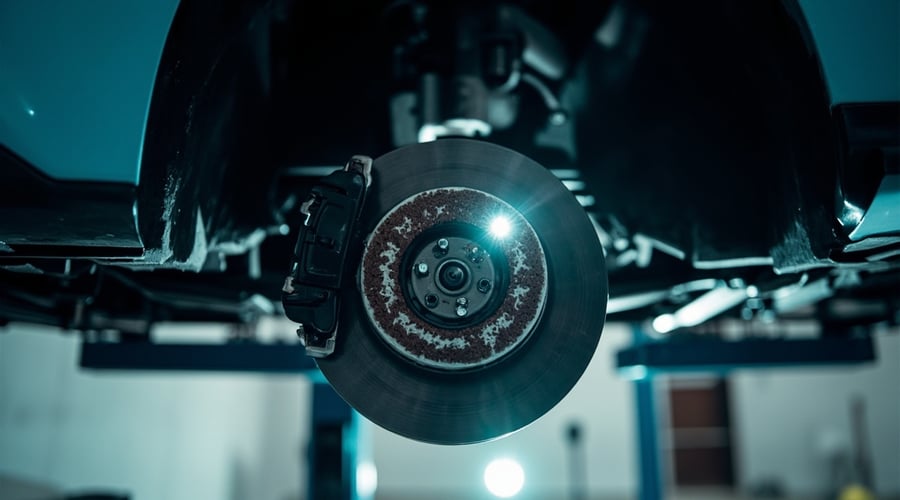
The Mazda 3 platform is solid, but rubber components don't last forever. By 100,000 km, most wear items are due. Front brake pads came in at around 4 mm of remaining thickness — not dangerous, but realistically that's about 7,000–8,000 km before they need replacing. Whoever bought the car would likely be spending $300-plus on pads within a few months of taking delivery. We replaced them before the car went on the lot.
Two of the four tyres told the same story. The fronts were fine; the rears were running low on tread. Technically still above NSW's 1.5 mm legal minimum, but not by much. We swapped them out. One thing worth knowing here: plenty of private sellers will tell you the tyres were "recently changed," and technically they might be right — but check the date code moulded into the sidewall. It's not uncommon to find rubber that's three or four years old despite decent tread depth. Old rubber hardens, and on a hot Sydney summer road it grips and brakes meaningfully worse than a new tyre. The old rears did not go back on this car.
On the suspension side, the right front strut top mount showed some minor age cracking — normal for the mileage, no noise, nothing structurally compromised. Job sheet note: serviceable, re-check at next service. I'll come back to how we handle items like this when it comes to pricing.
The Engine Bay: Mazda's Known Tendency at High Mileage
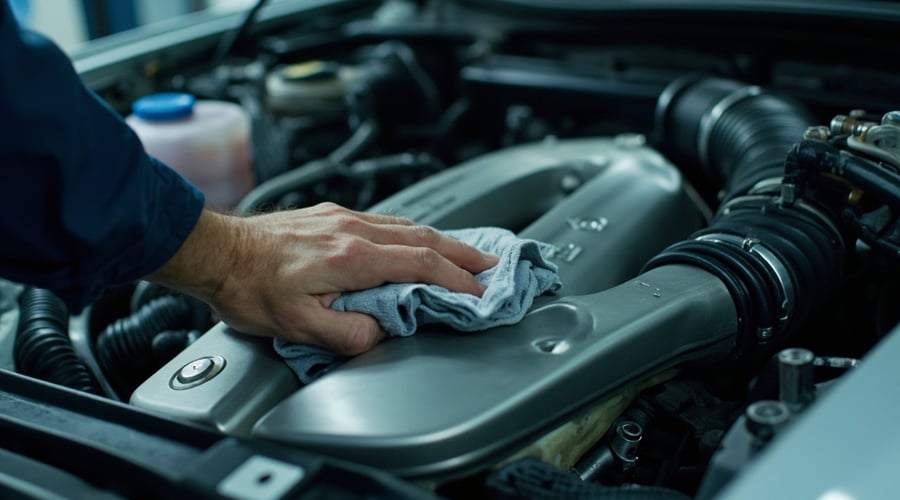
The first thing we check in the engine bay isn't the dipstick — it's the cam cover gasket. On SkyActiv 2.0 engines at this kind of mileage, a light oil weep from the cam cover is a fairly common finding. This one had some film, but genuinely light — no contamination in the spark plug wells, no visible drips. We cleaned the area down, checked the gasket for deformation and brittleness, and the job sheet call was: light weep, cleaned, monitor, no replacement needed. That might sound like we're papering over something. We're not. If the gasket had been leaking properly, or if the rubber had gone hard and cracked, we would have replaced it. It hadn't.
Engine oil and filter, new. We do this on every car we take in, regardless of what the last service stamp says. Coolant was discoloured — flushed and replaced. These sound routine, and they are, but when you buy privately you're handling this yourself: booking a mechanic, taking time off, spending $200–$300 on top of what you just paid for the car. Having it sorted before handover is the point.
Gearbox oil, we left alone. The 6-speed auto in this generation Mazda 3 is a well-sorted unit — Mazda's own service intervals for transmission fluid are conservative, shift logic was clean with no hesitation or hunting in the lower gears, and our call was that disturbing it wasn't warranted. Some workshops will change the transmission fluid on every car that comes in because it makes the job sheet look fuller. That's not always the right call for the car. We fix what needs fixing and leave what doesn't.
Interior and Electrics: For a Mazda 3, the Cabin Is the Product
A lot of people choose the Mazda 3 over a Corolla based on how it feels to sit in. It's not a big car — it doesn't pretend to be — but the steering weight, the damping on the switchgear, and the lateral support in the seat all punch above the price point. If the interior has been thrashed, none of the mechanical work matters.
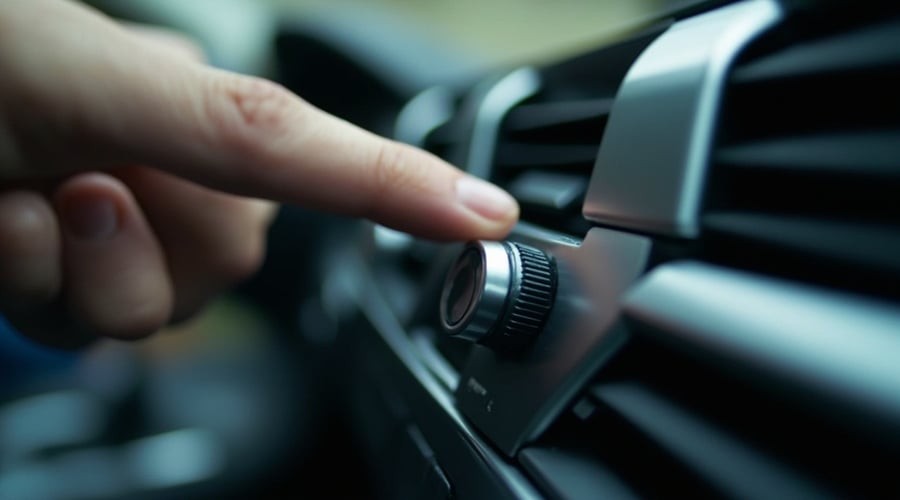
This one was mostly in good shape. Steering wheel leather showed normal wear but no cracking or peel; seats were clean, no burn holes or staining. Two issues came up. First, one of the centre vent adjustment tabs was broken — easy fix, we ordered the part and swapped it in. Second, and this is worth knowing if you're shopping Mazda 3s of this generation: the soft-touch coating on the infotainment control knob had started to go tacky. This is a known degradation issue on these cars. Touch it and it feels slightly sticky — not dramatic, but enough to drag the whole interior impression from "nicely finished" to "old."
The honest answer on how we handled it: we cleaned and treated it to reduce the tack, but we didn't replace the unit. Replacing the full control panel isn't a cheap job, and adding that cost to the price would make this car look expensive for its segment without buyers being able to see why. So it stays on the job sheet as documented: coating degradation present, treated, not replaced, non-zero wear. Any buyer who comes in can see that note, and there's room in the asking price to account for it. More on that below.
Full electrical sweep: lights, A/C compressor, power windows, central locking, cruise control, reverse sensors — all checked and all fine. OBD scan returned no stored fault codes. Mazda's electrical architecture isn't particularly complicated by Japanese-car standards, but "low risk" isn't the same as "skip it." Intermittent faults don't always throw codes, and a physical check catches things a scan won't.
The Road Test: A Mazda 3 Tells You Pretty Quickly If Something's Off
After the static checks, we took it out on our usual loop — up onto Parramatta Rd, across to Church St, through the slower residential streets around Concord. A Mazda 3 gives clear, honest feedback; it's not a car that buries problems in vague handling.
Assessment from the run: steering centred correctly through corners, no pull under braking, suspension quiet over speed bumps, brake pedal travel linear and firm, idle stable from a cold start, no hesitation or drag through the upshifts once the engine was up to temperature.
One finding: the front-left wheel was slightly out of dynamic balance. At 100–110 km/h on the motorway, there was a faint vibration through the steering wheel — not structural, not a safety issue, but a wheel balance and alignment check sorted it. The thing is, plenty of previous owners drive around like this for months without registering it; your hands just adapt. We reset it to the point where there's nothing to adapt to.
The Numbers, and How They Feed Into the Price
This is the part most car yards don't talk about, so let me be direct.
The safety and maintenance items — brake pads, two rear tyres, engine oil, coolant flush — those are costs we carry, and they're factored into the asking price. They're also costs the buyer won't be facing for the next six to twelve months. If another car is listed a few hundred dollars cheaper but hasn't had this work done, you're not actually saving money. You're just paying it later, on your time, at your mechanic.
The non-safety small items — the tacky control knob coating — we didn't replace, and we didn't price the car as though we had. Replacing it properly would have made this Mazda 3 look expensive for its segment for no visible reason. Instead, it stays on the job sheet as a documented item. A buyer who wants to sort it themselves can factor that into their offer. A buyer who wants us to add it to the deal can have that conversation in the yard. Either way, it's not hidden.
Mazda 3 buyers at this price point are watching their budget closely. The worst thing we can do is pad the price with work they can't see or verify. What builds confidence — and what actually holds a price — is being able to show the receipts.
Why a Job Sheet Is Worth More Than a Sales Pitch
Ask a private seller about the car's condition and you'll get "good nick, no issues." Ask when it was last serviced and you might get a receipt from two years ago. Ask about accident history and they'll tell you there isn't any. None of that's necessarily dishonest — they just haven't had anyone check independently, and no one's name is on the line.
When we took this Mazda 3 in, the question wasn't "can it be driven?" Every car on an Australian road technically clears that bar. The question was "how long can the next owner drive it before they have to spend serious money?" That's a different standard, and it's the one our three-month warranty sits behind.
Every car we put on the lot has a job sheet. You don't have to be buying from us to find this useful — next time you're looking at any used car, ask the seller for a current inspection report and read it line by line. What's listed, what isn't, and what's been left as a known issue tells you more than any test drive.
Where This One Ended Up
By the time this article goes up, this Mazda 3 is sitting on the floor ready to go. A solid 106,000 km Japanese car — not perfect, no used car is — but with the wear items sorted, the safety items current, and an honest list of what's left on paper.
If you're working with a $15K–$20K budget and a Mazda 3 is on your shortlist, or you have questions about how to read an inspection report, drop something in the comments. We can't promise every car we sell is flawless. We can promise that whatever happened to it in our workshop is written down, and when you come in, you can read the original job sheet yourself.