A used car arrives at our Concord workshop — here's every check it goes through before it's priced
Most dealers say "workshop inspected." Here's what that actually looks like, step by step.
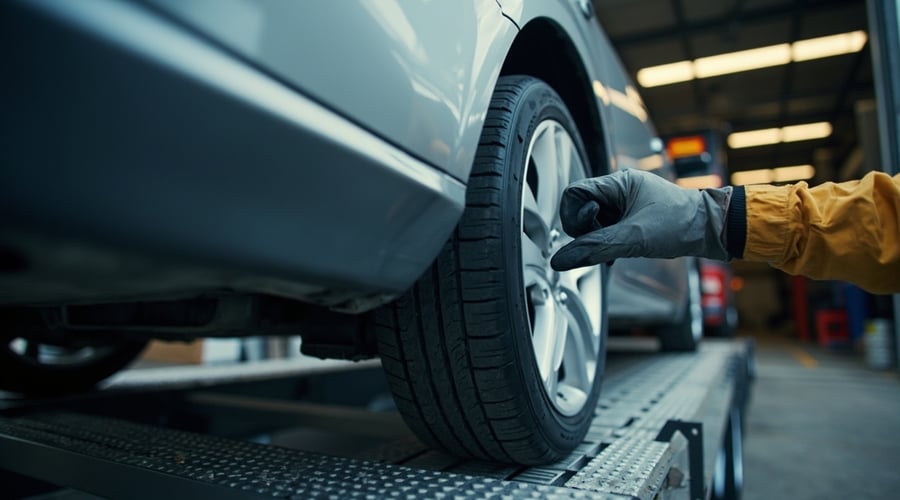
Every car on our lot at Concord has a story before it gets a price sticker. Some of those stories are clean. Some are not. The whole point of the process I'm about to walk you through is to find out which one you're looking at — before a buyer ever sits in the seat.
"Workshop checked" is one of those phrases that gets thrown around so often in used car listings that it's stopped meaning much. So let me make it concrete. Here is exactly what happens when a car comes through our M&F workshop, from the moment it arrives to the moment it's priced and put out front.
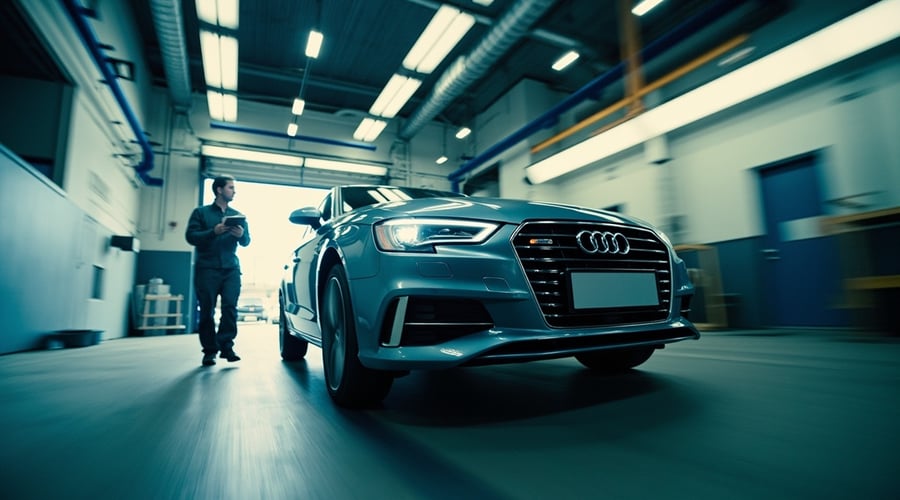
The PPSR Pull Comes First — Before Anyone Touches the Car
The first thing we do isn't mechanical. It's a PPSR search by plate, run the same day the car comes in.
If you haven't used the Personal Property Securities Register yourself, it's the national database that tells you whether a vehicle has money owing on it, whether it's been written off, and whether it's been reported stolen. It costs $2 to run as a private buyer. We pull it on every single car, without exception.
What we're looking for: any finance encumbrance (meaning the previous owner borrowed against it and the lender technically still has a security interest in the vehicle), any written-off status — repairable or statutory — and any police interest flags. A car with an undisclosed encumbrance can be repossessed even after you've paid for it. That's the scenario the PPSR exists to prevent.
We also cross-reference against NSW Transport records at this stage. The VIN stamped on the compliance plate should match the VIN in the system. If it doesn't, that's a red flag serious enough to stop everything right there. It's rare, but it happens — particularly with grey-area imports or vehicles that have been in a serious structural repair.
If the PPSR comes back clean and the VINs match, we move into the physical inspection.
What the Workshop Actually Measures
The physical inspection runs in four zones: exterior and structural, underbody and drivetrain, engine bay, and interior and electrical. Our technicians work through these in order, not from memory — they follow a written checklist so nothing gets missed on a busy day.
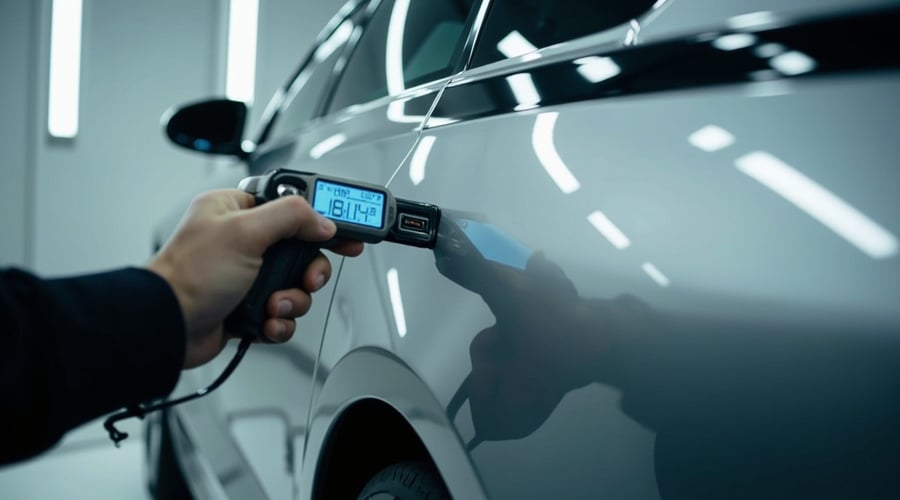
Exterior and structural is where the car's history shows up if it's been in an accident. We're not just looking for obvious panel damage. We're looking at panel gaps — whether they're even on both sides — and at paint depth. A paint depth gauge tells you whether a panel has been resprayed. Factory paint sits in a consistent range; a thick reading on one door and a thin reading on the next one means that panel has been worked on. Sometimes it means a tidy colour-matched repair after a minor scrape. Sometimes it means a significant collision repair that didn't make it into the service history.
We also check door hinge alignment, boot lid gaps, and bonnet fit. A car that's been in a serious front-end impact often shows it in how the bonnet closes — not dramatically, but enough that a calibrated eye catches it.
Underbody and drivetrain is where the harder questions get answered. On the hoist, we're checking for:
-
Subframe condition and any signs of structural repair (welds that don't match factory finish, fresh underseal over suspicious areas)
-
CV boot integrity — a split CV boot isn't expensive to fix, but if it's been split and running, the joint may have already worn
-
Suspension components: control arm bushings, ball joints, tie rod ends. We physically check for play. Worn bushings show up as imprecise steering and tyre wear; they're also not cheap to sort on a European car
-
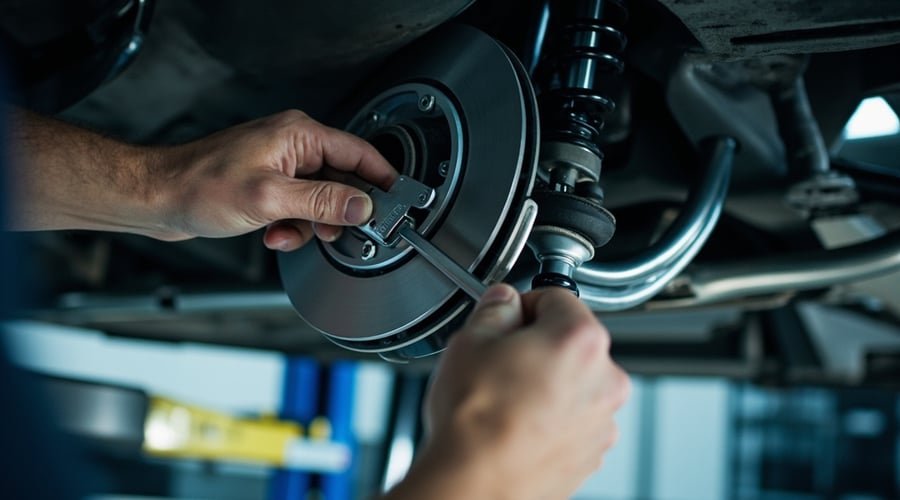
Brake disc thickness, measured with a vernier calliper against the manufacturer's minimum specification. Discs that look fine visually can be under minimum spec, and a car at or below minimum needs new discs before it goes anywhere
-
Tyre tread depth across all four corners, and whether the wear pattern is even. Uneven wear is often a suspension or alignment symptom, not just a tyre problem
-
Any oil or fluid leaks from the gearbox, diff or axle seals
On any car with significant claimed mileage, the wear on these components either confirms or contradicts the odometer. Tyres and brake discs don't lie — if a car is sitting at 60,000 km on the clock but the discs are at minimum spec and the CV boots are cracked, the kilometres don't add up.
Engine bay inspection covers fluid condition and levels, belt condition (cam belt or chain — we note when the last service was, and flag if it's due), any visible oil leaks from valve cover gaskets or sump, coolant condition (rusty coolant is a sign of a cooling system that hasn't been maintained), and battery health. On European cars, we also scan for fault codes using a diagnostic tool — this catches issues that haven't yet triggered a dashboard warning light but are already logged in the ECU.
This is the step that matters most for anyone considering a German car. A clean engine bay doesn't mean a fault-free car. We've had cars come in looking immaculate under the bonnet that threw ten pending codes on the scanner. Some of those are historical faults that cleared naturally. Some are live faults the seller knew about.
Interior and electrical is the last zone. We test every window, every lock, the air conditioning (including whether it holds pressure and cools properly — not just whether it blows cold for thirty seconds), all lights including indicators and reversing lights, the horn, the infotainment system, all USB and charging ports, and the sunroof if there is one. We also check seat adjustment mechanisms and check for any signs of water ingress — damp carpet under a floor mat is one of the things buyers almost never check, and it's one of the things that causes the most trouble later.
The Road Test
Once the workshop checks are done, the car goes out for a road test. Parramatta Rd from Concord into Strathfield and back is a useful loop — you get city speed, some stop-start, a few medium-speed corners, and enough distance to feel how the car settles once the engine is warm.
What we're listening for: any clunks from suspension over road imperfections, any shudder under braking (a warped rotor will show up under moderate brake pressure at around 60 km/h), whether the car tracks straight without input, how the transmission shifts (autos should shift cleanly without hesitation or hunting between gears), and whether the engine pulls consistently through the rev range or has a flat spot.
We also note whether the car exhibits any vibration at highway speeds, which can indicate a wheel balance issue, a tyre with internal damage, or a brake rotor that's been overheated.
If something comes up on the road test that didn't show on the hoist, it goes back into the workshop.
What Happens When We Find Something
Here's the honest part: we find things. Not on every car, but regularly enough that it's part of the process rather than an exception.
Minor wear items — brake pads at 30%, wiper blades that smear, a cabin filter that hasn't been changed in years — we generally repair or replace before the car is priced. These aren't negotiating chips; they're things that affect whether the car is actually ready to drive.
Bigger issues require a decision. If a car has a fault that can be properly repaired, we price in the repair, do the work, and the car comes out with a clean bill of health. If the fault is structural, if the repair cost means the car can't be priced at a point that makes sense for a buyer, or if there's something about the history that we can't fully account for, the car doesn't go on the lot.
That's a real constraint. We've turned down cars because the numbers didn't work after the inspection. A car that needs $4,000 in structural repairs isn't a car we're going to sell at market price and hope the buyer doesn't notice.
What "3-Month Warranty" Means Against This Background
Every car we sell at Max Auto comes with a 3-month warranty. That warranty means something specifically because of what happened before it was written — the car was on the hoist, the PPSR was pulled, the scanner was plugged in, and someone drove it properly before it was priced.
We're not the only dealer doing this. But "workshop inspected" as a phrase doesn't have a standard behind it — it can mean a five-minute walk-around, or it can mean what I've just described. The difference matters when you're putting $40,000 or $50,000 into a car and relying on it for your daily commute from Burwood or Homebush.
The inspection process I've described above is what we mean when we say a car has been checked. If you come in and want to see the inspection notes on a specific car, ask. We keep them. And if a car has a known issue that we've disclosed in the listing, that disclosure came from this process — not from guessing, and not from hoping you won't notice.
If you're looking at a specific model and want to know what the common faults are on that car, or what to look for when you come in for a test drive, message us before you visit. That's a conversation worth having before you're standing in a car yard making a decision on the spot.