A Used Mercedes-Benz C 300 Comes Into Our Concord Workshop — Here's What the Hidden-Cost List Actually Said
The purchase price is just the beginning — here's what the inspection invoice actually revealed.
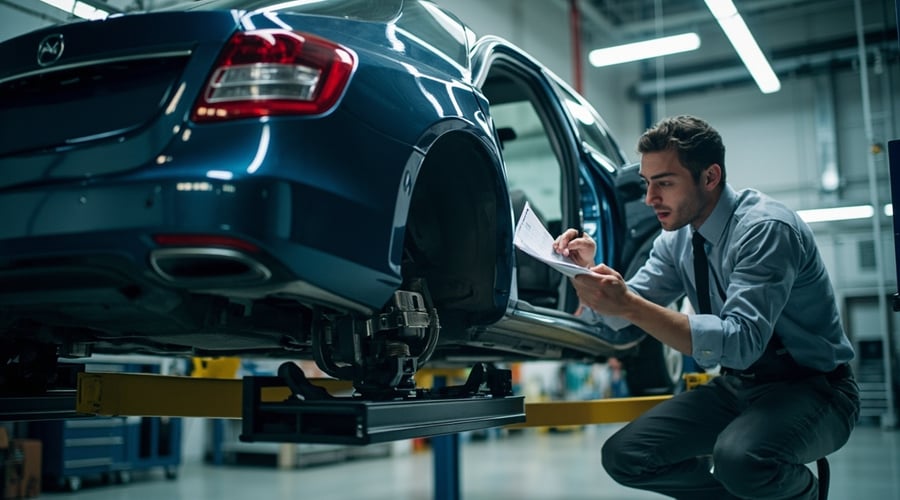
Most people who walk into a used-car lot eyeing a Mercedes-Benz C 300 are thinking about the sticker price. What it costs to get the keys. That part they've done the research on — they've checked CarSales, they've scrolled through listings on Parramatta Rd, they've got a number in their head. What they haven't thought about is the list that gets written up in a workshop before the car goes anywhere near a buyer.
This is that list. A real one, from a W205 C 300 that came through our Concord workshop. We're going to walk through it item by item — what we found, why it matters, and what it actually costs to fix — so that if you're considering a prestige European car in the $25,000–$45,000 range, you go in with a clear picture rather than a nasty surprise six months down the road.
The short answer, before we get into the detail: budget at least $2,000–$4,000 above the purchase price for known maintenance items on a W205 with more than 80,000 km on it. That number can go higher. Here's why.
The Car That Came In
This was a 2017 W205 C 300, the 2.0-litre turbocharged four-cylinder petrol variant, presenting in good cosmetic condition. Around 95,000 km on the clock. Black on black interior, full leather, all the spec you'd expect. From the outside, and even from a careful test drive, nothing obviously wrong.
That's the thing about a car like this. It presents well. The ride quality of the W205 is genuinely good — composed, quiet, the kind of car that feels expensive to sit in. It's easy to fall in love with it on a test drive and skip past the detail.
The workshop intake is where the detail shows up.
What the Inspection Actually Found
Valve Cover Gasket — The Classic German Oil Seepage
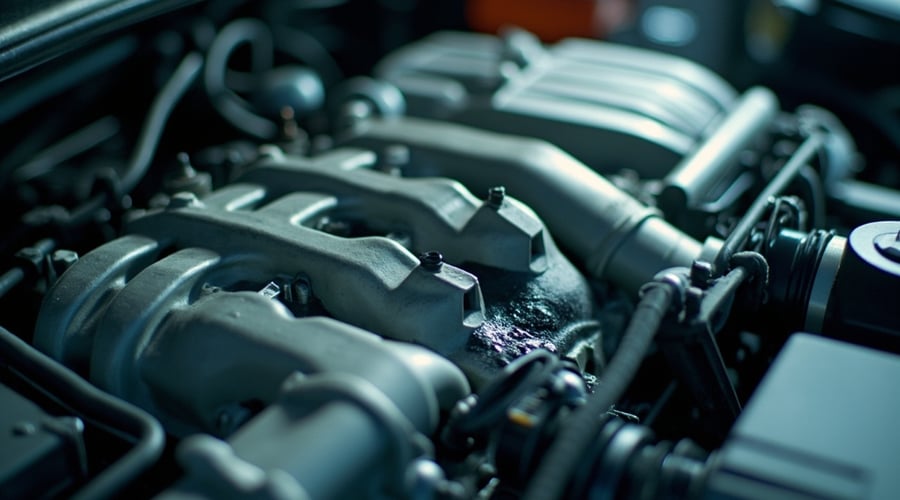
The first thing the mechanic noted: oil seepage around the valve cover gasket. Not a catastrophic leak. If you wiped it down and looked again in a week, you'd see a fresh trace of oil — dark, slightly wet, running down the passenger side of the engine.
On a W205 with high 80s or 90s kilometres, this is about as common as it gets. The 2.0T M274 engine that powers the C 300 is not a bad engine, but the valve cover gasket and the associated cam cover seals are a known wear item at this mileage. Left alone, you're looking at an oil smell when the engine gets hot, potential drip onto your driveway, and in worse cases, oil reaching hot components you don't want oil anywhere near.
The fix: replace the valve cover gasket and reseal the cam cover. Parts and labour at a European specialist in Sydney — expect $400–$700 depending on who does the work and whether any adjacent gaskets need attention while you're in there. It's not a financial emergency, but it's not a "deal with it later" item either.
What a buyer should do before purchase: open the bonnet and look at the top of the engine. Any oil discolouration or residue around the cam cover is worth flagging. Ask the seller when it was last done. If they don't know, price it into your offer.
Air Suspension Sensor — The One That Doesn't Show on a Test Drive
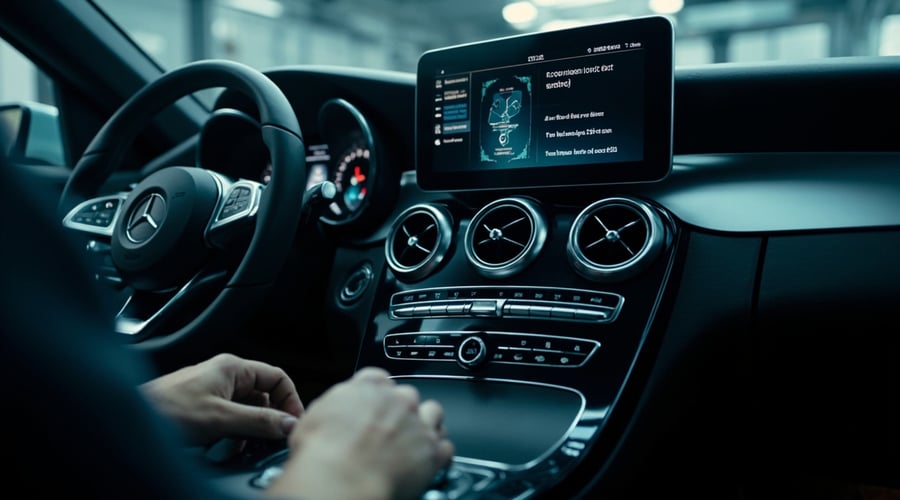
The C 300 in this spec ran an electronically controlled suspension setup with ride-height sensors at the rear. One of those sensors was showing degraded output — the car wasn't sitting noticeably off-level to the naked eye, but when we pulled the diagnostic data, the rear left sensor was producing erratic readings.
This is the kind of fault that a private seller genuinely might not know about. It doesn't throw a warning light immediately in every case, and on a relaxed Sunday test drive on flat roads, you'd feel nothing unusual. Where it starts to matter: the car's adaptive damping system is making adjustments based on bad data. Over time, you get uneven ride quality, and eventually the fault will surface properly — sometimes as a warning on the instrument cluster, sometimes as a noticeably sagging corner.
Suspension sensors on the W205 aren't cheap. A genuine Mercedes-Benz part through the dealer network in Sydney runs in the range of $350–$600 per sensor, plus labour for calibration. Aftermarket sensors exist, but on a system this integrated, you want a part that's going to talk correctly to the car's electronics. This is one of those cases where going cheap can create a secondary fault.
The broader point: European cars in this class rely heavily on integrated electronics. Things that would be a $50 fix on a Corolla become $300–$500 on a W205, because the parts are more expensive, the calibration takes time, and the labour rate at a workshop that actually knows these cars is higher than at a general mechanic.
Brake Rotors — Past the Wear Limit on the Front Axle
The front rotors were measured at 1.5mm below the manufacturer's minimum thickness specification. Visually, they looked fine — no obvious grooving, no rust scoring beyond normal. But brake rotor wear isn't always visible. The measurement tells you what the visual doesn't.
At 1.5mm under minimum spec, you're in a range where braking performance under heavy use starts to deteriorate. More immediately relevant: this is a roadworthy issue. In NSW, a licensed dealer putting a car through a pre-sale inspection — which is part of how we bring cars onto the lot — cannot certify a vehicle with rotors out of spec. It gets fixed before the car goes up.
Front rotor replacement on the W205, with pads done at the same time (which you should do — don't put new pads on worn rotors or worn rotors against new pads): $600–$900 for the front axle at a European workshop in Sydney, covering genuine or quality aftermarket rotors and branded pads. Some dealers use the cheapest available option; we've found that on a car with the brake feel and weight distribution the C 300 has, that's a false economy.
If you're buying privately and the car hasn't had rotors and pads done in the last 20,000–25,000 km, budget for it. Ask for service records. If the records don't exist or are patchy, that's a separate concern.
What the Total Bill Looked Like
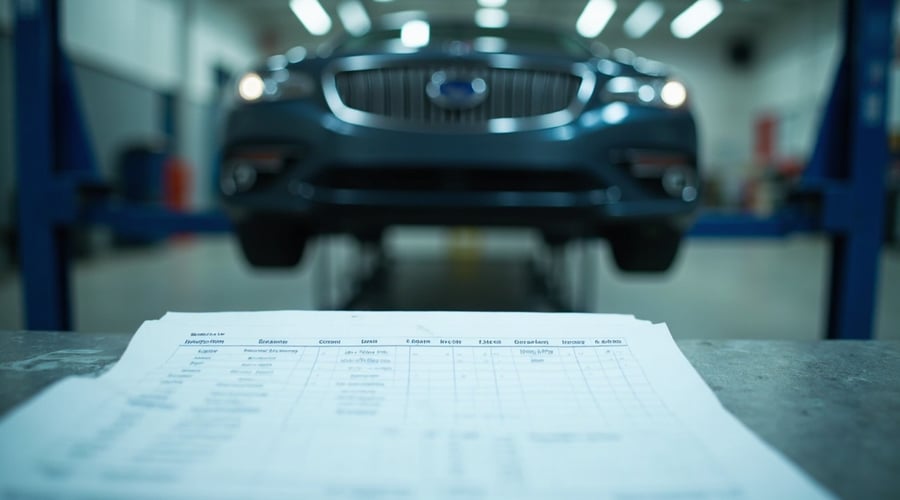
After the three main items — valve cover gasket, suspension sensor, front rotors and pads — the workshop bill on this car came to just under $1,800 in parts and labour. That's not a disaster for a car in this segment, but it's also not nothing, and it was a car that looked and drove well.
Here's the honest version of what that means: on a $35,000–$40,000 W205 purchase, this is manageable if you knew about it going in. It becomes a nasty shock if you didn't. And this car wasn't hiding anything dramatic — no evidence of prior accident damage, no indication of poor ownership history, one careful owner based on the service records. These were normal wear items on a European prestige car at this mileage.
The cars that come through with more stress in their history — inconsistent servicing, multiple owners, gaps in the paperwork — can carry significantly more. Not all of it shows on a test drive or a visual inspection.
What This Means for Any W205 C 300 You're Looking At
There are a few things you can check yourself before you spend anything on a pre-purchase inspection.
Open the bonnet and look at the cam cover. Any oil residue there is a data point. Not necessarily a deal-breaker, but worth knowing.
Look at the rotor surface through the wheel spokes. You're looking for deep grooves — circumferential scoring that you can feel with a fingernail — or rust that's more than surface-level. If the rotor looks thin and the pads look low, budget for the replacement.
Check service records against the odometer. A W205 should have been serviced every 12 months or 15,000 km. Gaps in the service history on a European car are more than an administrative inconvenience — the M274 engine doesn't love being run with degraded oil.
And for the suspension sensors and electronics: this is where you genuinely need a workshop with the right diagnostic equipment. You cannot assess the health of the W205's suspension electronics by driving it. You need the laptop connected.
The Honest Trade-Off on European Prestige at This Mileage
The W205 C 300 is a genuinely good car. It's well-engineered, it drives better than most of its competition in the used-car market at this price point, and it holds a reasonable resale position in Sydney. If you service it properly and deal with the wear items as they come up, it's not a money pit.
But the cost-to-service reality of a German prestige car out of factory warranty is different to a Japanese car at the same price. Parts cost more. Labour at a workshop that actually knows the platform costs more. The electronics are more complex and faults require proper diagnosis, not guesswork. On a Toyota Corolla at the same mileage, the equivalent list of wear items might cost $600–$800 to deal with. On this C 300, it was $1,800. That's not a criticism of the car — it's just how the economics work, and you should know it going in.
If your budget for the purchase is at its limit, and there's nothing left for the first service and known wear items, a European prestige car at high mileage is going to stress you out. Buy the car at a number that leaves you room. Or buy the Japanese alternative and use the difference for something else.
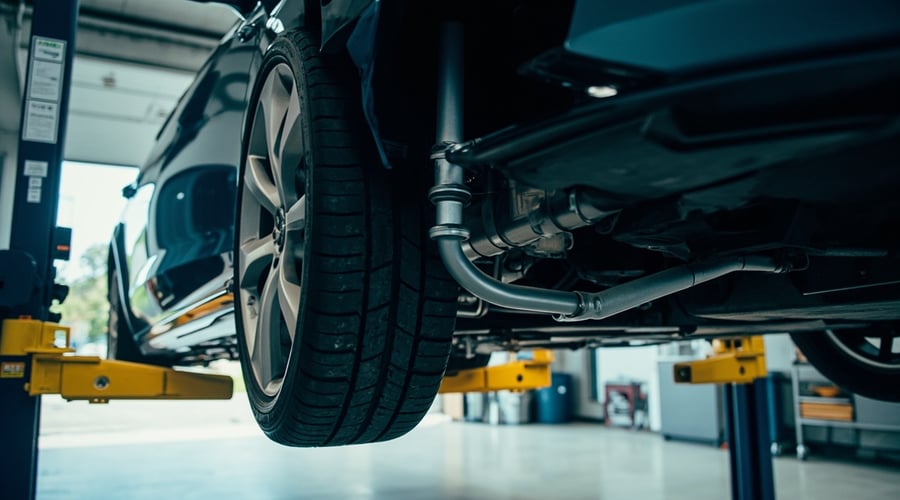
What a Proper Pre-Sale Process Looks Like
When this car came in, the items above were identified before the car went anywhere near the lot. The workshop addressed the brake rotors and pads — a roadworthy requirement — and made the valve cover gasket repair. The suspension sensor was documented, priced, and factored into how the car was presented.
That's the minimum a licensed dealer registered with NSW Fair Trading should be doing. The vehicle comes with a 3-month warranty when it leaves our lot, which means we need to know what's on it before it goes. It's not a generosity — it's a necessity.
If you're buying from a private seller or from a lot that doesn't have its own workshop, you don't have that filter. Which means you're buying someone else's wear list, and you'll find out what's on it after the transfer papers are signed.
If you're looking at a W205 C 300 or any other European prestige car and want to know what the workshop intake list actually says before you commit, we're happy to talk through what a pre-purchase inspection should cover — or to show you what we found on any car currently on our lot. Come in, or send us a message.