Buying a Private Sale Car in Sydney? These 4 Things Can Burn You on Handover Day
Four checks before you hand over the money — because in a private sale, what you skip can cost you everything.
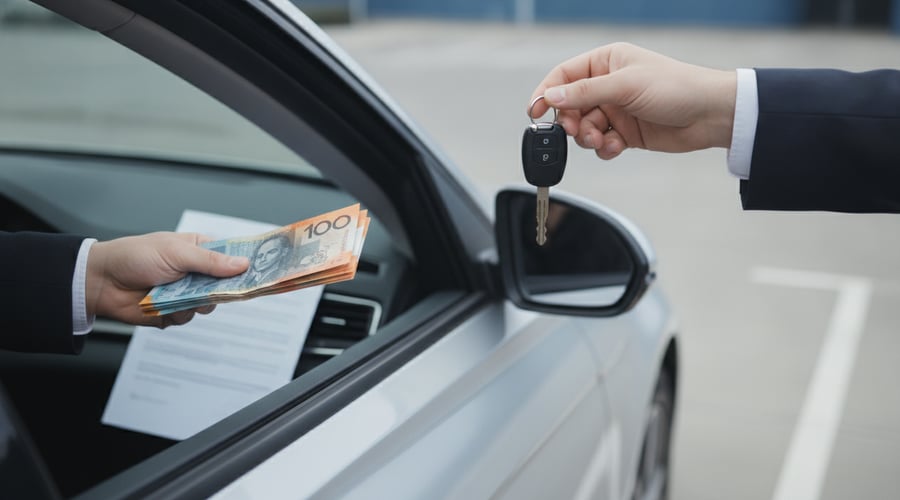
You find something on Gumtree, sort out the price over WeChat, and agree to meet Saturday in a Burwood car park. That's how a huge chunk of Sydney's private car deals actually happen — and most of the time, it goes fine. But every now and then, the money leaves your account and something's off: there's still a bank loan sitting against the car, the rego runs out next week, or the person handing you the keys isn't the name on any of the paperwork.
None of this is fringe stuff. Private vehicle disputes — overwhelmingly around outstanding finance and rego — show up regularly in NSW Fair Trading's published enforcement records. The brutal part is the timing: by the time you spot the problem, the money is usually already gone.
So here are the four things to lock down before you sign anything. This isn't a case against private sales — plenty of honest sellers on Gumtree and Facebook Marketplace are just moving on a car they've looked after. It's a checklist you can run through on the day, it won't take long, and it can save you a serious headache.
The loan that hasn't been paid off
This is the most common trap, and usually the most expensive.
In Australia, a car loan is typically secured against the vehicle itself — meaning the lender holds a registered interest in it regardless of who's driving it. If a seller hasn't fully paid off their loan and they sell you the car, the finance company can still have a legal claim over it. Worst case: you've paid, you have the car, and the lender comes to collect it.
This isn't a rare edge case. A significant proportion of privately listed used cars in Australia still carry registered security interests on the PPSR — sometimes because the loan is genuinely outstanding, sometimes because it was paid off but nobody got around to removing the entry.
How to check it yourself:
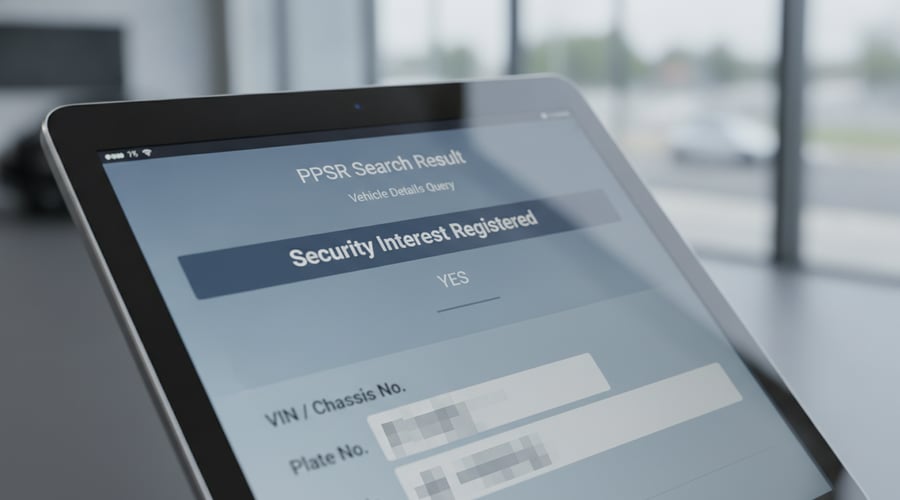
Go to ppsr.gov.au and search by plate number or VIN. It costs around $2. If the report shows "Security Interest Registered," there's a recorded interest against the vehicle right now.
That doesn't automatically mean the loan is still active — lenders sometimes forget to remove entries after a loan is cleared. But if you see that flag, you need the seller to provide a written payout letter confirming the finance has been settled, or to clear it before handover and show you the cancellation confirmation.
Handing over money without any written evidence? Don't.
The rego that's about to expire — or already has
Registration is a legal requirement to drive on NSW roads, and how much rego is left on a private sale car directly affects what you'll actually spend in the first few months.
Here's a scenario that plays out all the time: the car was listed with six months of rego. Negotiations dragged on for two weeks. By handover day there are three months left — but nobody adjusted the price. You don't think much of it at the time, and then three months later you're wearing the renewal yourself.
Worse is buying a car where the rego has already lapsed or been cancelled. Under NSW rules, a vehicle that's been expired for more than three months needs to pass an AUVIS inspection (a blue slip) before it can be re-registered. If the rego was cancelled outright — say, a previous owner just stopped renewing it — the paperwork gets messier still. And while you're driving to that inspection, you're technically unregistered on public roads.
How to check on the day:
Ask the seller to pull up the rego details on the Service NSW website or the My Service NSW app right there in front of you. You can also check it yourself for free — go to service.nsw.gov.au, search "Check your vehicle registration," and enter the plate number.
If there are fewer than three months left, factor the renewal cost into your offer — or ask the seller to renew before the car changes hands.
The person selling you the car isn't the registered owner
This one tends to fly under the radar, but when it comes up, it's genuinely messy to sort out.
NSW requires the registered operator — the person actually listed on the vehicle's registration — to sign off on a transfer. If you've negotiated with someone who's "selling it for a mate," handed over your money, taken the keys, and then find out the person who signed the paperwork isn't the registered owner, Service NSW can reject the transfer. Everything after that gets complicated fast.
At the more serious end: if the car turns out to be a lease vehicle, a fleet car, or the seller's name has no connection to the registration at all, you're not just looking at an admin headache. You're looking at a real question about where the car actually came from.
How to protect yourself:
Ask to see the seller's driver's licence and compare the name against the registered operator on the registration certificate — the PPSR report doesn't show who owns the car. They should match.
If someone is genuinely selling on behalf of another person — an adult child selling a deceased parent's car is a common one — ask for written authorisation or the relevant estate documentation before you proceed.
If the names don't line up and the seller can't give you a straight answer, don't sign anything.
You drive away before the transfer is done
This is the one that catches people off guard precisely because everything feels sorted by the time it happens.
A pattern that plays out regularly in Sydney private sales: both parties sign the forms, and someone says "just take it now, I'll go sort the transfer at Service NSW tomorrow." Then one person goes, the other doesn't. Or they both go, but something's missing. The transfer gets bounced back.
Here's what that means legally. Until the transfer is completed in NSW, the vehicle is still registered in the seller's name. During that window:
- If the car is involved in an accident, liability gets murky fast.
- If the seller runs into legal or financial trouble in the meantime, it can affect the vehicle's status.
- If you find a problem and want to unwind the deal, both sides will already have different versions of what happened.
What NSW actually requires:
The buyer has 14 days after the transaction to lodge the transfer with Service NSW; the seller is separately required to notify Service NSW that the vehicle has been sold. But "within 14 days" doesn't mean tomorrow is fine — the cleanest move is to complete the transfer the same day.
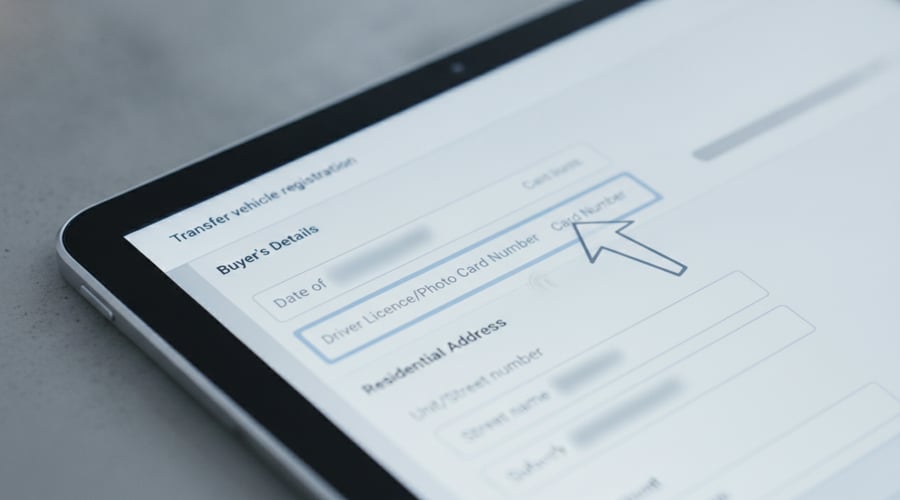
The good news: NSW lets you handle the entire transfer online through MyServiceNSW accounts, with each party completing their side separately. You'll both need the plate number, VIN, purchase price, driver's licence details, and proof of payment ready to go.
If the seller pushes back on completing the transfer on the day — any reason, any excuse — treat it as a red flag.
The four-point checklist — run through every item before any money moves
Keep this somewhere you can pull it up on the day.
① PPSR check done Run it the morning of, or the day before. No security interest on the report — you're good. Security interest showing? Get written proof the finance has been cleared before you go any further.
② Rego confirmed on Service NSW Check it live, right there. Fewer than three months left — negotiate who covers the renewal, or push for the seller to renew before handover.
③ Seller's licence matches the registered owner The name on the licence should match the registered operator on the registration certificate. Third-party sale? Get written authorisation before anything is signed.
④ Transfer started the same day — not tomorrow Online transfer through MyServiceNSW is the cleanest option. If that's not possible, book a time at your nearest Service NSW service centre and go together.
Each of these is straightforward on its own. Together, they cover the four points where private sales are most likely to fall apart. Checking upfront is a lot easier than filing a dispute with NSW Fair Trading afterwards.
One thing a registered dealer does before you ever see the car
A licensed motor dealer — one registered with NSW Fair Trading — runs through all of the above before a car is listed for sale: outstanding finance, registration status, ownership history. That doesn't make private sales inherently dangerous, but it does mean that if you're buying your first car in Sydney, or you're not fully across the English-language paperwork, going through a registered dealer means someone else has already done this verification before the car reaches you.
We've been on Parramatta Road in Concord since 2013. Every car we take in gets a PPSR check and ownership verification as a matter of course — it's the baseline, not a selling point. If you've found a private sale car you want to buy but you're not sure how to run the checks, or you have a car to sell and want to understand its finance status first, feel free to send us a message. No charge for the question.