Buying a Used 5th-Gen Honda CR-V in Sydney — Two Mechanical Issues You Must Check on the Spot Before Handing Over Any Money
Before you fall in love with it, check these two things — your mechanic might miss them.

The 5th-gen CR-V is everywhere on Sydney's used-car market right now, and for good reason. It's practical, it holds its value, and it's the right size for families who don't want to commit to a full-size SUV. If you're hunting in the $20,000–$38,000 bracket on Carsales or Facebook Marketplace, there's a solid chance at least a third of your shortlist is a CR-V from this generation — the 2017 to 2022 model years.
But there are two specific mechanical issues baked into this generation's 1.5-litre turbocharged engine that come up again and again in real workshops. Not vague "could happen to any car" stuff — documented, Honda-acknowledged issues that show up disproportionately in Australian-market cars, especially in Sydney's stop-start city driving. If you hand over money without checking these two things, you could be walking into a repair bill that dwarfs whatever you thought you were saving on the purchase price.
This article tells you exactly what they are, why they happen, and — most importantly — how to check them yourself, on the spot, before you commit to anything.
The 1.5T engine: good on paper, two known weak spots in practice
Honda's K20C4 1.5-litre turbocharged four-cylinder is genuinely a decent engine. It's willing, reasonably efficient, and in most markets it has been trouble-free. The problem is that Australian driving conditions — specifically Sydney's congested, low-speed, short-trip patterns — put unusual stress on two aspects of this engine's design.
The two issues are:
1. Oil dilution (fuel getting into the engine oil) 2. Rocker arm cover oil leaks (a valve cover / cylinder head oil leak specific to this generation)
They're distinct problems with different causes and different checks. Work through both during any inspection.
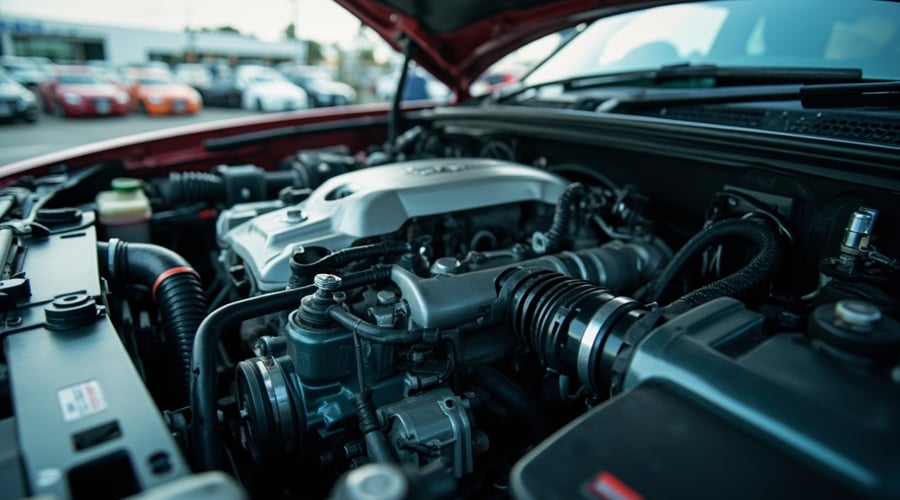
Issue #1: Oil Dilution — The One That's Hardest to See
Oil dilution means petrol is getting past the piston rings and mixing with the engine oil. The result is oil that has been thinned out by fuel — it looks like there's plenty of oil on the dipstick, but it's no longer doing its job properly. Running an engine long-term on diluted oil accelerates wear on bearings, the crankshaft, and other critical components that depend on the oil maintaining a consistent film under pressure.
Honda Australia acknowledged this issue and released an updated Engine Control Unit (ECU) software fix in 2019–2020. The fix adjusts fuel injection timing to reduce how much raw fuel contacts the cylinder walls during warm-up. It helps — but it doesn't fully eliminate the problem for cars driven mostly in short-trip, low-speed conditions. In Sydney's inner-west and suburban corridors, that describes a significant share of the fleet.
Why Sydney is worse than average: The engine needs to reach full operating temperature to properly burn off any fuel that has condensed in the oil. Short trips — the school run in Burwood, a quick errand down Parramatta Rd, a loop around the Concord area and back — mean the engine frequently warms up partway, then cools again before combustion temperatures get high enough to evaporate the accumulated fuel. Do that five days a week for a few years and the fuel builds up in the oil faster than the system can clear it.
How to check for oil dilution yourself
You need two things: your nose and the dipstick.
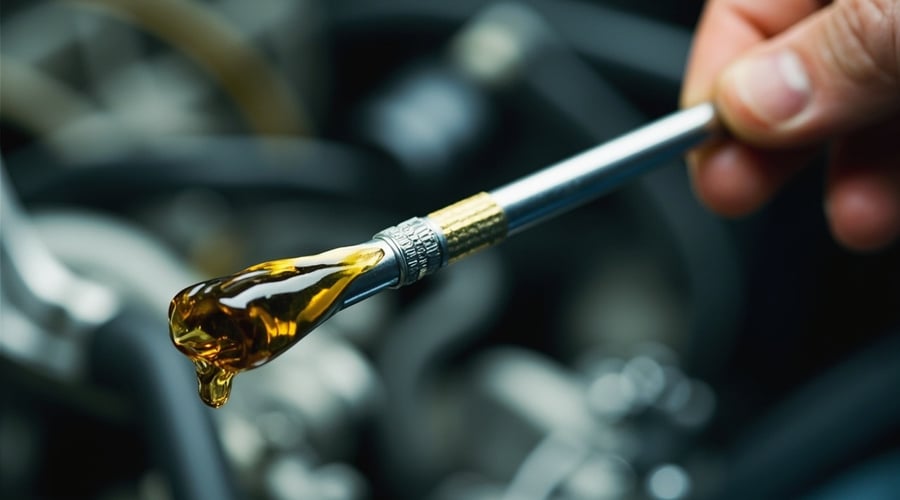
The dipstick test: Pull the dipstick, wipe it clean on a rag or paper towel, re-insert it fully, pull it again. Look at the oil level — if it reads noticeably above the full mark, that's a red flag. Diluted oil increases in volume because petrol has physically mixed into it, pushing the level higher than a correctly filled engine should ever read. On a properly maintained car, the oil level should sit somewhere between the two marks, or right at the full line. A level that's consistently creeping above the top mark — especially if the seller can't explain a recent overfill — means fuel is adding volume that shouldn't be there.
The smell test: Hold the wiped dipstick close to your nose and take a deliberate smell. Engine oil has a hot, slightly acrid, burnt smell — it's heavy and not particularly sharp. Petrol has a distinct, lighter, sharper smell that most people can identify instantly because it's the same smell as a service station forecourt. If you get a clear petrol note off the dipstick, stop. That's fuel in the oil, and no amount of negotiation makes that a comfortable starting point for a purchase.
Ask for the service history: Has the ECU software update been applied? Honda dealers and many independent shops carried out this update as a goodwill repair or as part of a scheduled service item from around 2019 onwards. If the car is a 2017 or 2018 model and there's no record of an ECU update anywhere in the service book or receipts, there's a reasonable chance it hasn't been done — and the calibration the engine has been running on was the one Honda later identified as contributing to the problem.
The honest caveat here: oil dilution can be present even when the smell and dipstick level both look borderline normal, especially if the previous owner recently changed the oil specifically to clean the car up before showing it to buyers. Fresh oil hides a lot. This is one of the cases where a proper pre-purchase inspection — including an oil sample sent to a lab for analysis — gives you certainty that a quick roadside smell test cannot. If the car is at a private seller, there's no service history to speak of, and the dipstick smells just clean enough to leave you uncertain, budget for that lab oil test before handing over a deposit. It costs around $40–$80 through most independent workshops and gives you an actual fuel-contamination percentage, not a guess.
Issue #2: Rocker Arm Cover Oil Leaks
This one is more mechanical and more visible than oil dilution — if you know where to look.
The 5th-gen CR-V's 1.5T engine has a known tendency to develop seepage and leaks around the rocker arm cover (sometimes called the valve cover) and its associated gaskets. This is partly a thermal expansion issue — the engine runs hot under turbo load, the cover expands and contracts repeatedly with each heat cycle, and over time the rubber gaskets compress, harden, and gradually lose their ability to hold a consistent seal. Sydney's traffic patterns, which involve a lot of stop-start heat cycling rather than the steady-state running the engine gets on a long highway drive to Canberra or the Blue Mountains, wear through this tolerance faster than the engineers designing for mixed-use driving likely modelled.
Left unchecked, oil leaking from this area drips onto hot engine components below — including exhaust components that can reach several hundred degrees under load. That produces a burning smell. In worse cases, sustained oil contact with hot exhaust surfaces is a fire risk. More immediately and practically, a slow leak means oil is leaving the engine at a rate the owner may not notice until the level has dropped enough to trigger a warning light or cause the engine to run noticeably rough at idle. By the time a warning light comes on, meaningful wear may already have occurred.
How to spot it during an inspection
Visual check of the rocker cover area: Pop the bonnet and look at the top of the engine. The rocker cover is the large cover running the length of the cylinder head — on the 1.5T it sits right on top, partially obscured by engine covers in some trim levels but accessible enough for a visual check. Look for:
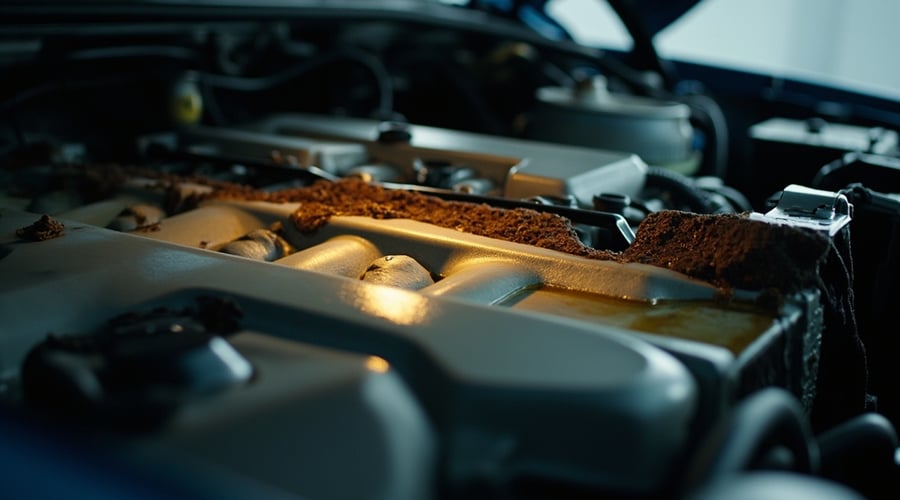
- An oily, glistening residue along the gasket edge where the cover meets the cylinder head — that wet line is the seam that should be dry
- Brown, baked-on deposits around the base of the cover, particularly toward the front or rear — this is oil that dripped, landed on a hot surface beneath, and cooked into a dark, crusty residue
- Oily residue on surrounding hoses, the firewall, or the inner faces of the strut towers — oil that has been sitting there long enough will have attracted dust and look more like a greasy dirt build-up than fresh oil
A completely clean engine is what you want to see. Some very light surface grease can accumulate on any engine over years of normal running, and that alone isn't cause for alarm. But a wet-looking seal line, visible fresh drips on the cover or the components below it, or that caked brown residue along the base are all red flags that warrant a closer look — and a conversation about price.
The smell test (again): During the test drive, especially after the engine has had ten minutes to warm up properly, turn off the cabin ventilation and take a moment to smell the air coming through the vents when you switch back to fresh air, or roll the window down at a stop and smell outside near the bonnet gap. A faint burning oil smell — sometimes more noticeable at idle with the windows down, or immediately after you park a warm car — can indicate oil hitting exhaust components. It's subtle, and on a mild day you might only catch it standing outside the car after you've pulled up. Once you've smelled it a few times, it becomes a distinctive and recognisable signal.
Check the oil level trend: Ask the seller directly: how often do you top up the oil between services? A healthy, well-sealed engine on a car serviced at standard intervals should essentially not need oil top-ups between those services. If the answer is "every couple of months" or "I keep an eye on it fairly regularly," something is consuming or losing oil — and the two most likely explanations in this engine are the rocker cover leak or dilution working in reverse (engine burning it off as the driving conditions change). Either way, it warrants a harder look before you proceed.
The repair reality: A rocker cover gasket replacement on a 1.5T CR-V at an independent workshop in Sydney typically runs in the range of $350–$600 in parts and labour, depending on access, whether adjacent cam seals or the spark plug tube seals need replacing at the same time, and the labour rate of the specific shop. It's not a catastrophic repair — the job is well-understood and the parts are readily available through Honda Australia's supply chain. But it's also not a trivial cost, and it's a cost you shouldn't absorb silently if you identified the issue during your own inspection. Use it in your price negotiation or make rectification a documented condition of sale before any money changes hands.
A Quick Pre-Buy Checklist: CR-V 5th Gen
Before you go to any inspection, save this on your phone:
- [ ] Dipstick: oil level — between marks, not over the full line
- [ ] Dipstick: smell — any petrol odour? If yes, walk away or insist on oil analysis before proceeding
- [ ] Rocker cover: visual — wet seal lines, baked residue, oil on nearby surfaces?
- [ ] Test drive: burning smell — especially at idle or shortly after warm-up
- [ ] Service records: ECU update — documented for 2017–2019 model years?
- [ ] Oil top-up history — has the seller been topping up between services?
- [ ] PPSR check — written-off status, finance encumbrance, stolen check. Do this before you travel to see the car. It costs $2 at ppsr.gov.au, takes two minutes, and has saved more than a few people from a wasted two-hour round trip, or worse.
That last one isn't specific to the CR-V — it applies to every used-car purchase in NSW. Run the VIN or plate before you even confirm the inspection time.
What About Everything Else on the CR-V?
To be fair to the car: these two issues aside, the 5th-gen CR-V is genuinely one of the better value propositions in Sydney's used-car market right now. The AWD system is reliable, the CVT transmission holds up well with proper fluid changes, the interior has aged well, and parts availability through Honda Australia's dealer network is solid. It's not a car to avoid — it's a car to buy carefully.
The dual-zone climate, the boot space, and the second-row room make it genuinely useful for families doing real work with a car. Insurance premiums in NSW for this model are reasonable for the segment. Running costs are not punishing if you keep up with oil changes — and if you verify that there's actually clean, uncontaminated oil in there to change.
The 2020 model year onwards is worth prioritising if your budget stretches that far. Those cars are more likely to have the ECU update applied from the factory, the manufacturing tolerances on the rocker cover seal improved slightly across the production run, and you're buying fewer years of potential deferred maintenance from a previous owner who may not have known what to look for.
The Version of This Story That Ends Well
The CR-V inspections that come through our Concord workshop follow a fairly predictable pattern: the well-looked-after ones are obvious from the first dipstick pull — clean oil, level sitting correctly, engine bay with no residue story to tell. The problem ones usually reveal themselves within ten minutes if you know what you're smelling and looking for. The challenging ones are the recently-serviced private sales where fresh oil has temporarily masked the dilution signal, which is exactly why oil sample analysis exists and why we use it.
At Max Auto, every CR-V we put through goes over the checklist above as a baseline — plus an oil sample and a test drive structured specifically to surface that burning smell if it's there. A rocker cover leak caught at intake means a $400 repair before a car goes on the floor, not a $400 problem a buyer inherits two weeks after handover.
If you're currently looking at a 5th-gen CR-V and want a second opinion before you commit — or if you want to know what we currently have in stock in Sydney — feel free to message us directly. Happy to answer questions, or walk you through what to ask a private seller before you make the trip out to see it.