Buying a Used Audi Q5 in Sydney: When DSG Shudder Is a Minor Quirk — and When It's a Deal-Breaker
Q5 DSG shudder: one type is fine, two mean walk away. Here's how to tell which is which on a test drive.

A few customers came in recently to look at Q5s. Most of them came back from the test drive wearing the same expression: loved the look, loved the interior, but there was this little thunk — right at the 1-to-2 upshift, like someone had given the car a gentle nudge from behind. The salesperson said something along the lines of, "All dual-clutches do that. It smooths out once the car warms up." Not exactly reassuring. So they went home, searched on social media, and came away more confused than before — some people calling it a known quirk, others saying it's all in their head, others saying never go near a DSG Q5.
So let's cut through it. Here's the conclusion up front: Q5 shudder comes in three varieties. Only one of them is negotiable. The other two mean you walk.
The question is whether you can actually tell which one you're dealing with.
Why There Are So Many Q5s on Parramatta Rd
Along the Parramatta Rd and Concord corridor, the Q5 is one of the most common European SUVs you'll see. It doesn't ride as firm as a BMW X3, and it doesn't carry itself with quite the same formality as a GLC. Second-hand prices often undercut a comparable-year premium Japanese SUV. There's room for the whole family, the all-wheel drive earns its keep on weekend trips to the national parks or the school run, and the styling holds up. B8-generation cars sit in the $15K–$30K range; B9s from 2017 onward generally run somewhere between $40K and $60K. A large portion of those — particularly the B8 — come with Audi's 7-speed S tronic dual-clutch gearbox.
With so many of them around, the shudder question comes up constantly. It's worth understanding properly.
A dual-clutch transmission isn't mysterious — it's a machine. There's a clutch pack, a hydraulic and solenoid system that handles shifts, and a control module governing the logic. When you feel a jolt, it means the gearbox either made a poor decision, executed a shift poorly, or the physical components are worn. Three causes, three very different outcomes.
Type One: The Gearbox Is Still Thinking About Its Previous Owner
Inside every dual-clutch gearbox is a TCU — the Transmission Control Unit, essentially the gearbox's memory. It learns your throttle habits and calibrates where the clutch engagement point should be. If a car has had multiple owners, spent years crawling through Sydney peak-hour traffic, had its battery disconnected at some point, or never had a software update, those learned values drift off-target.
What it feels like: worst when cold, noticeable on low-speed 1→2 and 2→3 upshifts, and it progressively smooths out as the car warms up. By the time you've done fifteen minutes, it's almost gone.
We've seen this a number of times in the workshop. One B9 Q5 came in with the owner reporting a light shudder on the cold 2-to-3 shift — completely gone once warm. When we pulled the data, there were no hard fault codes, but the adaptive values had drifted significantly. TCU reset, a standard re-adaptation drive cycle, and the symptom essentially disappeared. No transmission removal, no major repair — just a reflash.
This is the only one of the three worth negotiating on.
The key word is cold. Shudder present when cold, gone once the car is properly warm — software adaptation is the likely culprit. That's a manageable situation.
Type Two: The Clutch Plates Are at Their Limit
A dual-clutch gearbox uses two clutch packs — one for odd gears, one for even — alternating as it shifts. When the clutch material itself is worn down close to its limit, engagement stops being smooth. It's similar to slipping a manual clutch, except here the clutch is physically close to failure.
This one has a distinct feel: the shudder is there whether you're light on the throttle or heavy; pulling away on a hill sends a judder through the whole car; in slow traffic where the gearbox is constantly hunting between gears, it feels like repeated nudges from behind. The critical difference from Type One: warming up doesn't fix it. If anything, it gets worse the longer you drive.
That means the clutch pack needs replacing — transmission out, parts and labour. Depending on what else is worn, you're looking at several thousand dollars. Maybe it's worth pricing in if the car is otherwise excellent. But if the dealer tells you "that's just how dual-clutches are," your response should be: "Fine — so you won't mind knocking off the cost of a transmission rebuild?" If not, move on to the next car.
Type Three: The Valve Body Has Blocked Arteries
This is the expensive one — and the one sellers most commonly wave away as "not a big deal."
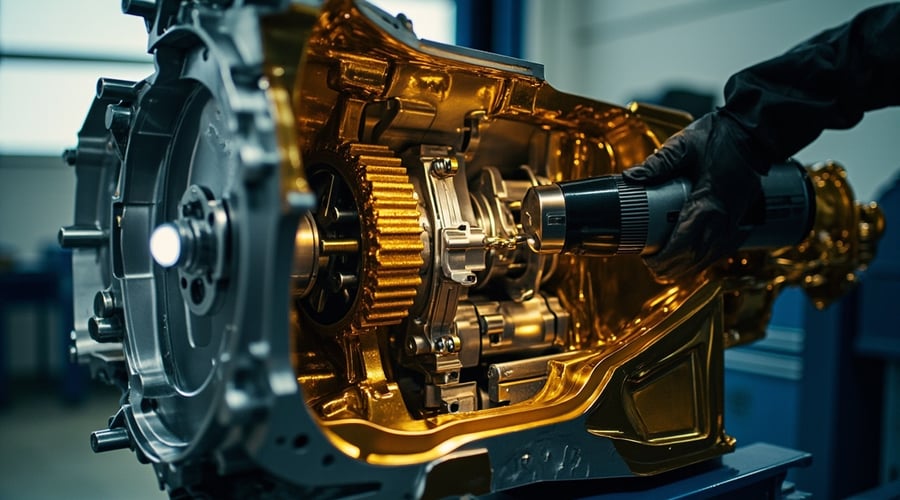
Gear changes in a dual-clutch are controlled by the valve body and a series of solenoids that manage hydraulic pressure with precision. If the transmission oil hasn't been changed on schedule, or the wrong fluid was used at some point, the valve body accumulates sludge and carbon deposits. The solenoid valves start sticking. Hydraulic pressure becomes inconsistent. The gearbox, essentially, stops being able to think clearly under load.
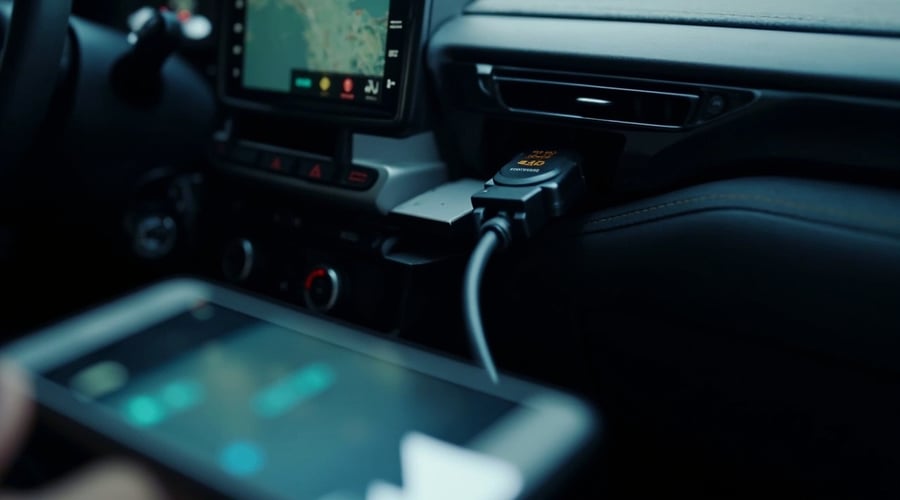
The signs are harder to ignore than Type Two: the shudder gets worse — not better — when fully warm; gear impacts feel random rather than consistent; sitting in D at a red light, the car lurches forward unexpectedly; occasionally you select a gear and nothing happens, then the car suddenly moves. Plugging in a scan tool usually pulls transmission-related DTCs, but don't wait for a warning light — plenty of transmission faults never trigger the dash lamp at all.
Repair costs at this stage start in the high thousands, and a serious case may call for a full replacement unit. Any car showing random lurching in D, deterioration when hot, or unpredictable forward surges — walk away. This isn't a bargain hiding in plain sight.
Four Things to Do on Every Q5 Test Drive
Knowing what to look for in theory isn't enough — you need to actually surface it during the drive. Set aside thirty minutes. Here's what to do, and save this to your phone right now.
Step one: Drive it cold. Before you arrive, tell the dealer not to warm the car up. When you get there, check the bonnet — the engine should be cold to the touch. Start it up and drive at normal suburban speeds. Work through 1→2 and 2→3 multiple times in relaxed traffic.
Step two: Drive it again once warm. After ten to fifteen minutes, go back to the same stretch of road and repeat the same throttle inputs. Shudder present when cold and gone when warm: software adaptation is the suspect. Still shuddering when warm, or worse: mechanical issue.
Step three: Find a hill. The western suburbs have plenty of inclined side streets. Pull away from a standstill on a slope with a light throttle. If it shudders and judders like a manual clutch that isn't quite biting, the clutch pack is under suspicion.
Step four: Open it up where it's safe to. On a clear road, accelerate firmly from around 50 to 90 km/h. A healthy dual-clutch shifts quickly and decisively. Any sensation of slipping mid-shift, or a drawn-out, indeterminate quality to the upshift, isn't something you should let anyone talk you out of noticing.
And before you leave, ask for the service history. Specifically: has the transmission fluid been changed at the recommended interval, and is there a record of it? No documented service history means every margin for error above narrows considerably.
The whole process takes half an hour. That half hour can save you several thousand dollars down the road.
The Honest Version of Owning a Q5 in Sydney
While we're here, it's worth being straight about running costs. The Q5 is a good European SUV — it genuinely earns its popularity. But "good car" doesn't mean cheap to own. Once it's out of factory warranty, parts and labour run noticeably higher than a comparably sized Japanese SUV. Tailgate strut motors, assorted sensors, cooling system components — on higher-mileage examples, these have a habit of queuing up one after another.
The real question when buying a used Q5 isn't "will this car have problems" — every car eventually does. The question is: can you see the problems clearly enough to price them in? A visible, diagnosable issue gives you negotiating room. The hidden ones are what cost you. We include a 3-month warranty on every car we sell, but that's a safety net, not a reason to buy without understanding what you're getting.
To put it plainly: if your Q5 only shudders briefly when cold and is smooth once warm, has clean service records, and comes back with no hard fault codes — that's a negotiable situation, and potentially a solid buy. If it's still rough when hot, slips under firm acceleration, or judders on a hill start — the price doesn't matter. Don't touch it.
Go back to what the dealer told you: "All dual-clutches do that." The better question is: "They all do it — but which kind of doing-it does this one have?"
Answer that, and you're actually buying on your terms.
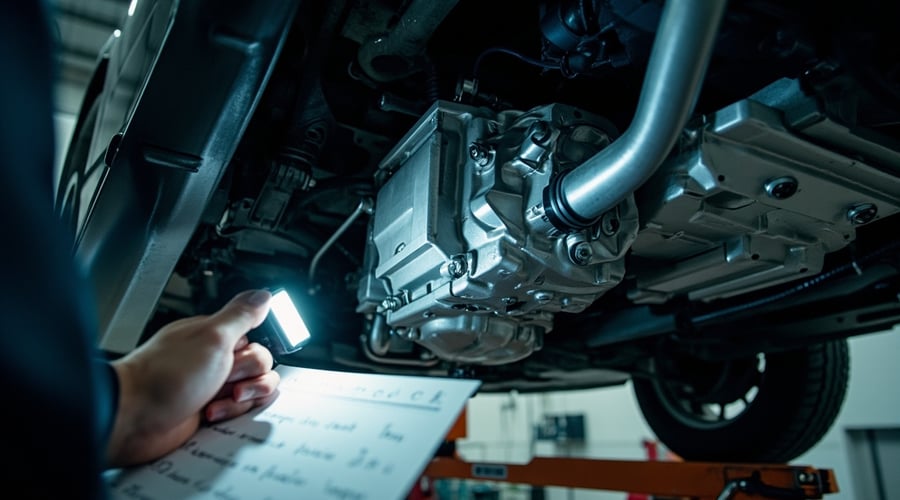
If you're currently looking at a Q5 — or you've already driven one and you're not sure what you felt — send us a message with what it did cold and what it did warm. We can give you an initial read based on experience. At our Concord workshop on Parramatta Rd, every Q5 we've stocked since 2013 goes through the same process: PPSR first, cold and warm drives, up on the hoist to check for any transmission seepage, and a scan for fault codes. If there's a mechanical fault we can't put right, the car doesn't go on the floor — because we carry a 3-month warranty on everything we sell, and a problem we missed becomes our problem too.