Buying a Used BMW X3 in Sydney: How Bad Is the Oil Leak Problem, Really?
The N20 leaks. The B48 is better. Here's what that actually means for your wallet — and what to check before you buy.
If you've been shopping for a used X3 in Sydney lately, you've almost certainly come across posts like this: someone insisting the N20 engine always leaks, someone else saying the B48 sorted everything out, and a third voice somewhere in the middle going "mate, it's a German car — a bit of oil is normal." Three different takes floating around the Chinese-Australian car community at once, and after reading all of them you're left with nothing but a vague, unsettling sense that something on this car leaks somewhere.
The X3 is everywhere in Sydney's used car market. Between the F25 (2011–2017) and the G01 (2017–2024), you'll spot one every few minutes along Parramatta Rd. High stock means high chatter, and high chatter means things get exaggerated fast.
So this article isn't here to scare you off the car, and it's not here to defend it either. The goal is to separate these two generations, go through the leak points that actually show up in workshop records, and give you a straight answer on what counts as serious versus what's simply a seal that's reached the end of its service life.
First, Get the Two Generations Straight — They're Not the Same Engine
This is the most common mistake Sydney buyers make when researching X3s. A lot of people read Chinese-market posts that lump F25 and G01 leak risks together, but the two cars run entirely different engines.
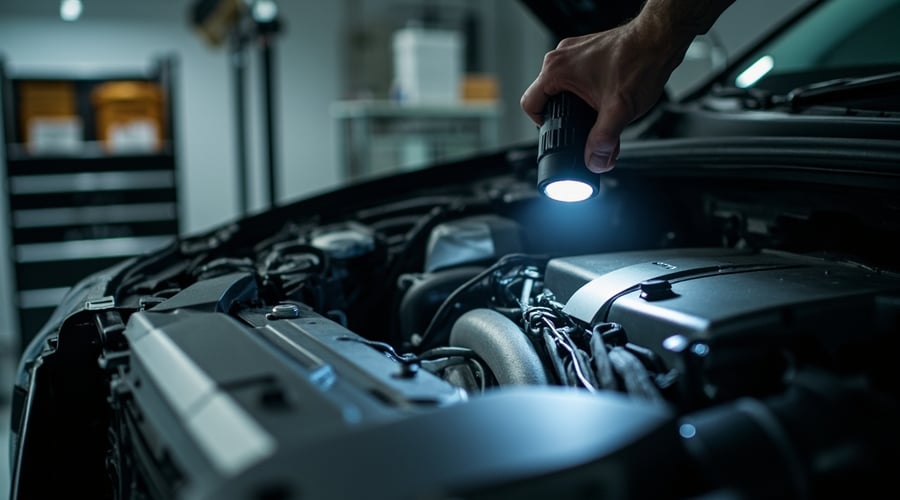
The F25 X3 is built around the N20 four-cylinder turbo, with some early cars running the naturally aspirated N52 six-cylinder (less common). The N20 has a handful of sealing points that were always going to age out — that's not a knock on the engine, it's just how it was designed. When the mileage gets there, they start to seep.
The G01 switched to the B48 four-cylinder turbo, which is now BMW's go-to engine across most of the lineup. The B48 addressed a lot of what the N20 got wrong on sealing — some problem areas were redesigned from the ground up, others got better materials. That doesn't make it leak-proof, but the failure mode is different, and we'll get to that.
Here's the one sentence worth holding onto: On the F25's N20, leaking is a scheduled maintenance event you'll almost certainly deal with. On the G01's B48, it's an occasional individual case you fix if it happens. Those are two completely different situations.
F25 / N20: The Leaks Are Real — but They Follow a Predictable Pattern
By 2025, almost every F25 on Sydney's used market is sitting at 80,000 to 150,000 kilometres. That's exactly the mileage window when the N20's seals start going through in sequence.
Based on what comes through our workshop and what Sydney's independent BMW specialists see regularly, N20 oil leaks cluster around three spots:
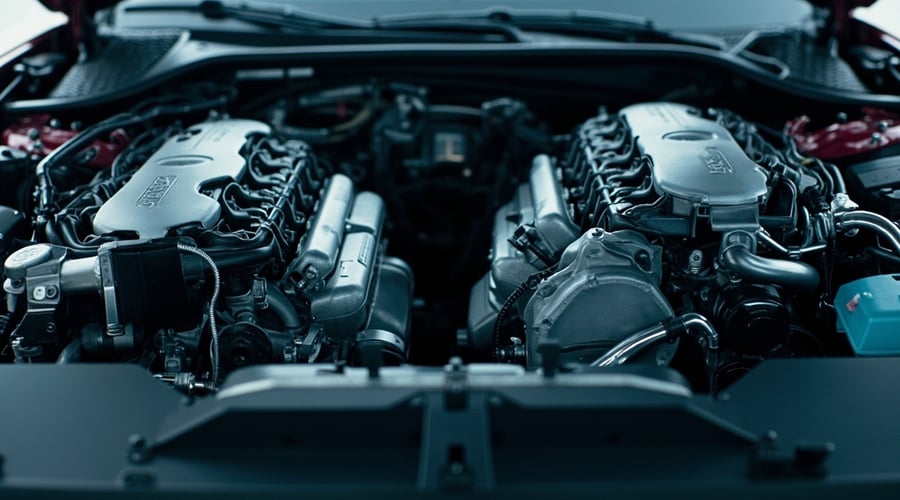
Valve cover gasket. This is the most common one. The N20's valve cover is plastic, and after years of thermal cycling — engine heating up, cooling down, heating up again — the cover warps slightly and the gasket gives out with it. You'll see oil residue building up on the side of the engine. In worse cases, you'll find drops in your parking spot and catch that burnt oil smell when you open the bonnet. This isn't a question of whether it happens — it's a question of when. Past 100,000 km, the probability goes up sharply.
Oil filter housing gasket. This one sits low at the front of the engine, and most people don't catch it early because the oil collects on the underbody shield first — you won't see it unless the car's on a hoist. The good news is it's usually a slow weep, not a pour. The bad news is that if it's left alone long enough, oil will track down into the wiring loom.
Timing chain tensioner / oil seal. Less common than the first two, but when it does leak it can look alarming — oil appearing along what looks like the middle seam of the engine. Pull the right cover and it's typically just a small seal that needs replacing.
So is the N20 oil leak actually serious? Honest answer: the leaks concentrate at a handful of known spots, the fixes are well understood, and a proper repair will last for tens of thousands of kilometres. But if you buy without checking and then put the car on a hoist three months later to find the underside coated in oil, it's going to feel exactly like you bought a broken car. The whole point is to check these spots before you hand over the money.
G01 / B48: Genuinely Better — but Don't Believe "Completely Fine"
Switching to the B48 made a real difference. The valve cover gasket and oil filter housing problems that plagued the N20 show up far less often. The B48 comes from a different generation of engine design — different block architecture, better sealing materials. In our experience, seeing a B48 with major oil leaks under 100,000 km is genuinely uncommon.
That said, the B48 isn't flawless. It can develop light seepage around the valve cover — less dramatic than the N20 version, and it tends to appear later in the car's life. More importantly, the B48's real vulnerability is the cooling system: water pump, coolant reservoir, hose connections. These aren't oil leaks, but they do leak — coolant this time. Sydney summers push cooling systems hard, and when plastic components start ageing under that kind of heat and pressure, they don't always give much warning.
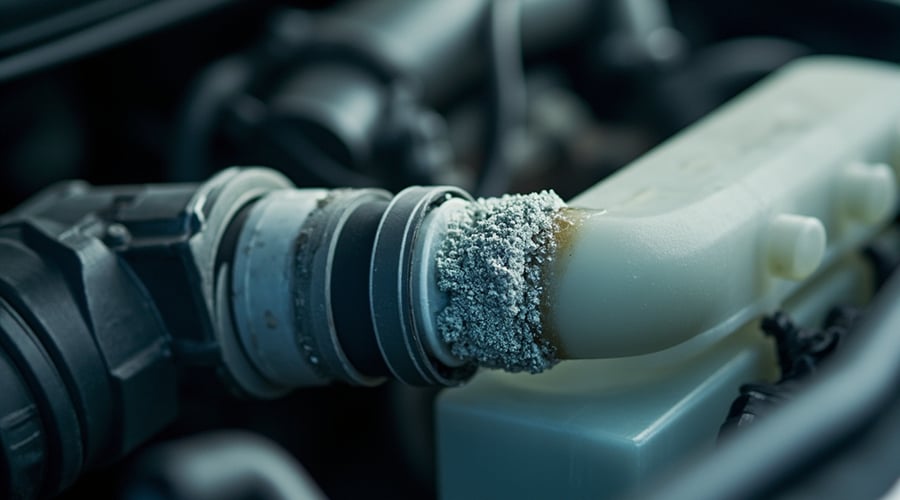
So if you're looking at a G01, don't just scan for oil stains and call it done. Check the coolant level, and look for white crystalline residue around the water pump area — that's dried coolant, and it tells you something has been weeping. On xDrive models, it's also worth checking the front differential seals and gearbox sump gasket. Neither is a crisis if it's seeping lightly, but both belong on your checklist.
What Repairs Actually Cost in Sydney
Don't compare to prices back in China — it's a different market, and it'll only set you up for disappointment. Here's what things actually cost at Sydney's independent BMW specialists.
Replacing the N20 valve cover gasket — parts and labour — typically runs $700 to $1,200 AUD, depending on whether the shop replaces just the gasket or the whole plastic cover assembly. Most experienced technicians will suggest replacing the cover too, since a warped cover will just eat through the new gasket before long. The oil filter housing gasket is cheaper — usually $300 to $500 all in. The timing chain tensioner seal lands in similar territory.
Worst case: all three leak points on a 100,000-km F25 hit at once. Budget $1,500 to $2,000 AUD and you can knock them out in a single visit, with change left over for a full oil service.
That's not cheap. But it is honest. Compared to a same-priced Japanese SUV — a RAV4 or a CR-V — the X3 will cost more to run. If you're buying the X3 because you want what it actually delivers (the chassis, the steering, the way it drives), then this is the real cost of ownership, and it needs to be inside your budget from day one. The most expensive mistake with a German SUV is trying to run it on a Japanese car maintenance budget.
Three Things You Can Check Yourself at the Inspection
Whether you're buying from a dealer or a private seller, these three checks take under five minutes and will filter out most problem cars.
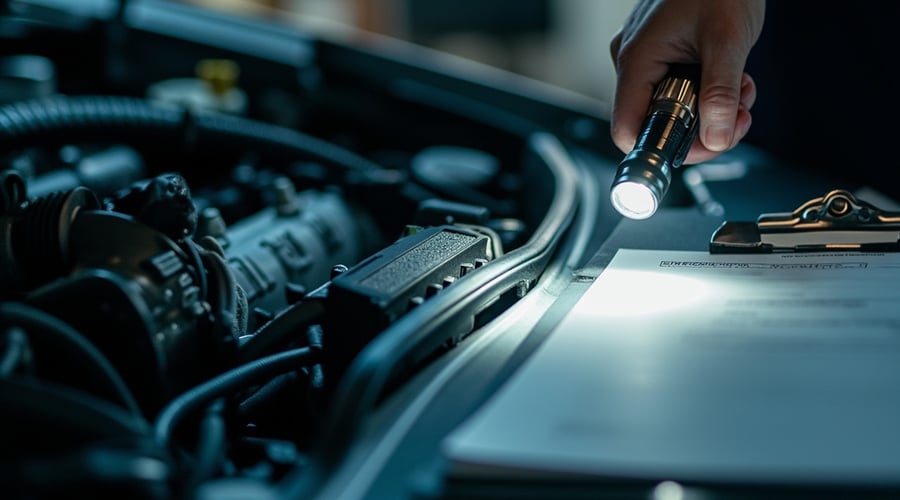
Check 1: Cold engine, before you start it. Don't fire it up straight away. Shine a torch along the side of the engine — look at the valve cover and the seam where it meets the block. A bit of grime is normal. A wet, reflective film of oil is not. Do this cold, because fresh oil spreads more visibly before the engine heat thins it out.
Check 2: Underside and parking spot. Try to get a look at the engine undershield — a fresh oil coating there tells you more than a quick scan of the engine bay ever will. If the seller's willing, let it idle for a few minutes, then move the car and check the ground underneath. One or two drops could be minor; a wet patch is a real conversation to have.
Check 3: Service history — look for previous leak repairs. Finding a record of a valve cover gasket or oil filter housing replacement isn't a red flag. If anything, it means a previous owner dealt with it. What matters is how many kilometres the car has covered since. Sold immediately after the fix? Worth asking why. Driven 20,000–30,000 km since with no recurrence? That's a good sign.
One more Sydney-specific step: run a PPSR check before you commit. Oil leaks are mechanical. PPSR covers finance owing, write-off history, and reported stolen — a completely different set of risks. On a used car, you need both. Don't treat them as interchangeable.
So — Serious or Not?
Back to the original question.
If "oil leak" means "the engine has an unfixable internal fault," the N20's reputation has been significantly overblown. What's leaking is external sealing hardware — gaskets and o-rings — not a cracked block or a disintegrating piston. Spend $1,500–$2,000, fix it properly, and keep driving.
But if "oil leak" means "I can buy this and never think about maintenance," then no, the N20 is not that car. Past 100,000 km, if you're not checking the oil regularly and you're not prepared to spend when the seals go, you'll end up with a car that genuinely earns its reputation.
The G01 is a meaningfully better story on leaks. But its cooling system quirks are a reminder that it's still a German SUV — not a Japanese car you can quietly ignore for three years.
Here's a practical framework: In the $25K–$35K range, an F25 is a reasonable buy — provided you inspect the known leak points before purchase and build roughly $1,500 into your budget for seal work. At $35K and above, go straight to the G01 — oil leaks don't need the microscope treatment, but put the cooling system on your inspection checklist. Don't let one leak scare you off a solid car. And don't let "the B48 is fine" become an excuse to skip the inspection. Neither extreme does you any favours.
When we take in an X3, the first thing that happens is it goes on the hoist — valve cover seams, underside, coolant level, the lot. We do that because every car that leaves here carries a 3-month warranty, and we're not interested in handing over something that starts dripping the week after delivery. Seals that need replacing get replaced. Coolant that needs topping gets topped. That's not a guarantee of zero faults for life — it's a commitment that the car is in reasonable shape when it leaves us.
If you're currently looking at an X3 in Sydney and you're not sure about a particular car's history or condition, drop the year and mileage in the comments — happy to give you a first read on whether anything obvious stands out.