Six Questions to Ask Before You Hand Over a Deposit on a Used Car in Sydney
6 questions to ask before you hand over a deposit on any used car in Sydney — most people only think to ask after it's too late.
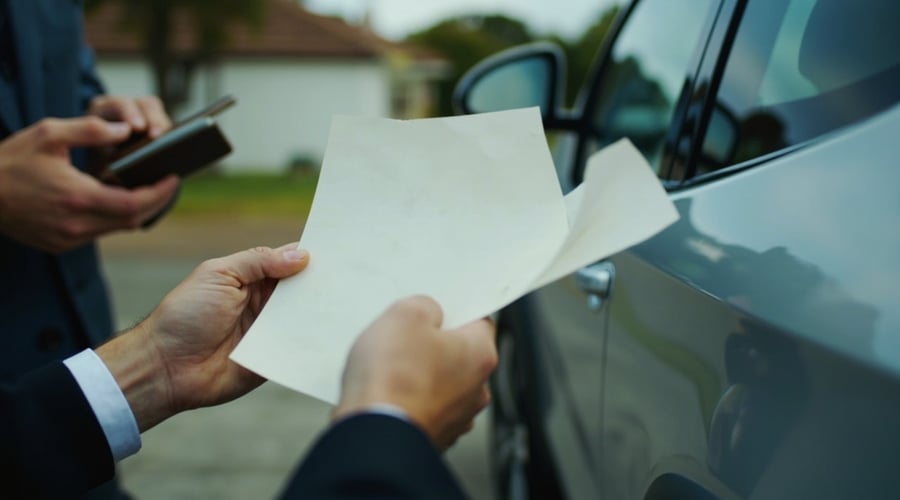
The riskiest moment in buying a used car isn't the test drive. It isn't the negotiation, either. It's when someone slides a contract across the table and you reach for your wallet.
Here's what actually happens: buyers spend ages scrutinising every scratch and dent, then the moment a contract appears — or a private seller opens their payment app — the brain goes blank. All you can think is don't hold them up. The card gets tapped. The deposit leaves your account. You drive home, and somewhere on the M4 it hits you: there were a few things you never actually asked.
By then, you've lost your leverage.
So here are six questions to work through before you commit — whether you're at any dealership along Parramatta Rd or meeting a private seller in a car park. If you haven't got clear answers to all six, don't tap the card.
Who Actually Owns This Car?
It sounds obvious, but it's the question people skip most often. The classic private-seller line is: "It's my brother's car — he's gone back overseas, I'm just selling it for him." That might be perfectly true. But if the ownership chain isn't clean, the one who gets stuck at transfer time is you.
What to do: ask to see the rego papers and check the registered owner's name against the seller's ID. If they don't match, don't jump straight to price — find out why, and establish who actually has authority to sign the transfer documents. With a dealership it's simpler: ask whether they're a licensed motor dealer and cross-check on NSW Fair Trading's public register. A registered dealer operates under the Motor Dealers and Repairers Act and holds the vehicle in the business's name — there's real accountability built in.
The line to watch for: "Pay me now and we'll sort the transfer paperwork later." Walk away.
Does This Car Have Any Accident, Write-Off, or Finance History — and Can You Show Me Proof?
A seller saying "clean car, never had a problem" costs them nothing. What you need isn't a verbal assurance — it's a document you can actually verify.
In Australia, the official record is the PPSR (Personal Property Securities Register). A search costs $2 at ppsr.gov.au and takes about two minutes. You'll need the VIN — it's on the rego papers or etched into the lower-left corner of the windscreen. The search tells you whether the car is encumbered (still under a finance agreement), reported stolen, or recorded as a write-off.
That last point matters more than most people realise. If a private seller hasn't paid out their car loan and you hand them cash, the finance company's claim on the vehicle doesn't disappear. The car can be repossessed even after you've driven it home — and getting your money back in that situation is genuinely difficult.
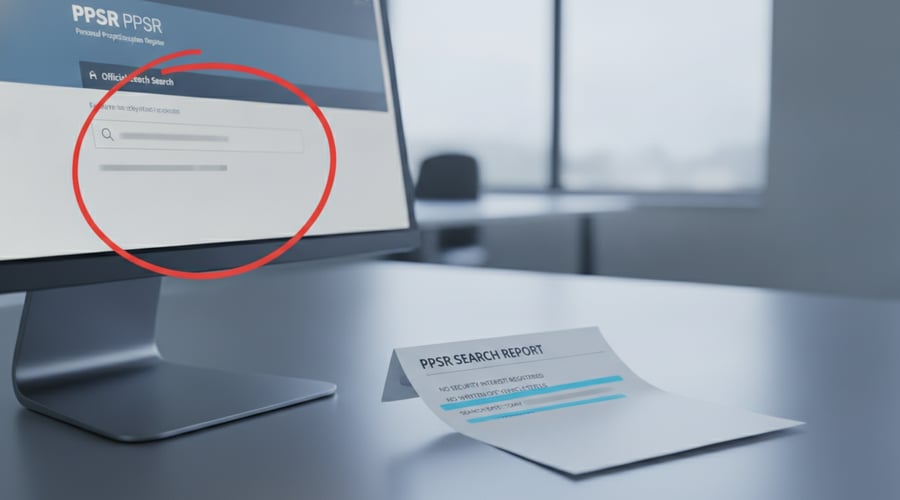
Ask this of everyone — dealership or private seller alike: "Can I see a PPSR report?" A legitimate dealer should be able to pull one up on the spot, or show you the copy from when the car was acquired. If a private seller pushes back with "I know this car inside out, you don't need that" — that's precisely the car you need to check.
What Does the Contract Actually Say — and Can Any Verbal Promises Go in Writing?
This is where most disputes start. The salesperson tells you the engine is spotless. The contract says "sold as is, buyer beware." Once you've signed, the verbal promise is worth nothing — it's not part of the agreement.
Your move: ask for any significant claims to be added to the contract, even just a single line — "engine and transmission free from known defects at time of sale." And get specific about what the warranty actually covers.
Under NSW law, licensed dealers must provide a statutory warranty on vehicles under 10 years old with under 160,000 km on the clock: three months or 5,000 km, whichever comes first. Worth knowing, though: statutory warranty doesn't cover normal wear items — brake pads, tyres, wiper blades. That's not a loophole; it's just how it's written, and it applies across the board.
Private sellers offer lower prices partly because you're taking on more risk yourself. That's not anyone trying to cheat you — it's just the trade-off being honest about what it is.
What Are the Deposit Terms, and Under What Conditions Can I Get It Back?
This is the question I most want you to ask before any money changes hands.
A lot of contracts mark the deposit "non-refundable" without spelling out the circumstances under which the deal might legitimately fall through. But a deposit is meant to lock in both parties — not just the buyer. If your finance application gets knocked back, if a third-party inspection turns up something significant, or if a PPSR search reveals a problem — whether you can recover your deposit depends entirely on what the contract says.
For a dealership, ask three things directly: Is the deposit refundable if my finance isn't approved? Is it refundable if an independent inspection finds a problem? Can both conditions go into the contract?
With a private seller, the sequence matters more than the negotiation itself. Do your PPSR search first. Arrange an independent inspection if you can. Hand over the deposit last — and as late in the process as possible.
If the answer to any of these is "don't worry, it'll be fine" with nothing going in writing, that's the moment to walk.
On the Day of Transfer, How Do the Documents and Payment Actually Change Hands?
The car itself is rarely where things go wrong. The paperwork is. Plenty of people have driven away happy, only to find the rego transfer is stuck because the previous owner never lodged their Notice of Disposal — and technically, the car is still in their name.
In NSW, vehicle transfers run through Service NSW. For a private sale, the cleanest approach is both parties going to a Service NSW branch together on the same day. If that's not possible, make sure the seller has signed both the Notice of Disposal and the transfer form before any money moves, then take those documents to Service NSW yourself to complete the rego transfer — and sort your CTP green slip at the same time.
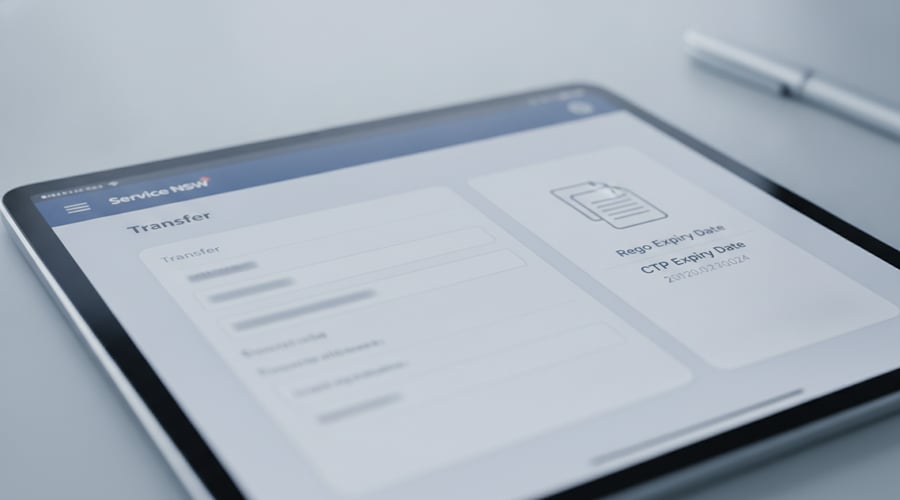
Dealer transactions are more straightforward — a registered dealer has standard paperwork built into the process. Even so, ask explicitly: How many keys are there? Is the service history included? When does the current rego expire? When does the CTP run out?
When Was It Last Serviced — and What's It Likely to Cost Me in the Next Six Months?
The sticker price is just the first payment. What comes after — tyres, brakes, a scheduled service — is where the real money goes. Labour in Sydney isn't cheap. A brake job parts-and-labour can run several hundred dollars; a new set of four tyres typically lands over a thousand. Buy without asking, and the first workshop invoice after pickup can be a genuinely unpleasant surprise.
For a private seller: ask to see the physical service history — the logbook with dated stamps, matching receipts, and odometer readings that line up. No records means you're buying blind on the maintenance front; price accordingly.
For a dealership: ask what the pre-sale inspection covered, whether there's a recent service record, and — if the mileage is getting close to a wear-item interval — what the actual condition of the brakes and tyres is.

Six questions. They all come back to the same idea: before money leaves your account, get the ownership, the car's history, the warranty terms, the deposit conditions, the transfer process, and the likely running costs out of your head and onto paper. None of this is adversarial. It's just what a normal, well-documented transaction looks like.
The line we hear more than we'd like at Max Auto is: "I wish I'd asked before I paid the deposit." Save this article. Run through these six before you look at any car. If you'd like a printable pre-deposit checklist, just send us a message — and if you come in to look at a car in person, you're welcome to work through these questions directly against our PPSR reports and pre-sale inspection records. Everything's there.