Buying a Used Lexus ES 300h in Sydney — How Much Does the「Toyota Platform」Actually Protect You?
The Camry Hybrid connection is real — but it only saves you money on the parts dealers never actually replace.
The pitch you'll hear a lot when shopping for a used Lexus ES 300h in Sydney goes something like this: "It's basically a Camry Hybrid underneath, so parts are cheap and anything can fix it." It's not wrong, exactly. But it's not the full story either, and the gap between those two things is where ownership cost surprises tend to live.
The ES 300h is a genuinely good car for Sydney conditions — refined, reliable, and holding its value better than most European alternatives in the same price range. But if you're buying one in the $30,000–$55,000 bracket and counting on Toyota underpinnings to keep your bills low, it's worth knowing precisely which part of that story is true before you sign anything.
What "Same Platform" Actually Means Here
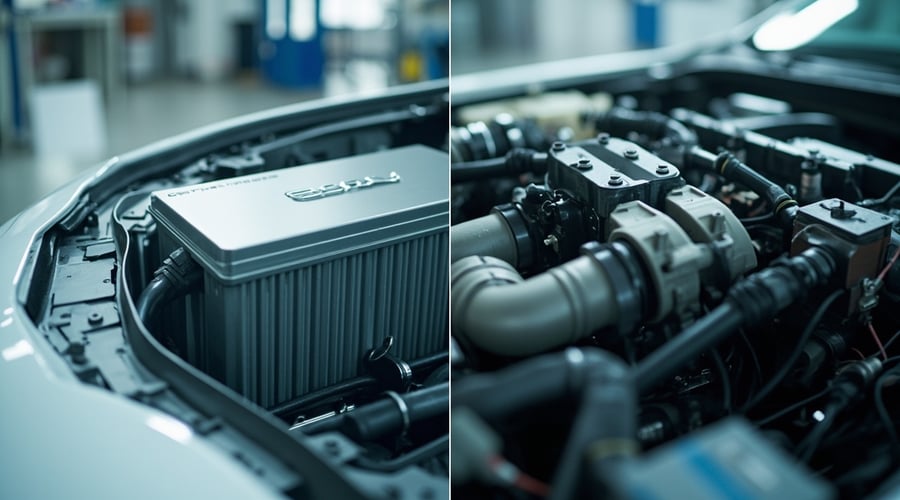
The XV60 Camry Hybrid and the Lexus ES 300h (from the sixth-generation, pre-2019 facelift era) share Toyota's K platform, the 2.5-litre 2AR-FXE petrol engine, and the same THS II hybrid drive unit — the combination of MG1, MG2 and the power split device that Toyota has been refining since the original Prius. If you've maintained a Camry Hybrid in Sydney, you already know this system is almost boringly durable. It's not uncommon to see examples with 200,000+ km on the original hybrid battery showing minimal capacity loss.
For the ES 300h buyer, what this means practically is that the core drivetrain parts — high-voltage battery modules, inverter assembly, the petrol engine's long-block components, transmission fluid and its service schedule — are either identical to or closely related to Camry Hybrid parts. Toyota dealers stock them. Independent shops familiar with Camry Hybrid work can service them. That's real.
It also means that hybrid battery anxiety, which is legitimate when shopping for something like a parallel-import Alphard with a JDM-spec battery that costs more and takes longer to source, is considerably less of a concern here. A replacement hybrid battery for an ES 300h from a reputable Aussie supplier runs somewhere in the $2,500–$4,500 range depending on whether you go OEM, remanufactured or refurbished-cell — not cheap, but not the four-figure horror story it can be for less common platforms.
Where the "Shared Platform" Story Stops
Here is the honest part. Lexus is not Toyota's budget tier. It is Toyota's luxury tier, and every meaningful difference between a Camry and an ES 300h is a difference you pay for when something goes wrong.
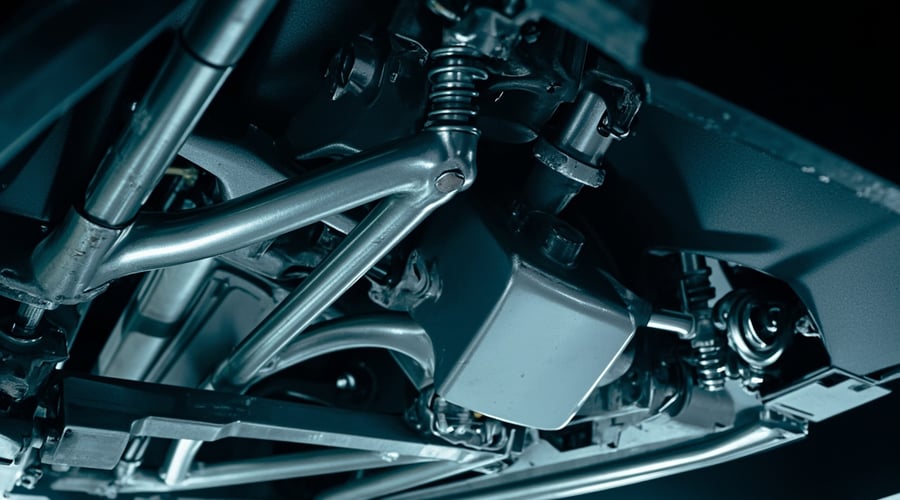
Start with the suspension. The ES 300h has a different front strut setup and a multi-link rear that is tuned for a more compliant, isolated ride than the Camry. The geometry, the bushings, the strut mounts — these are Lexus-spec items. Replacement parts cost noticeably more than their Camry equivalents, and not every suspension shop will have them on the shelf. A set of rear lower control arm bushings is a routine item; budget $400–$700 fitted at a good independent shop, more if you're going to a Lexus dealer.
The air conditioning system differs. The electric AC compressor in some ES 300h variants is not shared with the standard Camry Hybrid. It is shared with other Lexus models, which means it exists in the aftermarket — but it is more expensive than the equivalent Camry part.
Braking is worth flagging too. The ES 300h uses an electronically controlled brake-by-wire system that integrates regenerative braking with conventional hydraulics in a way that is more complex than a standard vehicle. Bleeding the brakes is not a standard bleed procedure — it requires either a Lexus/Toyota diagnostic tool or a compatible aftermarket equivalent to properly cycle the hydraulic modulator. This catches people out at independent shops that haven't done the right research, and it means you cannot just hand it to any mechanic and expect a textbook brake service.
Anything that lives in the cabin falls entirely outside the platform-sharing benefit. The Mark Levinson audio system (where fitted), the multi-information display, the climate control panel, the interior trim pieces — all of these are Lexus-specific. A cracked dashboard centre piece or a failed infotainment screen is a Lexus problem, not a Toyota problem, with Lexus-level sourcing time and cost.
The Real Sydney Running Cost Picture
Let's put some shape around what this looks like over a few years of ownership in Sydney.
Routine servicing — oil, filter, brake fluid, coolant, cabin air filter, engine air filter — is genuinely modest if you use an independent Toyota/Lexus specialist rather than the dealer. There are good independent shops in the inner west and Western Sydney that know these cars well. Budget roughly $250–$400 per service for a standard interval service, $500–$700 for a more comprehensive one that covers transmission fluid and a thorough check. Going to the Lexus dealer will comfortably double those figures.
Tyres are where a lot of ES 300h owners get a quiet shock. The car runs a wider, lower-profile tyre than a Camry — often 215/55R17 or 235/45R18 depending on the trim level. These are not Lexus-specific items; you can get Michelin, Bridgestone or Dunlop fitments at any Sydney tyre shop. But the sizes are not the most common, so prices are slightly higher than what you'd pay for a Corolla. Budget $700–$1,100 for a full set of mid-range tyres fitted.
On the NSW rego front, the ES 300h attracts the same rego and CTP costs as any other private passenger vehicle of its weight class — there is no hybrid exemption or surcharge in NSW. Green slip pricing depends on your postcode, age and insurer, but inner-west Sydney buyers can generally expect to be in the $600–$900 range annually for CTP alone. Comprehensive insurance on a $40,000–$45,000 ES 300h runs somewhere around $1,400–$2,200 depending on the insurer, your suburb and your history.
Resale is probably the most underrated part of the ownership cost calculation. The ES 300h holds its value steadily on the Sydney used market. It is genuinely rare to find a well-maintained example being heavily discounted, because demand is consistent — particularly from buyers in the $30K–$50K range who want a quiet, comfortable car with a reliable hybrid drivetrain. If you buy at the right price and maintain it properly, your depreciation over three to four years is likely to be gentler than a comparable European car in the same segment.
What to Check Before You Buy One
There are a few specific things worth checking on any used ES 300h in Sydney, beyond the standard PPSR pull and service history review.
Run a PPSR check by the plate or VIN through the Australian Financial Security Authority's website (ppsr.gov.au) — this tells you whether the car has been written off, whether it carries finance encumbrance, and whether it's been reported stolen. This takes about ten minutes and costs $2.40. Do it before you drive, not after.
Ask specifically about the brake system service history. Because of the brake-by-wire complexity mentioned above, a car that has been serviced at shops without the proper diagnostic capability may have an improperly bled hydraulic system. This is not always symptomatic in normal driving, but it matters for safety. A good pre-purchase inspection by a Lexus or Toyota specialist will pick this up.
Check the 12-volt auxiliary battery. This is a separate battery from the high-voltage hybrid pack, and it is the most common item to fail on higher-mileage ES 300h examples. A weak auxiliary battery causes all sorts of diagnostic gremlins — unexpected warning lights, start hesitation, infotainment issues — and is often the explanation for a long list of mysterious fault codes on a car that is otherwise mechanically sound. Replacement is inexpensive ($150–$250 fitted); just want to know you're not buying someone else's unresolved fault codes.
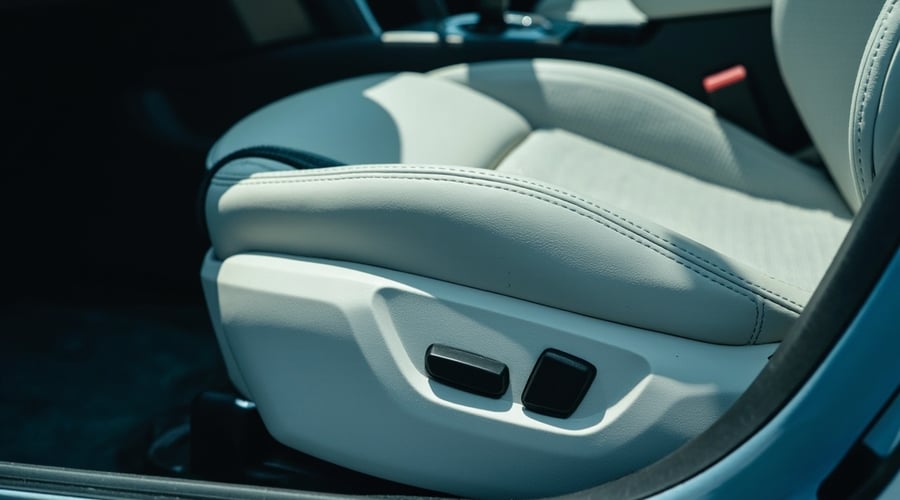
Look at the leather carefully. Lexus uses a specific leather treatment and stitching pattern on the ES 300h seats that is not easy to repair cost-effectively. Surface wear on the driver's bolster and lower cushion is normal on higher-mileage cars and is cosmetic rather than structural, but avoid a car where the leather is cracked or separating — this is hard to reverse without full seat retrim.
The One-Line Verdict
The Toyota platform genuinely protects you on the expensive, hard-to-replace bits — the hybrid drivetrain, the engine internals, the high-voltage battery system. That is real and meaningful, and it is why the ES 300h is a better bet than a parallel-import European hybrid of similar price. But it does not make this a cheap car to maintain. The suspension, braking, climate and interior systems are Lexus-spec, and you pay Lexus prices for those. Go in knowing both halves of that, and you'll be making an informed decision rather than an optimistic one.
For a buyer who wants genuine long-term reliability, manageable running costs and a premium experience without European-level repair bills, the ES 300h at the right buy-in price is a sensible choice for Sydney. For a buyer who needs the absolute minimum cost of ownership, a Camry Hybrid itself is probably the more honest answer.
If you're looking at a specific ES 300h and want another set of eyes on it before you commit, we're happy to do a walkthrough in our workshop in Concord. We've seen enough of these come through — at purchase and at service — to know where the good ones hide and what the borderline ones tend to look like. Send us the listing or bring it in; no obligation, no pressure.