Buying a Used Lexus RX in Sydney? Here's the Maintenance Bill Most People Forget to Run
"Bulletproof" doesn't mean cheap to run. Here's the Lexus RX ownership math Sydney buyers usually skip.
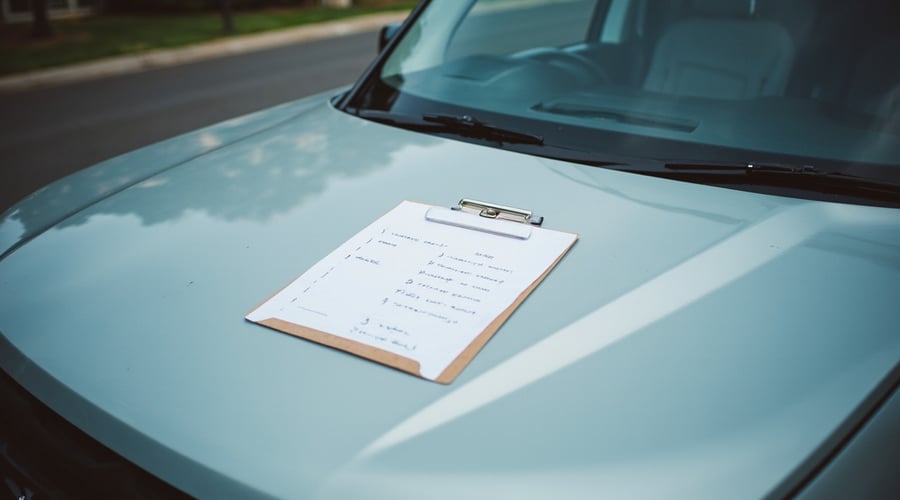
Drive through Burwood or along Parramatta Road on any given weekend and you'll spot them everywhere — RX 350s and RX 450h hybrids from the 2012–2015 era, parked outside family homes, doing the school run, sitting in church car parks. The Lexus RX has quietly become one of the default family SUVs for Sydney's Chinese community, and for obvious reasons: it's spacious, whisper-quiet, looks the part, and doesn't carry the same anxiety-inducing reputation as a same-vintage German luxury SUV.
The problem isn't the car. The problem is the budget spreadsheet. Most buyers factor in the purchase price, rego, and insurance — then stop. A few significant maintenance items never make it onto the list, and those are exactly the ones that sting later. This isn't a case against the RX. It's a case for going in with your eyes open.
"Bulletproof" Is a Compliment, Not a Maintenance Schedule
Let's be straight about what Lexus reliability actually means. Yes, the RX series holds up remarkably well compared to European alternatives from the same era. The mechanicals are solid. But "reliable" means the major components tend to last — it doesn't mean the consumables are cheap when they eventually need attention. That's where people get the wrong idea.
The most common version goes something like: It's basically a rebadged Toyota, so servicing should cost about the same as a Camry. It doesn't. The RX is a heavier, more complex machine with larger brakes, pricier fluid specifications, and — in the 450h — a hybrid drivetrain that needs its own kind of scrutiny. Parts cost more, and so does labour at any shop that actually knows what it's doing with Japanese luxury vehicles.
And here's an honest take on what this car actually is: the RX is not fun to drive. The steering is light, the suspension is soft, the body rolls noticeably through corners. If you're mostly commuting solo and want something that feels taut and responsive, this isn't it. What the RX genuinely delivers is a very comfortable, very quiet living room on wheels — ideal for families, long highway runs, and passengers who appreciate the ride quality. Know which one you need before you buy.
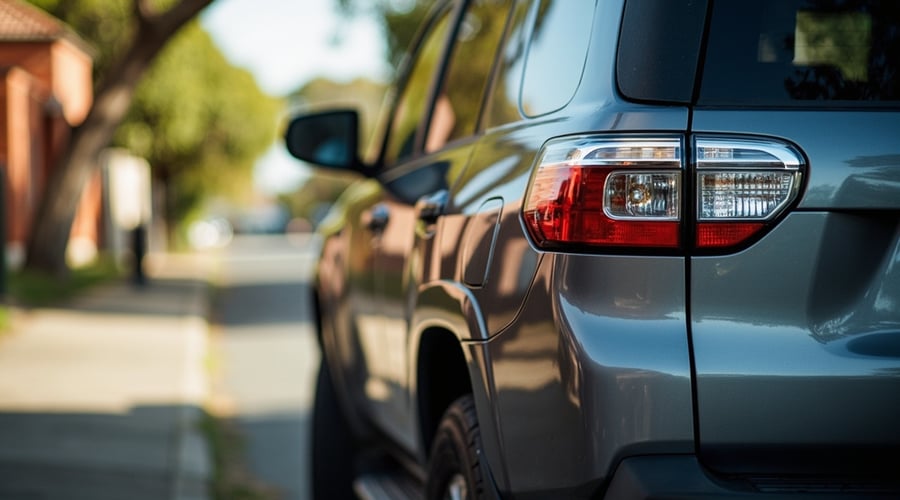
The Bill Most People Miss First: Transmission Fluid
One technical point worth clearing up before we get into numbers: the Lexus RX doesn't use a traditional belt-driven CVT. The RX 350 and RX 300 run a conventional 6-speed or 8-speed automatic; the RX 450h hybrid uses an eCVT built around a planetary gear set — no belt, structurally quite robust. Both are genuinely reliable transmissions. But both need their fluid changed on a real schedule, and a remarkable number of previous owners haven't done it.
The culprit is a piece of folklore that circulates through the used-car market: Japanese transmissions are filled for life. Some manufacturers have encouraged this idea. The result is that plenty of RXs on the Sydney market are sitting on degraded, darkened fluid well past 80,000–100,000 km. You won't necessarily feel anything wrong when you drive it — the shifts might still feel perfectly smooth — but the internal wear is accumulating quietly.
Sydney's stop-start peak-hour traffic, combined with occasional freeway runs, puts more thermal stress on transmission fluid than pure highway driving ever does. Fluid degrades faster under those conditions.
What does fixing it cost? A basic gravity drain-and-fill at a reputable independent shop in Sydney will run you a few hundred dollars. If the job involves dropping the sump, replacing the filter, and cleaning the magnetic drain plug — which is the right approach on a neglected transmission — you're looking at closer to $800–$1,000 once you factor in Lexus-spec ATF WS fluid, which isn't cheap. Be wary of any shop that substitutes a generic multi-vehicle fluid to cut costs; it's fine in the short term and quietly damaging over time.
If the seller can't produce a transmission service record, assume it hasn't been done. Budget for it in year one.
The Second Bill: Brakes Are Bigger Than You Think
The RX is a heavy car — close to two tonnes at the kerb, more with passengers and luggage. The RX 450h recovers some braking energy through regeneration, which does extend brake pad life in theory. In practice, Sydney peak-hour traffic means constant low-speed braking — exactly the kind of use that glazes rotors and wears pads faster than open-road driving.
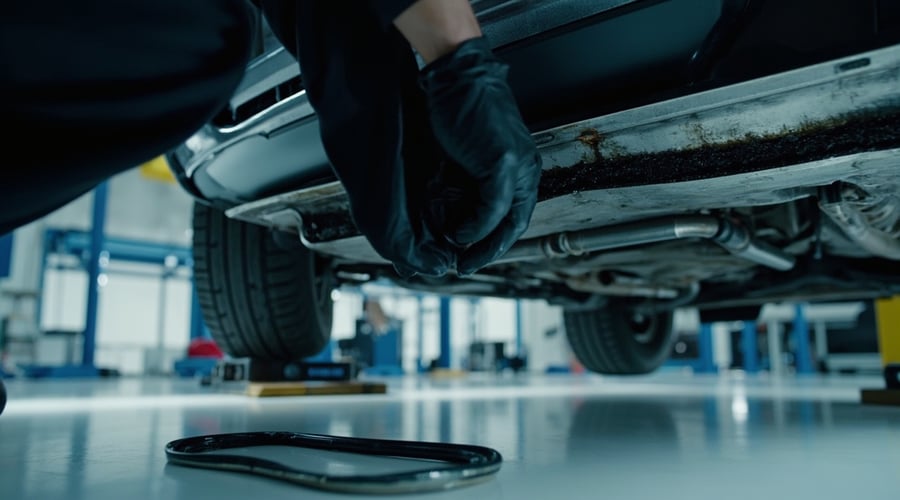
Here's what sellers — private or trade — rarely volunteer: a lot of used RXs go out the door with brake rotors already close to minimum thickness. The rotor edges have developed a visible lip where the pad has stopped sweeping. It's not dangerous the day you pick up the car. It becomes a negotiating point, or a repair bill, within your first few months of ownership.
Lexus RX rotors are large-diameter items with correspondingly large pricing. Front rotors and pads at a dealer typically run over $800 and can push past $1,000. Front and rear together, $1,500 is not unusual. A good independent shop using quality aftermarket parts can trim that by roughly a third — and on brakes, "quality aftermarket" is the operative phrase. Sydney has plenty of hills, wet roads, and school zones. This isn't the place to spec the cheapest brake parts available.
When you're looking at a car in person, crouch down and check the rotor edge for a pronounced step. Better yet, have a PPI inspection include rotor thickness measurements. If the rotors are nearly spent, use that to negotiate the price down — or simply build the replacement cost into your purchase budget so the first service visit doesn't come as a shock.
The Third Bill: The Hybrid Battery Question You Need to Ask
The RX 450h's hybrid credentials are genuinely solid — quiet off the line, better fuel economy in city traffic, and Lexus's hybrid system has a strong overall reliability track record. There are documented cases of these batteries going well past 300,000 km without issue. But "generally reliable" and "this specific battery in this specific car is fine" are two different things.
Battery degradation in these vehicles is driven by age, charge cycle count, and thermal history. A Sydney summer of sitting in direct sun, combined with a previous owner who mostly drove short trips — never fully warming the battery management system — accelerates module-level voltage imbalance. Once enough imbalance develops, you'll see a hybrid system warning on the dash. Dealer pricing for a full battery assembly replacement runs anywhere from $4,000 to $7,000 depending on the year and source. A specialist independent hybrid shop doing a module-level replacement is cheaper — but it's still not a few hundred dollars.
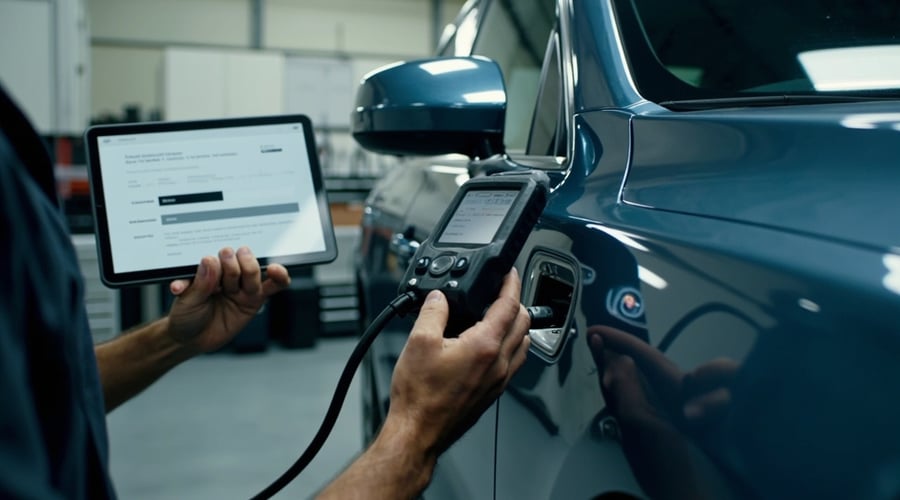
This is why sticker price on a used 450h can be misleading. The only way to properly assess battery condition is with an OBD tool that reads individual cell voltages across all modules. If a seller — private or trade — can't or won't show you that data, that's information in itself.
Honest take: if your budget only stretches to a high-mileage, older-vintage RX 450h and absorbing a potential battery replacement isn't something you're comfortable with, the RX 350 deserves a serious look. You'll burn more fuel, but the drivetrain is simpler and that particular financial exposure doesn't exist.
The Running Costs That Don't Go Away
Beyond those three items, the regular annual costs of running an RX in Sydney add up in ways that catch people off guard.
NSW rego for a 3.5-litre V6 RX 350 is calculated on weight and engine capacity — it comes in noticeably higher than a four-cylinder SUV. CTP and comprehensive insurance in Sydney's inner west will depend heavily on your driving record and postcode; for a driver without a long clean history, $1,500–$2,500 per year for comprehensive cover is a realistic range. Fuel: the RX 350 averages 13–14 L/100km in city conditions. At 15,000 km per year and $1.80–$2.00 per litre — which is where Sydney prices have been sitting — that works out to roughly $3,500–$4,500 in fuel annually. The RX 450h drops that to around 8–9 L/100km, but it typically commands a price premium of several thousand dollars over a comparable-vintage RX 350. It's worth calculating how many years of fuel savings it actually takes to recover that difference.
One more thing on resale: Lexus holds its value well relative to other luxury makes, but that advantage erodes as the vehicle ages. When you eventually sell, a complete service history will matter to Chinese buyers just as much as it matters to you right now. A car without documented maintenance gets discounted — count on it.
Three Things to Do Before You Buy
Get the records. Ask for the full service history, and pay specific attention to whether transmission fluid, brake fluid, coolant, and spark plugs appear on it. If those items aren't documented, assume they haven't been done. Don't take anyone's word that it was "all done recently."
Get an inspection that goes further than a test drive. A proper PPI on an RX should include an OBD readout of hybrid battery module voltages (on a 450h), rotor and pad thickness measurements, a check for transmission sump seepage, and a cold-start listen for engine noise. Spending $150–$200 on a thorough inspection is one of the more reliable ways to avoid a $3,000 surprise in month three.
Budget for a full fluid service upfront. Whichever RX you end up with, set aside $1,000–$1,500 to go through all the fluids — transmission, differentials, brake fluid, coolant — before or shortly after purchase. Do that, and you'll actually get to experience what "Lexus reliability" means in practice, rather than inheriting whatever the previous owner deferred.
When an RX comes through our workshop, we run a few checks beyond the standard PPSR and body inspection: hybrid battery module voltages, rotor and pad measurements, and a look at the transmission sump and fluid condition. Not because these cars are problematic — it's precisely because we've seen enough of them arrive with those specific items quietly overdue. If you want a heads-up when the next RX goes up on our lot, or you've found one elsewhere and want a second pair of eyes on it, send us a message. Whether you buy from us or not, get the numbers straight first.
Run all those costs through your calculator and the RX still makes a compelling case as a Sydney family car. The difference is between buying one on the assumption that reliability means low cost, and buying one knowing exactly what you're signing up for. The second experience is considerably better.