Buying a used Toyota Alphard in Sydney: which parts are globally shared, and which are Japan-only — the real parts map
Before you sign for a parallel-import Alphard, know exactly which parts Toyota Australia will touch — and which they won't.
Most of the anxiety around buying a parallel-import Alphard in Sydney comes down to one question: when something breaks, can I actually fix it? The honest answer is: it depends entirely on which part breaks. Some components on a JDM Alphard are as easy to source in Sydney as those on any locally-delivered Toyota. Others will have you waiting weeks for an air freight from Japan, paying a premium you hadn't budgeted for. Knowing which is which — before you hand over $80,000 to $130,000 — is the whole game.
This is a practical parts map for the fourth-generation Alphard (H40 series, 2023–present) and the third-generation (H30 series, 2015–2023), which make up the bulk of the parallel-import stock circulating on Parramatta Road right now.
The globally-shared tier: where you have nothing to worry about
A large portion of what can go wrong on an Alphard is covered by parts that Toyota manufactures to a global standard. These are interchangeable across markets, stocked by Toyota Australia's national parts network, and available through independent importers like BM Auto Parts or Midway Auto Parts in the Sydney metro area. Lead times are usually next-day to three days.
Engine consumables and wear items. The 2.5-litre hybrid system (2AR-FXE) in the H30 and the 2.5-litre hybrid in the H40 use the same oil filters, spark plugs, coolant, drive belts and air filters as several Australian-market Toyota models. Your local independent mechanic can order these through the standard Toyota trade account. There is nothing JDM-exclusive about routine servicing on either powertrain.
Brake components. Rotors, pads and callipers on both generations are shared with other Toyota and Lexus platforms sold in Australia. The front rotor diameter on the H30 is the same spec as the Lexus LX450d. This is one of the first questions we ask when a vehicle comes in — and on the Alphard it works out in your favour.
Suspension consumables. Control arm bushes, ball joints, sway bar links and shock absorber inserts are all available through aftermarket suppliers (Monroe, Moog, Bilstein all list the H30). This is not a car with orphaned suspension geometry. The H40 is newer and aftermarket coverage is still building, but OEM Toyota parts through a dealer still cover it.
Tyres. Both generations run standard sizing (typically 235/50R18 or 235/60R18 depending on grade). Any tyre shop in Sydney handles these without a second thought.
Transmission fluid and transfer components. The CVT and six-speed automatic units used in the Alphard share fluid specifications and many internal components with other Toyota platforms. Not a concern for most buyers.
The JDM-exclusive tier: where your risk actually sits
This is the part of the conversation most sellers skip. There is a set of components on a JDM Alphard that are either Toyota Japan-specific, or tied to features that were never offered in the Australian market. When these fail, you are sourcing from Japan — full stop.
The hybrid battery pack. This is the single biggest risk item on a third-generation H30 hybrid, and it needs to be addressed plainly. The high-voltage battery assembly is a JDM-specific unit. Toyota Australia will not supply it through their parts network, because they never sold the vehicle here. Your options are: a parallel-import used battery from Japan (grey market, no warranty, quality depends entirely on supplier); a new OEM battery sourced through a Japan-side Toyota dealer and air-freighted here (cost: somewhere in the range of $6,000–$10,000 landed, depending on exchange rate and freight at the time); or, increasingly, third-party remanufactured packs from specialist hybrid battery rebuilders, a few of which now operate in Sydney and Melbourne. The H30 hybrid battery is not a certain failure — many high-mileage examples run them without issue well past 150,000 km — but if it does fail, you are not calling a Toyota dealer in Parramatta and picking it up the next day. Factor that into your decision.
The H40 hybrid battery situation is less proven because vehicles are newer and mileages are lower in the Australian parallel-import pool. The same structural point applies: Toyota Australia will not stock it.
Power sliding door actuators and control modules. The Alphard's powered doors are one of its signature features and one of its more common workshop visits on higher-mileage examples. The door control units, the motors, and especially the pinch-sensor modules are JDM-specific. Aftermarket replacements exist but fitment quality varies. OEM replacements require Japan sourcing, with lead times of two to four weeks in our experience. Labour cost for a full door actuator replacement can run $500–$1,200 depending on what has failed.
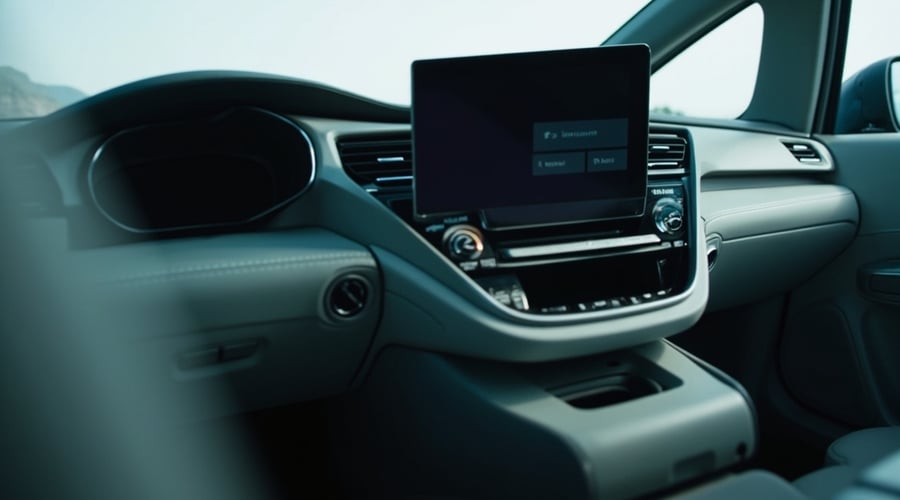
Entertainment and navigation systems. The factory head unit — especially the large-format screen in Executive Lounge grades — is Japan-specific, runs Japanese firmware, and has no Australian software counterpart. If the screen unit fails, you are either sourcing a used JDM replacement from Japan or retrofitting an aftermarket Android unit (which many owners do anyway). Do not expect Toyota Australia to touch the infotainment system on a parallel-import vehicle.
Air suspension (where fitted). Some H30 Executive Lounge grades came with an adaptive air suspension option. These ride-height control modules and the air compressor assembly are JDM-sourced items. They are not impossible to get, but they are not sitting in Toyota Australia's warehouse. If you are buying an Executive Lounge, ask specifically whether the vehicle has air suspension and check that it is functioning correctly before you sign anything.
Climate control panels and switch assemblies. Physical switches, particularly the dual rear-zone climate panels in the second row, are Japanese-market-specific in part numbers. Individual switches fail more often than people expect — the heated seat buttons in particular. A single switch can take two to three weeks to arrive from Japan and cost $100–$300 for what looks like a small piece of plastic.
What Toyota Australia will and won't do
Toyota Australia will service a parallel-import Alphard — there is no legal prohibition on them working on it. However, they are under no obligation to supply parts they have never stocked, and they will not honour any remaining Japanese manufacturer warranty, because that warranty was issued under a different market agreement. If the vehicle has any remaining factory warranty from Toyota Japan, that warranty is void in Australia from the moment it crosses the border. There is no cross-market recognition.
What Toyota Australia will do: provide labour and supply globally-shared components (as above). What they will not do: source JDM-specific assemblies through their system, or take responsibility for the hybrid battery.
This is not a criticism of Toyota Australia — it is simply the structure of how parallel imports work in NSW. It is the same situation with a JDM Lexus LM or a Honda Odyssey JP-spec brought in through the same channel. The vehicle was not designed to be sold here; the parts support reflects that.
The pre-purchase check you should be doing
If you are seriously considering a parallel-import Alphard, here is the minimum verification list before you commit:
Pull the PPSR. Go to ppsr.gov.au, search by the vehicle's VIN. You are looking for written-off history, finance encumbrances, and stolen vehicle flags. Cost: $2. Do not skip this step — it takes three minutes.
Request a hybrid battery health check. Any workshop with Toyota-compatible diagnostic equipment (Techstream or equivalent) can pull the hybrid battery state-of-health data. You want to see individual cell balance readings, not just a top-level "battery OK" light. A healthy H30 hybrid battery should show cell balance within a few percentage points across the pack. If the seller can't provide this, pay for an independent pre-purchase inspection (PPI) — in Sydney these typically run $200–$350 at a reputable independent workshop.
Test every powered feature. Both sliding doors through full open and close cycles, the power tailgate, the second-row seat recline and ottoman function, the sunroof, all climate zones. Do this in the car park, not inside a showroom. Powered features that work in a warm showroom occasionally don't behave the same way in the cold.
Check the service history stamp pattern. JDM vehicles serviced in Japan will have Toyota Japan dealer stamps in a logbook. A vehicle with missing service intervals on a five-year-old hybrid is a different risk profile from one with continuous stamps from a Japanese dealership network. The stamps don't guarantee anything, but their absence is a flag worth noting.
Ask the dealer directly: "Where would you source a replacement hybrid battery if this one failed?" A dealer who knows their stock will give you a straight answer about supplier relationships and lead time. A vague answer tells you something too.
The honest trade-off
An Alphard in good condition, sourced carefully, is a genuinely impressive vehicle — the second-row space, refinement and build quality are hard to match at any comparable Australian-market price point. The parallel-import pathway is how most Sydney buyers access it, and when it works, it works well.
The trade-off is real, though: you are taking on parts-supply risk that does not exist with an Australian-delivered car. The hybrid battery is the one item that should be a go/no-go check, not an afterthought. Everything else on the JDM-specific list is manageable — inconvenient and sometimes expensive, but not crisis-level. The battery is different. At replacement cost, it can change the economics of the purchase entirely.
Build that into your negotiating position. If you are buying an H30 hybrid with high mileage and no documented battery health check, you are assuming that risk. Price it accordingly.

How we handle this when a car comes in
When an Alphard arrives at our workshop before going on the lot, the hybrid battery health check is part of the standard intake process — not an optional extra. We pull the cell-level data, not just the dashboard indicator. If the battery shows uneven cell balance or degraded capacity, that goes into the vehicle's condition assessment and is reflected in the price. We also check every powered feature on the full cycle, because a door actuator that sticks at 50 percent open is exactly the kind of thing that is easier to know about before the sale than after it.
Every car we sell comes with a 3-month warranty, and we want to be clear about what that covers in the context of a parallel-import vehicle — it is worth asking us to walk through the specific terms when you come in, because the parts-sourcing reality described in this article is relevant to how any warranty claim would be fulfilled.
If you are looking at an Alphard and want a second opinion on a specific vehicle — whether you sourced it privately or through a dealer — come in or send us the details. We will tell you what we see, not what you want to hear.