Buying used in Sydney: 5 odometer red flags you can spot yourself (and how to check it free in NSW)
When you're looking at a used car in Sydney, the hardest thing to judge isn't the paint or the colour — it's the number of k's on the dash. It's just a plastic screen, and winding it back is easier than changing a profile pic. "50,000 k's" sounds reassuring, but you can't trust the car on that number alone.
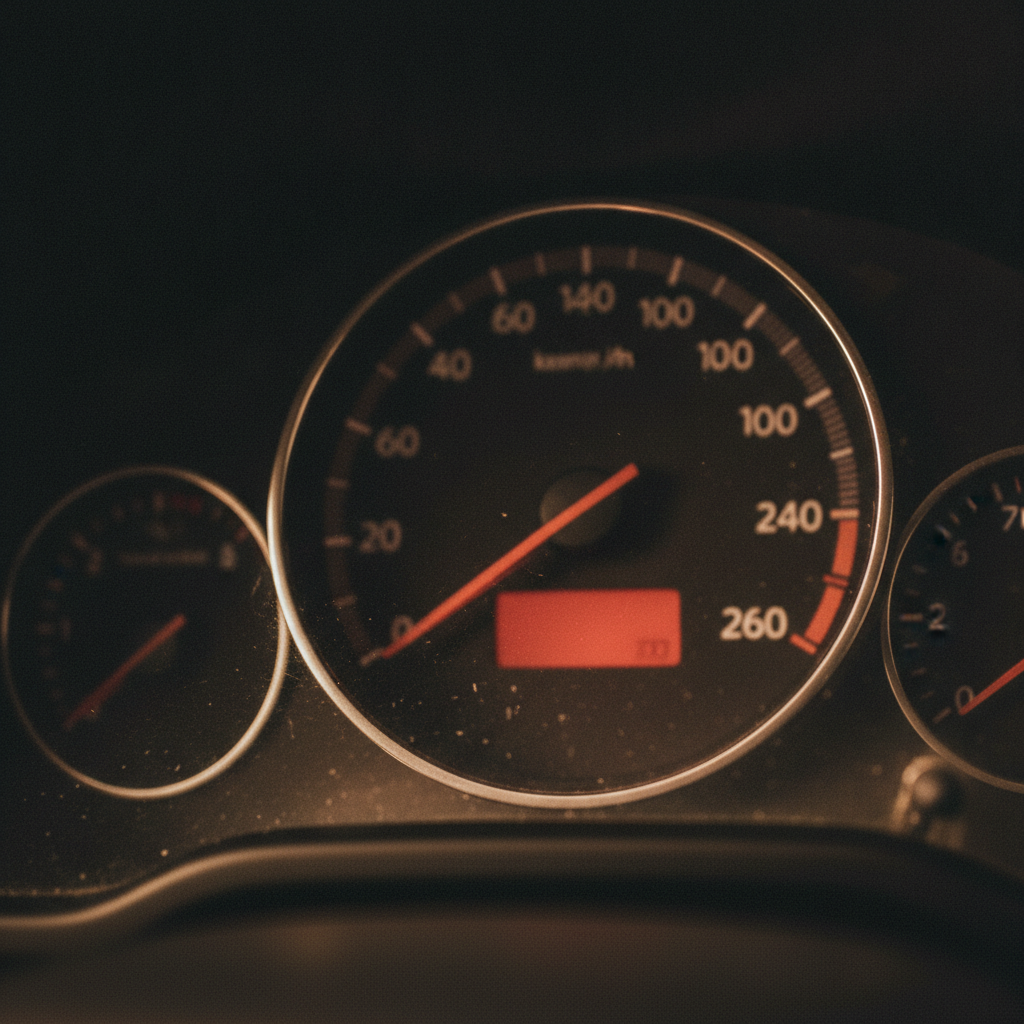
The good news: a wound-back car always leaves marks that don't add up. Here are five red flags you can spot with your own eyes — no hoist, no mechanic — and then one $2 government check the dashboard can't touch.
Red flag 1: Does the logbook stamp sequence run clean?

Illustration · Red flag 1: Does the logbook stamp sequence run clean?
Every time a car's serviced at a dealer or workshop, they stamp the logbook and write the k's on the day. Flip through it in date order: a stamp number that jumps, a big blank stretch, or a later service showing fewer k's than an earlier one — any one of those, ask about it to their face. Why it matters: you can change a number on the dash, but nobody forges a dozen stamps from different workshops in different handwriting. The more the logbook joins up, the more you can trust it.
Red flag 2: Do the tyres match the k's?
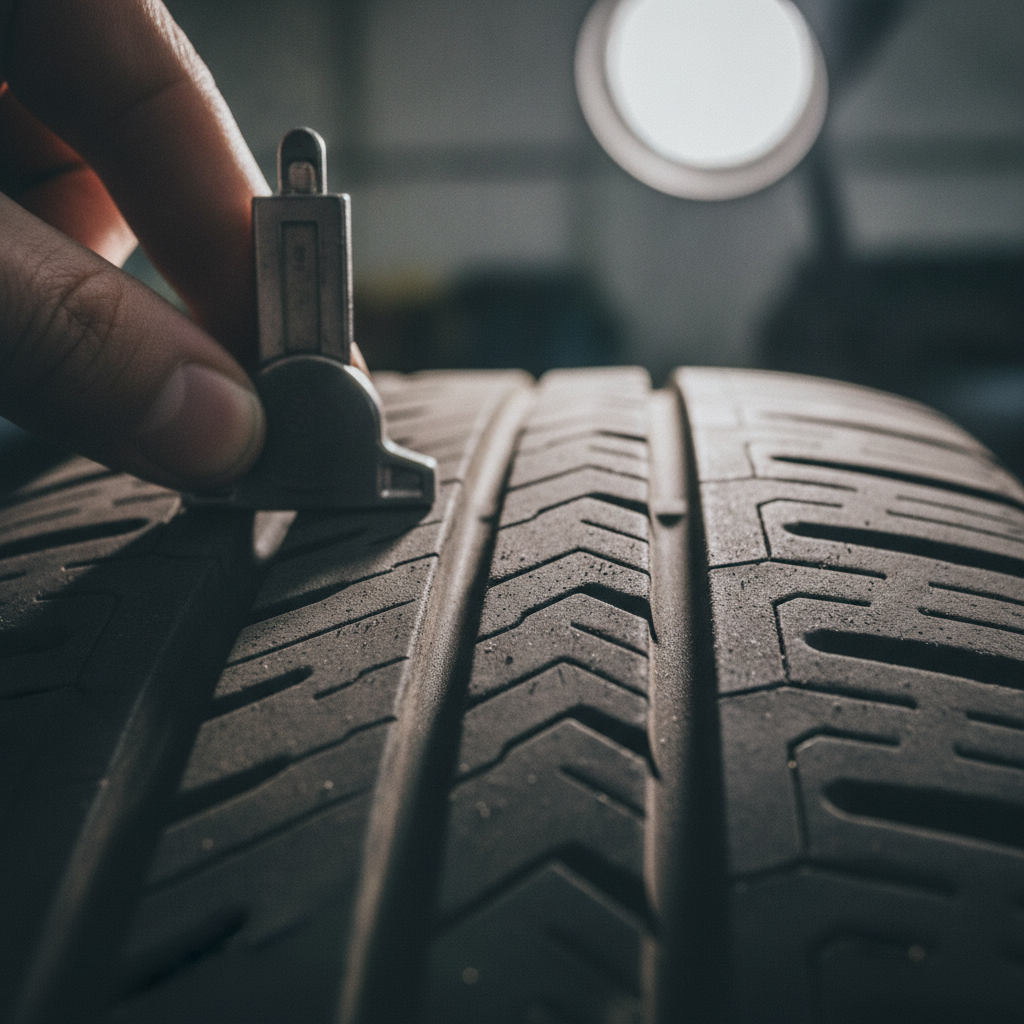
Illustration · Red flag 2: Do the tyres match the k's?
A set of factory tyres is good for roughly 50,000–70,000 km. Showing 40,000 k's but all four tyres worn down to the indicators — or the other way, 80,000 k's on tyres that look near new — either is worth a question. How to check yourself: crouch down and eyeball the tread depth, then read the four-digit date code on the sidewall (the week and year it was made). New tyres aren't the problem; the problem is an owner who can't tell you where and when they were done.
Red flag 3: Is there a lip on the edge of the brake discs?
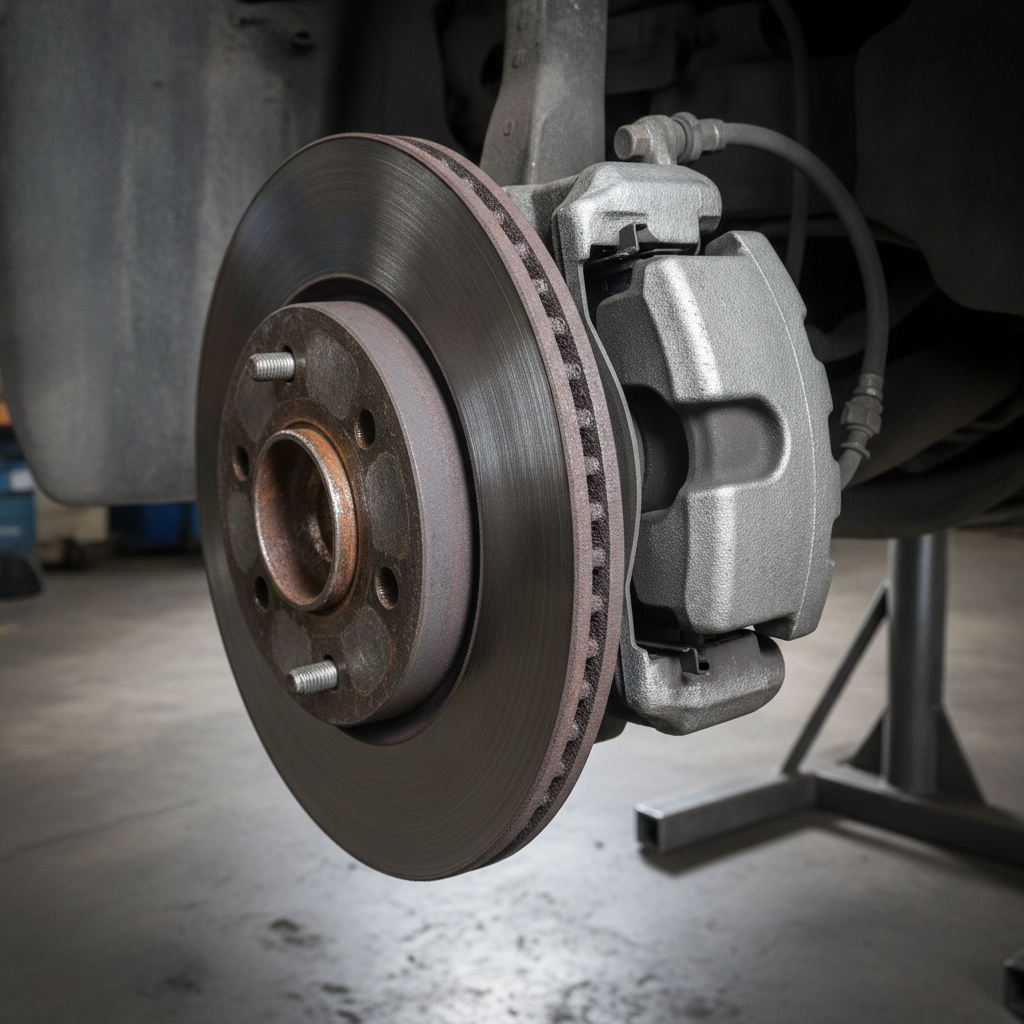
Illustration · Red flag 3: Is there a lip on the edge of the brake discs?
As the pads wear the face of the disc, the untouched outer edge is left standing as a raised lip. Factory discs usually don't build an obvious lip until past 80,000 km. If it's showing 30,000 k's but you can already catch a fingernail on a clear lip, the real reading is almost certainly higher.
Red flag 4: Wear on the wheel and gear selector
That shiny, frayed patch on a steering wheel is sweat and time — you can't fake it into existence. 40,000 k's on the clock but the wheel's polished shiny at ten and two, and the auto selector's rubbed pale? Real mileage is probably double. Interior wear is the most honest clue on the car: you can wind the number back, you can't un-wear the trim.
Red flag 5: The span since the last sale
This one you read together with the PPSR below. The report shows when the car last changed hands. Say it sold a year ago and the reading has barely moved since — that's a year of almost no driving. Where was it parked? Or was the number squeezed? A typical Sydney commuter does 12,000–20,000 km a year, so a span that plainly doesn't add up is a question mark.
Straight up: not one of these five is proof on its own. A rideshare car can chew through a set of tyres in a year; a garage-kept old thing can still have plenty of tread on its factory tyres past 70,000 k's — and a determined seller can swap a steering wheel or skim a disc. So don't hang a verdict on a single flag: read several together, then check them against the paper trail. The paper trail is the one part that's genuinely hard to fake.
Check it yourself in NSW — two steps, free to $2

Illustration · Check it yourself in NSW — two steps, free to $2
Step 1 — the free Service NSW rego check. Punch the plate into the Service NSW site and you'll see whether the car's NSW registration is current and when it's due. Free, but it won't show write-offs or a wound-back odo — it's the warm-up.
Step 2 — PPSR, $2, the one that counts. Go to ppsr.gov.au, enter the VIN (bottom of the windscreen, driver's side), pay two dollars and you get a report. Read three things: whether there's finance still owing on it (an encumbrance), whether it's been recorded as written off (the national register goes back to 2004), and whether it's reported stolen. You can change the dash; you can't change the PPSR.
The extra step we do when we buy a car in
Past those two steps, we pull the full record from NSW Transport against the VIN, then lay it all side by side — every service stamp in the logbook, the ownership dates on the PPSR, and the actual wear on the car — and check it line by line. Numbers add up, we buy it; they don't, we hand it back. Since 2013, every car has gone through exactly this in our M&F workshop before it's listed. No exceptions.
Going to look at a car next week — even if it's not one of ours? Run these five red flags over it yourself first. Not sure about the handwriting on a stamp, or whether the wear matches the k's? Snap a photo and send it through, or ask in the comments — we'll take a look.