When's the Best Time to Buy a Used Car in Sydney?
Buy too early and you overpay; too late and the good ones are gone. Time it right and you save more than money.

In Sydney, when you buy a used car can matter as much as which one you pick.
The same Corolla can swing two or three grand depending on the month you walk in, and the same dealer who won't budge in February will happily talk you down in June. Prices, choice and how hard you'll have to haggle all move on a calendar — and most of it is predictable once you know what drives it.
Here's when the Sydney used-car market tips in your favour, when it works against you, and why none of it matters if you skip the one check that actually protects your money.
The cheapest stretches to buy

Illustration · the year's buy/sell windows
End of financial year (June). EOFY is the biggest sale period on the Australian calendar. Dealers are chasing targets to close out the books on 30 June, so the back half of June is when you'll see the sharpest drive-away deals and the most willingness to negotiate. If you can be ready to buy by late June, you're shopping at the best-motivated time of the year.
November to December — the plate-year drop. A car's age in the used market is counted by its build year, and on 1 January every car effectively "ages" a year overnight. Dealers know it, so from November they discount current-year stock hard to move it before the calendar rolls over. Pair that with end-of-year clearance and the run-up to Christmas, and late spring into December is the second genuine bargain window.
Model runout. When a new generation or facelift lands, the superseded model goes into runout and gets cleared at a discount — and used examples of the old shape soften in sympathy. If you're not fussed about having the latest body, buying the model that's just been replaced is one of the easiest ways to get more car for the money.
Summer (December–January). Over the holidays a lot of private sellers list at once — people upgrading, moving or leaving the city. More cars on the market means softer private prices and more to choose from. The trade-off is that condition is all over the place this time of year, so the good ones get snapped up fast and there's plenty of junk mixed in. Cheap isn't the same as a bargain.
When to wait

Illustration · what each budget gets you
January–February. The new year brings tax-refund money and a wave of "new year, new car" buyers, so demand firms up and dealers have no reason to discount. It's the closest thing to a seller's market the year offers — a poor time to be in a hurry.
Right after a fuel-price spike. When petrol jumps, thirsty cars suddenly get cheap (an opportunity, if running costs don't scare you) while small, economical hatches attract a premium. If you specifically want the fuel-sipper, you'll pay the most for it in exactly the weeks everyone else wants one too.
Timing gets you a discount — a proper check gets you peace of mind

Illustration · the paperwork to get ready
Here's the honest part: getting the month right might save you a grand or two. Buying a car with a hidden problem can cost you five to fix. The real money is in condition and history, not the calendar — so whenever you buy, do these first:
- Run a PPSR check. Two dollars at ppsr.gov.au: enter the plate and see whether the car has finance owing against it or has ever been written off. Five minutes, and it's the cheapest protection there is.
- Verify the rego on Service NSW. Confirm the registration is current and the plate matches the vehicle details.
- Insist on a valid Pink Slip. In NSW a used car needs a current safety inspection (eSafety/“pink slip”) to change hands. No certificate means the seller sorts it or you arrange the check yourself.
- Read the service book. Gaps in the stamp sequence, or handwriting that looks filled in after the fact, are worth a second look.
- Check the tyres against the odometer. A car that's supposedly done 50,000 km on tyres worn near the markers doesn't add up — that's a red flag.
- Get an independent pre-purchase inspection. Spend $150–$200 to have a mechanic with no tie to the seller put the car on a hoist. On an older car, it's not the place to save.
You can do the first five yourself, no mechanical know-how needed.
The bottom line
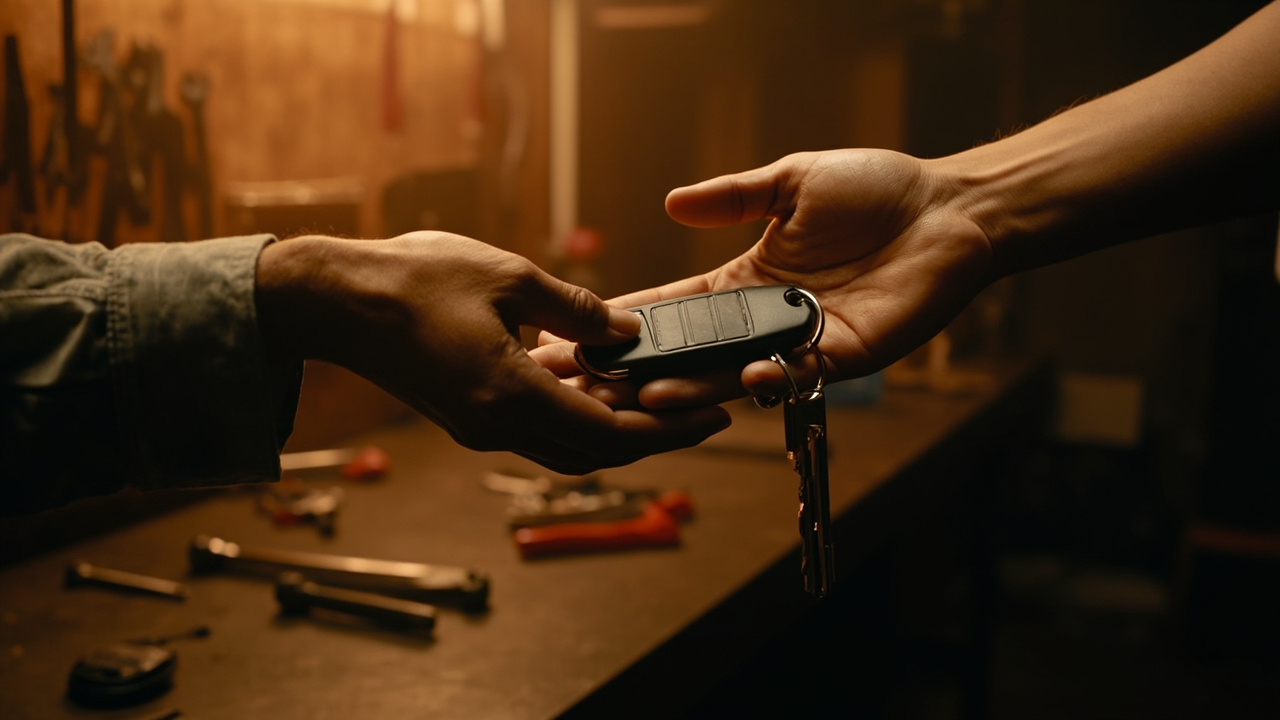
Illustration · picking up the keys
Time it well and you'll pay less, choose from more, and haggle from a stronger position. But the calendar only decides how much you save — the car's condition decides whether you've actually bought well.
We've been doing this in Sydney since 2013. Every car we list goes through our own M&F workshop first, and a 3-month warranty travels with it. Tell us your budget and what you need the car for, and we'll tell you what's worth waiting for — and what's worth grabbing now. Just send us a message.