Car History Check in Australia: PPSR vs the Free Rego Check vs Paid Reports — Which One Actually Protects a Used-Car Buyer?
Three checks, three price points — here is the honest order to run them before you hand over any money.

Most pages that explain car history checks in Australia are written by the companies selling the most expensive one. That is worth keeping in mind before you open your wallet.
Here is the short version before we go deeper: run the free state rego check first, then the $2 PPSR certificate, and only buy a paid aggregator report if the PPSR comes back clean and you want the extra odometer and listing history that the PPSR does not carry. Done in that order, the total cost is either $2 or roughly $22–$42 — never $40 for something you did not need.

The Free Rego Check: What It Actually Tells You
Every Australian state and territory runs a free registration status check through its transport authority. In NSW, that is Service NSW — you enter the plate number and get back whether the vehicle is currently registered, when rego expires, and the make and body type on file. Some states surface the odometer reading recorded at the last pink slip inspection, which is genuinely useful. NSW also flags whether the vehicle has been written off and recorded on the National Written-Off Vehicle Register (WOVR) — that flag alone can save you from a serious mistake without spending a cent.
What the free rego check does not tell you: whether there is finance still owing on the vehicle, whether it is reported stolen, the full write-off history across all states, the odometer at every previous service or sale, or the number of past owners. It is a registration status check, not a vehicle history check. Buyers sometimes treat it as a clean bill of health and move on — that is the gap the other two checks are designed to fill.
To run it in NSW: go to Service NSW, select "Check registration", enter the plate. It takes about thirty seconds. Do this before anything else, because if the rego has already lapsed or the WOVR flag appears, you have just saved yourself $2 and an afternoon.
The $2 PPSR: The One Check You Should Never Skip
The Personal Property Securities Register is a federal government database, and a PPSR certificate costs $2.40 at ppsr.gov.au. You can search by VIN (the 17-character number stamped on the compliance plate and the chassis) or by plate number in most cases.
A PPSR certificate tells you three things that matter enormously: whether the vehicle has a security interest registered against it (meaning a lender still has a legal claim on the car — common when a previous owner financed it and sold it privately without paying it out), whether it has been reported stolen, and whether it appears on any written-off register. Buying a car with finance owing does not just mean an awkward conversation — under Australian consumer law, a lender can repossess the vehicle from you even though you paid in good faith. That is not a theoretical risk; it happens.
For the full walkthrough on how to read a PPSR certificate and what each field actually means, we have covered it in detail in our PPSR guide — this piece is about how the three checks layer together, not a second explanation of the PPSR itself. The one-line summary: $2, run it before every purchase, no exceptions.

Paid Aggregator Reports: What the Extra $20–$40 Buys You
Services like CarHistory and CarFacts bundle the PPSR result with additional data that the PPSR does not carry. A paid report typically includes: odometer readings at multiple points in the vehicle's history (drawn from service records, inspection records and past sale listings), previous sale prices and listing dates, the number of times the vehicle has been listed for sale, an estimated market valuation, and sometimes previous CTP and insurance information.
That odometer history is the most useful thing in the paid report and the thing most worth paying for — because odometer fraud is still one of the more common forms of used-car deception in Australia, and a pattern of readings across several years is much harder to fake than a single reading on the day you inspect the car. If a car shows 180,000 km at a service three years ago and is presented to you today at 95,000 km, the paid report surfaces that. The PPSR alone would not.
The honest trade-off: paid reports are only as complete as the data that has been submitted to the systems they draw from. A car serviced by an owner who kept paper records and never lodged anything electronically will show gaps. The report is not a guarantee — it is a probability tool. And it is only worth buying after the PPSR comes back clean. Running a $35 CarHistory report on a car that has finance owing is money wasted; the PPSR would have told you in thirty seconds for $2.40.
Also worth knowing: the valuations in aggregator reports are backward-looking averages. They are useful context, not a negotiation weapon. A car sitting in a specific condition, with specific service history, on Parramatta Road in Sydney today may be worth more or less than the figure the report shows, depending on the market that week.
The Right Order — and Why the Order Matters
There is a logical sequence here that saves money and time:
Run the free Service NSW rego check first. If the rego is expired or the WOVR flag appears, you are done. No further cost.
Run the $2 PPSR second. If there is finance owing, a stolen flag, or a write-off record, you are done. Cost: $2.40.
If both come back clean and you want the deeper odometer and listing history — especially on a higher-mileage car, or one where the seller's story about the car's past feels vague — buy the paid report. Cost: $20–$40 depending on the provider.
Total cost of a thorough check: $22–$42. Total cost if you find a problem early: $2.40 or zero.
The sequence matters because each layer filters out a different kind of problem. Buyers who jump straight to the paid report sometimes assume it covers everything — but the paid report relies on the PPSR data it bundles, and if you have not cross-checked the PPSR result yourself against the VIN on the car in front of you, you have an additional exposure: the report was run on the correct VIN, but was the VIN plate on the car actually the original one? That is a separate question, and it brings us to what a physical inspection adds on top of all three digital checks.
What a Dealer's Workshop Check Adds That No Database Can
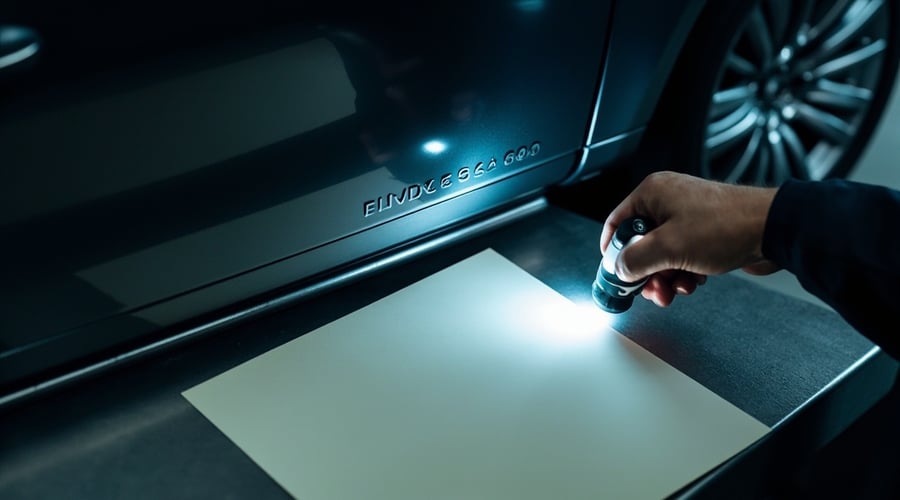
Every database check is looking at what has been recorded. It cannot tell you what has not been — an unreported accident repair, a flood-affected car that was dried out and never lodged with an insurer, a VIN plate that has been swapped. That gap is where a physical inspection earns its money.
At our Concord workshop, every car that comes in goes through a pre-listing check that runs alongside the paper trail. The VIN stamped on the compliance plate is cross-checked against the number on the chassis and the firewall — any discrepancy between the three is an immediate red flag that no PPSR would catch. Panel gaps, paint depth readings, underbody corrosion and structural welds are checked visually; a flood-affected car usually leaves traces that no database records. Brake disc thickness and tyre wear are measured and compared against the odometer reading — a consistent mileage story across all four corners is much harder to manufacture than a single doctored entry.
The paper trail from those checks — workshop notes, any parts replaced before listing, the PPSR certificate itself — should be available to any buyer who asks before they pay a deposit.
What to Ask Any Sydney Dealer Before You Pay
Wherever you buy, there are four things you should ask for before money changes hands. A legitimate dealer will have all of them ready:
The PPSR certificate for that specific VIN, run recently. If it is more than a few weeks old, ask for a fresh one — security interests can be registered at any time.
The full service history, or an honest account of where it is missing and why. Gaps are not always a problem, but a seller who cannot explain them probably does not know the car's history well enough to stand behind it.
A copy of the written-off vehicle check result — the WOVR flag from the rego check or the PPSR write-off category, explained clearly. There are repairable write-offs and statutory write-offs; they are not the same, and the distinction matters for insurability and resale.
In NSW, any licensed dealer is required to provide a statutory warranty on eligible vehicles — check the NSW Fair Trading guidelines on what that covers and for how long, and confirm the warranty terms in writing before you sign. At Max Auto, that is a 3-month warranty, consistent with what we publish on our website.
If a dealer hesitates on any of those four, that hesitation is information.
If you are buying privately or from a dealer and want a second opinion on what the checks show, drop us a message. We run the full sequence on every car before it reaches our lot — and if you want to walk through what the paperwork looks like on a specific model, come in for a look at the Concord workshop. No pressure, just the actual documents on the table.