First Time at a Sydney Dealership? Do These 5 Things Before You Test Drive
First time at a Sydney dealership? Run these 5 checks before you touch the keys — they matter more than the test drive.
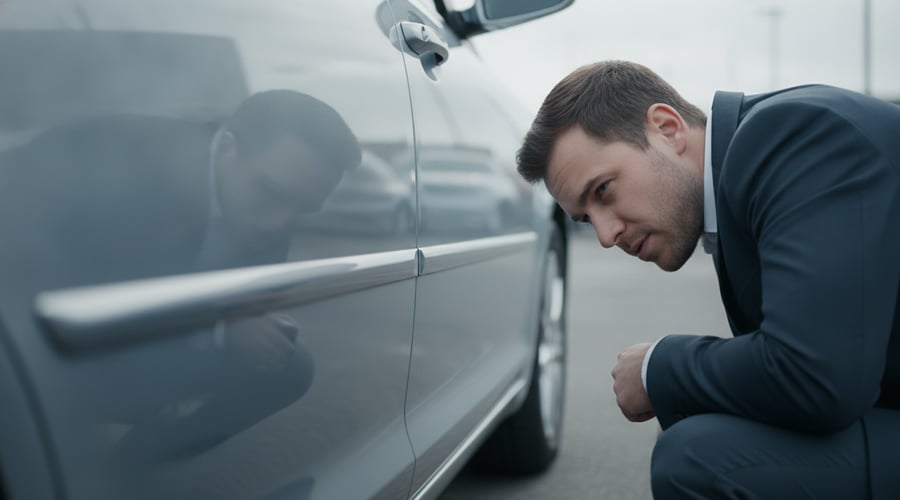
Most first-time buyers walk into a car yard with one thing on their mind: the test drive. Feel the acceleration, squeeze the brakes, listen for rattles. Fair enough — but here's the thing. By the time you climb in and pull away, that car has already told you half of what you need to know. You just weren't paying attention.
You do a lap of the block, come back, and the salesperson asks how it felt. "Drove fine." But does it have an accident history? Has the body been repaired? Are the rubber hoses in the engine bay starting to crack? You couldn't say — because you went straight for the seat belt.
So this isn't a test drive checklist. These are the 5 things to do before you sit down — roughly in the same order our workshop goes through every car we take in.
Step 1: Walk the Car and Look for Anything That Doesn't Match
Beginners scan for scratches and dents. That's a start, but it's only half the picture.
What you're really after is symmetry — or the lack of it. Find a spot with decent light (Sydney's afternoon sun around 2–3 pm is ideal), start at the front of the car, and walk the full perimeter at a low angle, eyes tracking along the body line. You're looking for:
- Are the panel gaps consistent? Does the gap on one side of a door match the other, front to back?
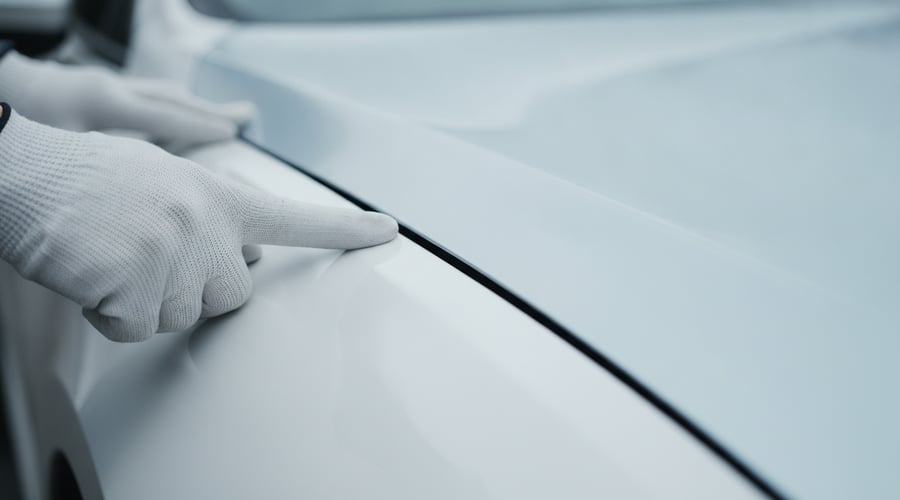
- Does the paint on the bonnet match the guards? Check at an angle in direct sunlight — a mismatched respray often only shows up in raking light.
- Is any panel suspiciously smooth? Factory metalwork has a very slight texture to it. A repaired panel often looks too flat, too even.
An uneven door gap, or a front guard that reads a different shade to the bonnet in side-lighting — that car has probably had panel work done. It might not be a dealbreaker, but the price should reflect it, and you're entitled to ask.
Step 2: Get Under the Car — Three Spots in Particular
You don't need a hoist or any mechanical background to get something useful out of looking underneath. Just crouch down, or slide your phone under and take a few shots.
Three places to check:
The wheel arches, all four. Look at the inner lining for fresh paint, scuff marks, or impact damage to the rust protection coating. The wheel arch takes the first hit in a rear-ender or a car park collision — if something happened, it usually shows up there first.
The main structural rails running along the centre of the chassis. These should be smooth and uniform. Weld marks, deformation, or an obvious join between old and new coating are all worth flagging — that's structural repair territory.
Under the engine, and the ground beneath it. A slow drip from the engine or gearbox leaves an oil stain on the concrete. A lot of dealerships along Parramatta Rd park on bare concrete — old stains linger for a long time. A stained bay doesn't automatically mean this car is leaking, but it's a prompt to look harder.
Step 3: Pop the Bonnet and Check These Four Things
Most people open the bonnet, stare blankly, and close it again. You don't need to know engines — you just need to know what four things look like when they've gone wrong.
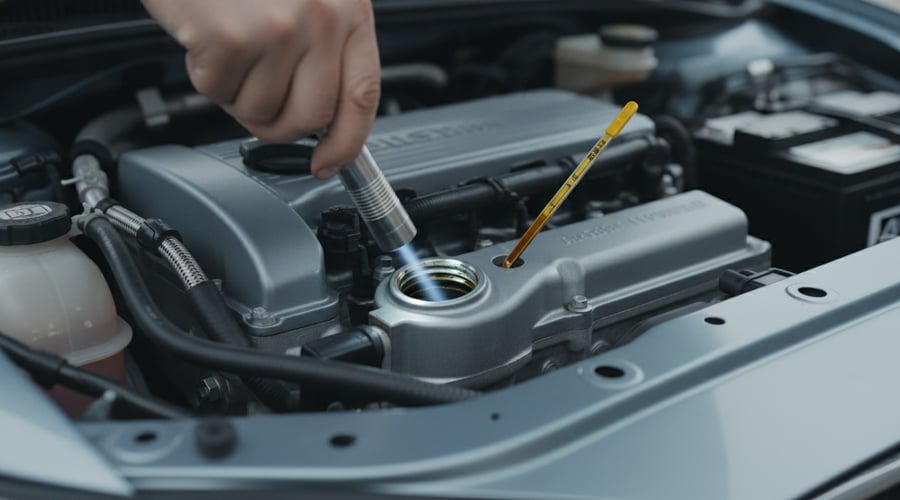
1. The dipstick and oil filler cap Pull the dipstick: oil should be amber to dark brown. Black like used espresso means the service schedule has been ignored. Then unscrew the oil filler cap and shine a torch inside — white or creamy foam on the inside of the cap means coolant and oil have been mixing. That points to a head gasket failure. Major repair territory.
2. The coolant reservoir Should be clear green or pink fluid sitting between the MIN and MAX marks. Murky brown, or a level that's dropped below MIN, means the cooling system hasn't been looked after.
3. The rubber hoses and wiring Run your eyes around the edges of the engine bay. Look for hoses that are cracking, stiff, or showing any residue where fluid has been weeping. Sydney's climate is reasonably easy on rubber, but high-kilometre cars still age out — and replacing a deteriorated hose isn't cheap once it's failed rather than caught early.
4. The suspiciously clean patch If one corner of the engine bay looks noticeably cleaner than everything around it — like someone took a pressure washer to a specific spot — that often means something was leaking and got cleaned up before the sale. Clean is fine. Selectively clean is a question worth asking.
Step 4: Ask for These Four Documents Before You Go Anywhere Near the Keys
In NSW, there's a handful of paperwork you should be asking for upfront — not waiting to be offered. If a seller doesn't volunteer it, ask. If they can't produce it, that's its own kind of answer.
1. A PPSR certificate (Personal Property Securities Register) This is the most important one. Go to ppsr.gov.au, search by plate or VIN, and you'll see whether there's an outstanding financial encumbrance on the vehicle, whether it's been recorded as written-off, and whether it's listed as stolen. It costs $2 and anyone can do it.
A registered dealer should have this ready before you even ask. If they don't, that's not automatically a dealbreaker — but you need to run it before any money changes hands. A car with an unpaid loan against it doesn't become your clean-title asset the moment you buy it. The debt follows the car, not the seller.
2. The registration certificate Confirm the rego is current and note when it expires. Service NSW has a free check at service.nsw.gov.au — search by plate and you'll see the rego expiry and whether a valid green slip (CTP insurance) is in place.
3. Service records They don't need to be complete, but you want at least two or three recent entries — dates, odometer readings, and what was done. The mileage should progress in a believable sequence. One lonely receipt dated last week isn't a service history; it's a gap with a single data point tacked on at the end.
4. Any inspection report, if one exists Some dealers provide a pre-purchase inspection from an independent assessor. If there is one, look at who produced it and what it actually covered. A report that checked the air conditioning and the infotainment but skipped the chassis and engine bay isn't going to tell you much.

Step 5: Sit in the Car for Two Minutes. Don't Start It Yet.
Most people get in and immediately reach for the ignition. Hold off.
Spend 30 seconds reading the interior wear against the stated kilometres.
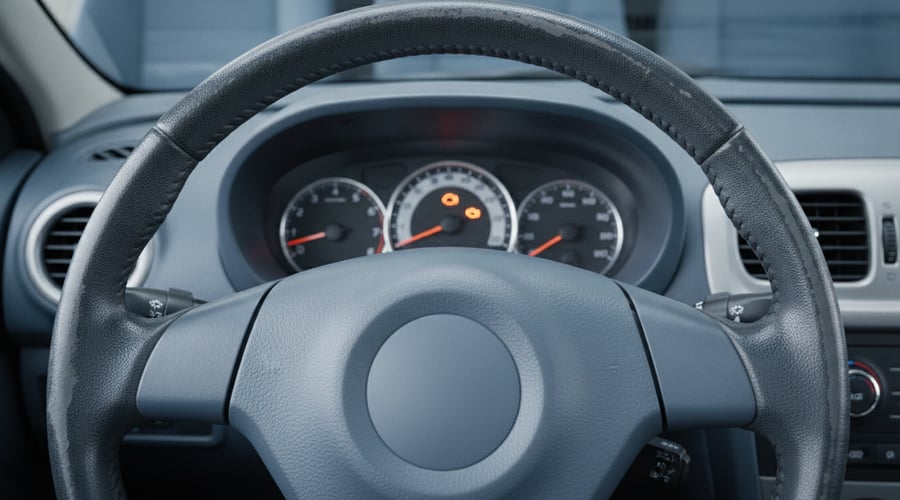
The leather on the steering wheel, the bolster on the driver's seat, the wear on the driver's floor mat — these are the hardest things to fake. A car advertised at 60,000 km with a steering wheel worn down to bare material and white lines rubbed into the seat bolster is telling you something. Either those kilometres were hard ones, or there are more of them than you're being told.
Then check the dashboard and the B-pillar (the vertical edge of the door frame when the door is closed) for accumulated dust and general grubbiness. It's a small thing, but it tells you how the car was prepped before it hit the floor — and by extension, how the dealer operates.
Now turn the ignition to ACC or ON — don't start it yet. Let the dashboard run its self-check, then see what warning lights are still on once the sequence clears. An orange engine management light (the little engine icon) means there's an unresolved fault code sitting in the system. ABS warning, tyre pressure, battery light — each means something different, but all of them need an explanation before you go any further.
Once you've done all of that, then start the car. Then go for a drive. You're not going in blind anymore — you're confirming what you already suspect, or tracking down the one thing that still feels off.
We Run the Same Checklist on Every Car We Take In
Every vehicle that comes through our workshop at Concord goes through all of the above — and then some. The chassis goes up on the hoist. The engine gets scanned for fault codes. That's partly why the same model can sometimes cost a bit more with us than a private listing down the road: we've found things, fixed them, and priced accordingly.
If a car we sell has had panel repairs, we say so in the listing. The price reflects it. Max Auto has been on Parramatta Rd since 2013, registered with NSW Fair Trading, and this stretch of road runs entirely on repeat business and word of mouth. There's no upside in hiding something that'll come out at the first service.
If you're planning to look at something specific in the coming weeks — a particular model, a particular budget — drop a question in the comments or send us a message. Come in having already run through these five steps and we'll have a much more useful conversation from the start.