Buying a Used Car in Sydney? These 5 Contract Clauses Have Tripped Up More Chinese Buyers Than Any Dodgy Salesman
Verbal promises mean nothing once you've signed. Here are the 5 contract clauses that catch Chinese buyers out most.

The most expensive part of buying a used car in Sydney isn't the sticker price you managed to knock down on Parramatta Rd. It's the lines in the contract you didn't quite read on the day you signed.
I've been doing this long enough at our Concord yard to watch the same pattern play out more times than I'd like. Buyer finds the right car. Price gets sorted. Salesperson flips to the last page, points at a few sentences, and says "just a formality, sign here." The buyer has one eye on their phone, doesn't want to seem difficult, figures they caught the gist of it. A week later something minor goes wrong, they come back, and the salesperson opens the contract and points to the exact line that shuts the conversation down.
So here's what I'll do: pull out the 5 clauses that consistently trip up Chinese buyers and explain what they actually mean in plain language. Not legal advice — just what I see play out in this industry, in this city, week after week. The goal is simple: next time you're sitting across the desk with a pen in your hand, you know what you're looking at.

"Warranty does not apply if the vehicle is over 10 years old or over 160,000 km"
Most Chinese buyers assume that buying from a dealership automatically means a warranty. It doesn't — not always. Under NSW law, statutory warranty has hard cutoffs: once a vehicle is more than 10 years old or has clocked over 160,000 km, the dealer has no legal obligation to offer one. That's when you'll see "No Warranty" in the contract, which essentially means if something breaks after you drive off, it's on you.
Even if your car sits well inside those limits, statutory warranty doesn't cover everything. Tyres, brake pads, batteries, interior trim, aftermarket screens and speakers, even some seal leaks — these are standard exclusions, and they'll be listed in the contract whether you read them or not.
The question Chinese buyers ask most often is: "Don't all dealer cars come with 3 months warranty?" That's mixing up two different things. Statutory warranty is a legal threshold — fixed and fairly blunt. A dealer's own 3-month warranty is a separate, voluntary commitment layered on top of that. At our shop, every car we list carries a 3-month warranty regardless of what the law requires — but the exclusions are written down just the same, because vague verbal assurances help no one. This clause isn't trying to trap you. It's telling you exactly where the limits are, if you bother to look.
"Purchaser is entitled to a cooling-off period of one business day"
The common assumption here is that Australia's consumer protections are generous across the board, so surely there's a 7-day change-of-mind window for cars. There isn't — at least not under NSW law. When buying a used vehicle from a licensed dealer, your cooling-off period is typically just one business day.
The trap within the trap: many contracts specify that if you take delivery during that window — drive it home, even briefly — the cooling-off period is treated as concluded. So if a salesperson pushes you to take the car home that afternoon while "we sort the paperwork tomorrow," that's precisely the moment to pump the brakes, not go along with it.
The clause is actually there to protect you. But it only works if you're prepared to send a written cancellation — email is fine — before that one business day closes. NSW regulations also cap what the dealer can keep: generally the lower of 1% of the purchase price or $250. So don't let fear of losing your deposit make you feel stuck, but don't take the cooling-off period for granted either.
"The buyer acknowledges this vehicle may be subject to a security interest / encumbrance"
This is probably the most important clause in any used car contract, and also the one that reads most like legal fine print designed to be skipped. In plain English: this car might still have a loan or lien registered against it, and it's your responsibility to check.
The core of many private-sale scams runs exactly along this fault line. The seller offloads the car, pockets your money, but the finance company still has a security interest registered. A few weeks later someone comes to repossess what is, legally, still their asset. You signed the clause. Good luck.
PPSR — the Personal Property Securities Register — isn't optional. It's a baseline. The right move isn't to check it after signing; it's to pull a report by licence plate before you sign anything. Reputable dealers will have already run it, but that doesn't make the clause disappear from your contract. What you can do: ask to see the dealer's PPSR report on the spot, or request that this line be added to the contract before you sign:
Seller warrants vehicle is free of encumbrance on the date of delivery.
It takes 30 seconds to write in. A salesperson who won't put it down is telling you something worth knowing.
"No agent or employee has authority to make any representation or promise not written on this agreement"
This is the clause that kills more post-sale disputes than any other. Word for word, it means: anything a salesperson told you verbally — any promise, any assurance — is legally void if it isn't written into the contract.
You ask whether the car's had a full service recently. "Absolutely, just done." You ask if there's been any panel work. "No, all original paint." You ask whether they'll throw in a free service. "Of course, no problem." None of it ends up on paper. Two weeks later your mechanic tells you the service wasn't done, the rear door has had bodywork, and the promised free service has somehow been forgotten. You pull out your WeChat screenshots. The salesperson opens the contract and points to this line.
How do you handle it? Stop being polite about it on signing day. Write every verbal commitment onto a supplementary page — in Chinese, in English, in broken whatever — and get the salesperson to initial it right there. Something as simple as "Full service completed before delivery, no repaint on right rear door" is legally meaningful once it's in writing and initialled. If the salesperson won't put it on paper, treat it as if they never said it. An honest salesperson who stands behind what they're offering will sign without hesitation. One who stalls and deflects is showing you exactly who they are.
"Vehicle is sold subject to inspection. The buyer acknowledges the vehicle has been inspected"
People tend to skim this one. The practical meaning: the car is sold as-is, you've had your chance to inspect it, and minor issues discovered afterwards are generally not grounds for a refund or repair claim.
The problem is that most buyers who sign this have only glanced at the exterior. They haven't looked under the bonnet, checked the undercarriage for rust, verified the tyre manufacture date, or noticed the slow oil weep around the sump. When they bring the car in for a service a fortnight later and the mechanic flags worn engine mounts or a leaking rear shock, the contract puts up a wall.
To be clear: this clause doesn't give any dealer a free pass to sell a written-off vehicle or conceal major structural damage. That's covered separately by NSW Fair Trading, and the Motor Dealers and Repairers Act has real teeth. What this clause covers is the smaller stuff you could have caught yourself with a proper look.
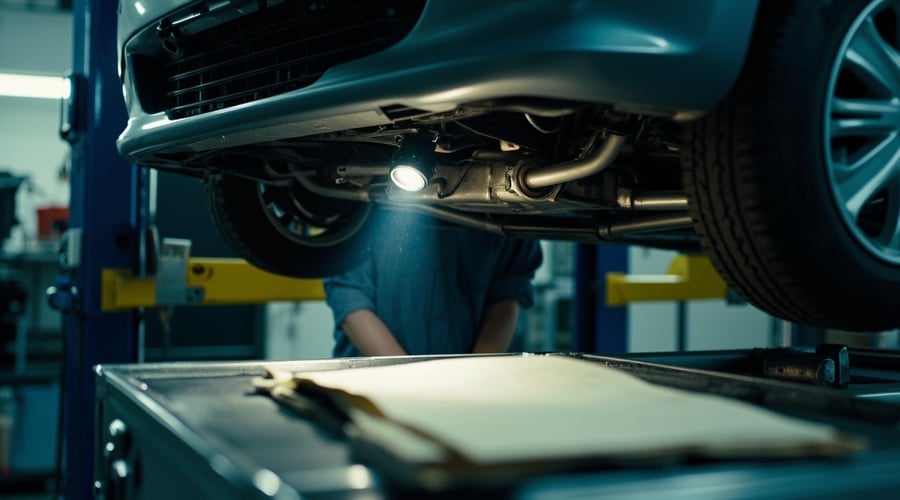
The practical fix: before you sign, ask to take the car to an independent workshop for a PPI — Pre-Purchase Inspection. In Sydney it typically runs $200–$300, and there are reputable mechanics all along the Parramatta Rd corridor and around Burwood. If a dealer won't allow a third-party inspection, that tells you far more than anything buried in the fine print.
Five things you can do right there on signing day
None of these are adversarial moves. They're just basic due diligence — the kind that takes 15 minutes but can save you a very frustrating fortnight.
1. Photograph every page of the contract before you leave. Pay particular attention to the warranty exclusions and anything touching the cooling-off period.
2. Check PPSR before signing, not after. Pull the report yourself by licence plate, or ask the dealer to show you theirs. Confirm there are no outstanding interests and that the vehicle isn't recorded as written-off.
3. Get verbal promises in writing. Anything the salesperson has committed to — services done, paint condition, extras included — goes on a supplementary page, signed and initialled by both parties before you walk out.
4. Don't take delivery during the cooling-off period unless you're certain. Keep that one business day intact, just in case.
5. Know the difference between NSW statutory warranty and the dealer's own 3-month warranty. "It comes with warranty" means very little without knowing which one, and what's excluded from each.
Not every salesperson is trying to mislead you. Some of them haven't read their own contracts word for word — the pace of the process doesn't exactly encourage it. But the money is yours, and the car is yours, and these clauses are worth understanding before your signature makes them binding.
We've been operating out of Concord since 2013. Every car we put on the lot goes through our own workshop first, and PPSR gets checked before anything else. On contract day, we walk through the key clauses in Mandarin — here's what the 3-month warranty covers, here's what it doesn't, here's what delivery confirmation actually means — because a buyer who understands what they're signing is a buyer who comes back.
If you're looking at a car right now and want to talk through a contract before you sign — or just want a second set of eyes on a specific clause — send us a message through the account with the word "contract" and we'll go from there. You're also welcome to bring any car you're considering to our yard for a look-over before you commit. Either way, it beats trying to unpick a signed agreement after the fact.