How to Spot a Flood-Damaged Car in Sydney: 6 Checks You Can Do Right at the Kerb
Flood-damaged cars hide in plain sight — catch what sellers leave behind before you hand over a cent.
There's an unspoken pattern in Sydney's used-car market: after a serious rain event, flood-damaged cars start quietly reappearing — not all at once, but in a steady trickle over the following year or two. After the major NSW flooding events of recent years, a wave of water-affected vehicles got patched up, carpets swapped, seats cleaned, and relisted at prices that looked almost too good to be true. Often they look better than comparable cars from the same era, precisely because the interior has just had a thorough going-over.
The catch is that flood damage doesn't announce itself at the point of sale. It announces itself later — corroded wiring connectors, a seat motor that starts grinding in humid weather, an airbag control module throwing a fault code once the damp really sets in. The inner west is no stranger to heavy humidity, and when the next wet season rolls around, that's when things surface. So don't trust the finish. Look for what the seller didn't get around to hiding.
These six checks take no tools, no cash, and no special knowledge. You can run through all of them at the kerb.
Start Under the Carpet, Not on Top of It
Most people step in, take a sniff, and figure they've done their flood check. They haven't — because the first thing any repairer does to a flood car is shampoo the seats and air out the floor mats. By the time you're sitting in it, the surface smells fine.
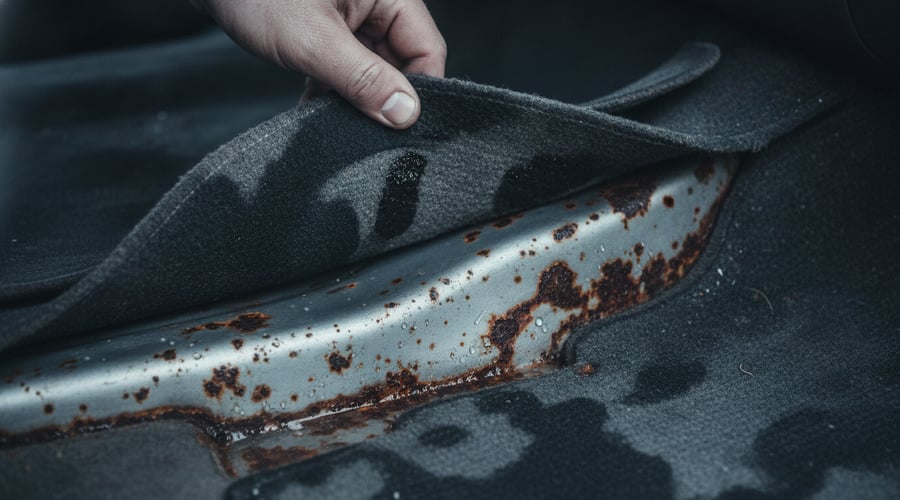
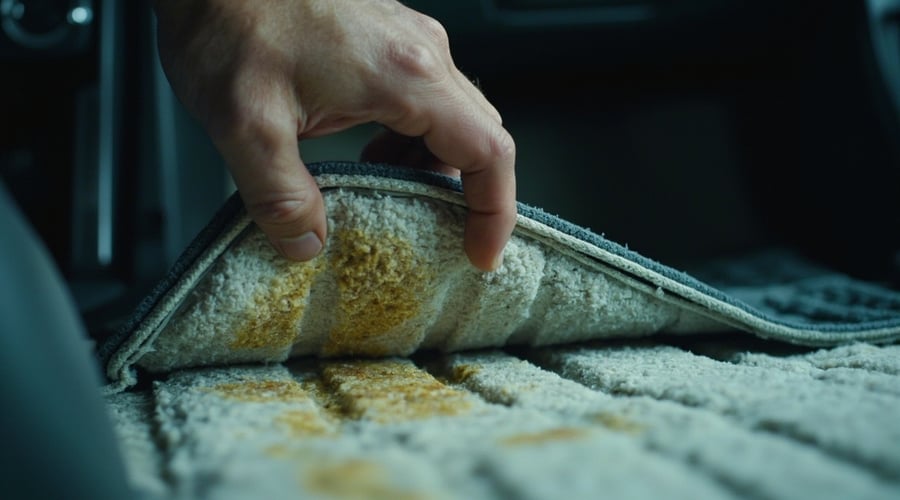
What you actually want is the felt underlay beneath the factory carpet. Pull the driver's footwell mat aside, lift a corner of the carpet, and press your fingers into the padding underneath. A car that's taken on water will have a musty, mildewy smell coming from that layer — or, if someone's tried to mask it, an oddly intense hit of laundry powder or air freshener. Strangely, the covered-up version is often easier to pick than the untreated one; it smells like someone's working hard to suppress something.
Then head to the boot. Pull out the spare tyre or the foam insert and look at the lowest corners of the spare-tyre well. A clean car has a fine layer of dust down there. A flood car has silt, dried mud, and often a visible tidemark — the line where the water sat before it receded. Repairers rarely touch the bottom of the spare-tyre well when they're cleaning up an interior. It's one of the most reliable spots to find what's been left behind.
Feel Along the Seat Runners — All the Way Back
No tools needed, just your hand and maybe a tissue. Push the front seat as far forward as it'll go, then reach underneath and run your fingers along the rail toward the back. While you're there, feel the mounting bolts at the base of the rail.
On a normal car, there's nothing but dry dust. On a flood car, the rail grease will have mixed with fine sand and grit, and the bolts and rail edges will often show rust — but rust with a very specific quality: it starts at a certain height and stops. Below the waterline, corroded; above it, clean. That kind of boundary is what happens when water sits and then drains, and the metal never fully dries out.
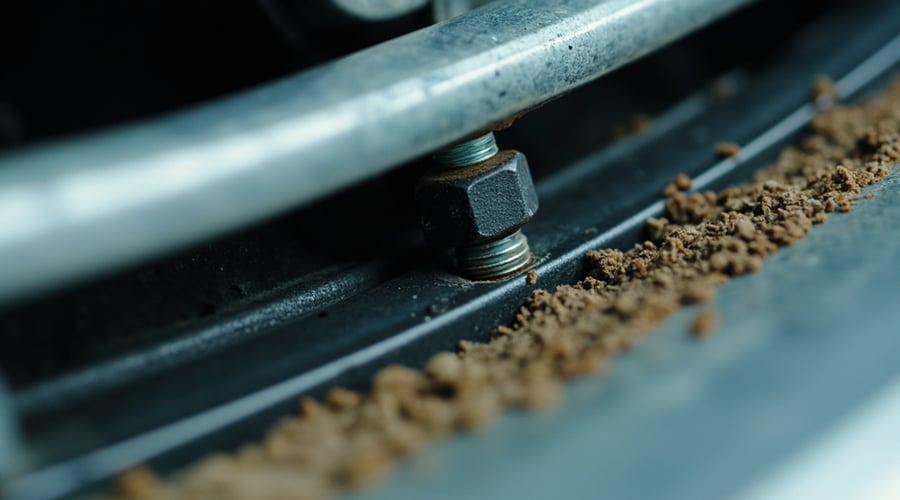
This spot works so well because almost no one cleans it. Sellers will wipe down door cards and scrub the mats, but very few people crawl under the seat with a cleaning cloth. What's down there tends to stay there.
Peel Back the Door Seal and Check the Wiring Labels
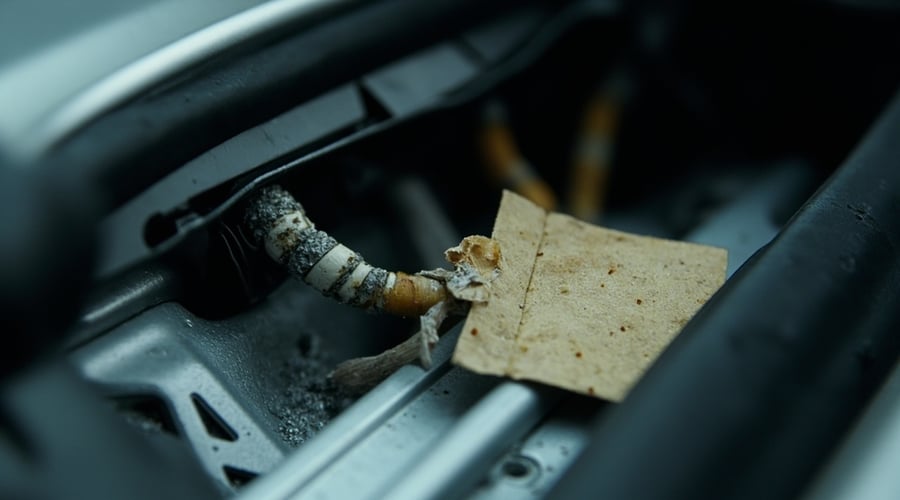
No need to force anything — just ease the rubber door seal away from the driver's door frame by a few centimetres. Look at two things: the underside of the seal itself (dried mud or silt lodged in the folds), and the wiring harness labels just behind it.
Paper wiring labels are surprisingly honest. When they've been submerged, they wrinkle, yellow, and the printed text bleeds or blurs. The adhesive backing may start to peel at the corners. Repairers dealing with flood cars will often pull the carpet, clean the headliner, and deal with the visible stuff — but they rarely strip out the door seals to replace the wiring labels behind them. Those labels just sit there, waiting.
Look for a Waterline in the Engine Bay
Open the bonnet, but before you start listening to the engine, look. Three spots are worth checking: the lower inside wall of the air filter housing, the base corners around the ABS pump and fuse box, and the cooling fins on the alternator and compressor.
On a flood car, these surfaces carry a faint tidemark — a line of dried silt showing exactly where the water reached. Below it: a thin layer of dried mud stuck to the plastic and metal. Above it: clean. Engine bays often get blasted with a pressure washer, so the obvious surfaces look fine. But the inner walls of components, the recessed corners of the fuse box base, the underside of the alternator — those spots rarely get the full treatment.
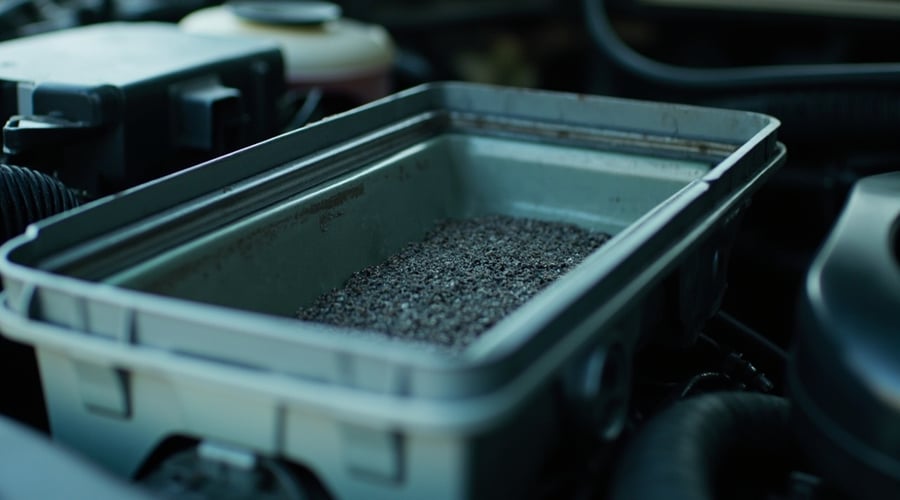
While the bonnet's up: pull the air filter out and have a look at it. If the paper element has water staining, mud specks, or a paste-like texture instead of clean dust, that car has a serious history.
Work Through Every Electrical Switch — Don't Stop at the Ignition
The most common real-world problems in flood cars aren't mechanical. They're electrical. Water in a wiring connector doesn't kill things immediately; it causes corrosion that creates intermittent faults — works fine twice, then fails on the third press.
Turn the key to ACC or ON without starting the engine and watch the instrument cluster self-check. Note any warning lights that stay on longer than they should, or anything unusual in how the airbag, ABS, or ESP indicators behave during startup. Some flood cars have had fault codes cleared, but the timing and brightness of those lights can still give things away.
Then go through every switch in the car: all four windows, the sunroof, the power mirror fold, heated or ventilated seats, and the air conditioning at full fan speed — put your face near a vent and smell it. Intermittent behaviour is the tell. First press, nothing; second press, it works. The more switches you test, the more chances you give the car to show you what it's hiding.
A Clean PPSR Is a Good Start — It's Not the Finish Line
Once you've done the physical checks, pull the records. PPSR — the Personal Property Securities Register — is the baseline for any used-car purchase in NSW. It costs $2 at www.ppsr.gov.au, takes a minute with the VIN or plate, and tells you whether the car has a written-off, stolen, or encumbered record. While you're at it, check the rego status and recorded odometer history through Service NSW — that one's free.
Here's the important caveat, though: a clean PPSR does not mean the car wasn't flooded.
A lot of flood-affected cars never make it onto the written-off register at all. The owner didn't claim insurance; they paid out of pocket to have it cleaned up, drove it until things started going wrong, then sold it privately. The car has a clean record because nothing was ever formally recorded. On the other hand, if the PPSR does show a water damage or written-off entry, walk away — don't try to negotiate around that.
This is what makes flood cars particularly tricky: they can be entirely legal, fully registered, with nothing against their name, and still be a slow-moving disaster.
If You're Unsure, Spend $200–$300 on a Lift
If a car has passed your visual checks but something still feels off, the most cost-effective move is a pre-purchase inspection from an independent mechanic. In Sydney, expect to pay somewhere in the $200–$300 range. They'll get the car on a hoist and check what you physically can't see from underneath: silt trapped in chassis cavities, watermarks on the exhaust and fuel tank straps, mildew inside wiring loom conduits.
Worth mentioning: this is exactly the kind of check we run at our Concord workshop before a car goes anywhere near the floor. Every car we take in goes on the hoist — we're looking up from underneath for tidelines, checking the cabin underlay for smell and texture, and combining that with an electronic systems road test before we make a call on whether the car's clean. It's not a quick process, but a flood car that slips through costs a buyer far more than the time it takes to catch it.
By the time you've worked through these six checks, you'll understand the real challenge: it's not that flood cars are impossible to find — it's that no single check is ever enough on its own. The seller who didn't clean under the seat rails probably didn't think to clear the wiring labels either. These things cluster.
If you've got a specific car you're looking at and want a second opinion, send us the details. If it's something we're stocking or can source, we'll run it through our own checks first.