Mazda CX-5 vs Toyota RAV4: Which One Actually Makes Sense at $30K in Sydney?
Resale value, running costs, insurance — the three numbers that actually decide which one's worth your $30K.
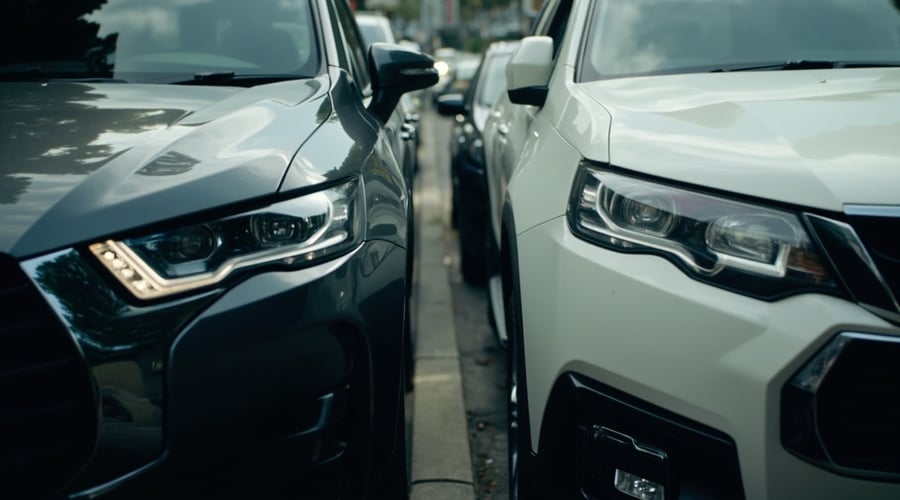
Around $30,000, two Japanese SUVs come up in almost every conversation we have with buyers on the lot: the Mazda CX-5 and the Toyota RAV4. Most people who walk in to drive them have already done their research on Little Red Book. Their questions tend to cluster around the same three things — which holds its value better, which costs more to run, and which is cheaper to insure.
So let's go through all three, properly. Not "both are great" — that's useless. The honest answer is your driving habits determine which one is actually worth your money, and getting that wrong just means paying for things you'll never use.
What $30K Actually Gets You in Each Car
This is where a lot of buyers get caught out, so it's worth spelling out clearly.
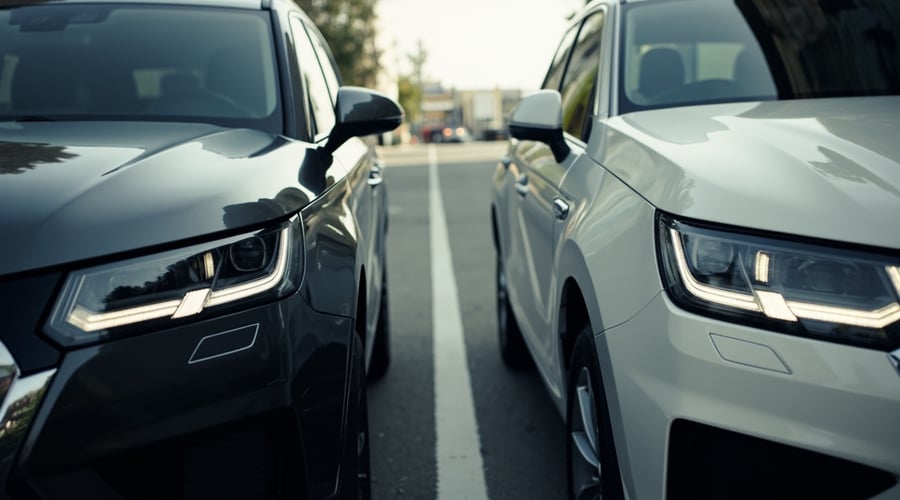
The RAV4 holds a firmer price in Sydney's used market than the CX-5. At the same $30,000 budget, a CX-5 will typically get you a 2020–2021 model with somewhere between 50,000 and 80,000 kilometres — usually mid-to-high spec, petrol engine. The RAV4 at that same price lands you in the 2018–2020 range, with 70,000 to 110,000 kilometres on the clock. If you want a hybrid RAV4 specifically, you're either adjusting that year range or adding a bit more to the budget.
That's not because RAV4 pricing is inflated — it's because demand for Toyotas in Sydney is consistently strong, from Chinese-Australian buyers and everyone else alike. High demand keeps prices firm.
So get this straight first: the same $30K gets you a newer car with fewer kilometres in a CX-5, or a stronger resale asset in a RAV4. Everything else flows from that trade-off.
Resale Value: RAV4 Wins — and the Reason Actually Matters
Straight up — the RAV4 holds its value better than the CX-5 in Sydney's used market. That's just a fact. But understanding why is genuinely useful, because it's structural, not magic.
Toyota's volume in Australia, the depth of the parts supply chain, the speed at which RAV4s move through auction — all of it means a RAV4 is simply easier to move on when you're done with it. Dealers will take it, private buyers will look at it, auction houses won't hesitate. That liquidity is what keeps the second-hand price up. The CX-5 is no disaster on resale — it just depends more on the individual car's condition and service history. Put a tired 2018 CX-5 next to a tired 2018 RAV4, and the RAV4 gets absorbed by the market more easily.
Here's the counter-intuitive part though: if you're planning to keep the car for five years or more, the resale gap is smaller than most people assume. Depreciation is a percentage, but your wallet feels absolute dollar amounts. A CX-5 bought at $28,000 versus a RAV4 bought at $31,000 — work out the five-year numbers and the actual difference in what you pocket might amount to a few thousand dollars, not a life-changing sum.
Resale value matters most to people who flip cars regularly. If you're a long-haul owner, the entry price ends up mattering more than the exit percentage.

Running Costs: CX-5 Is Simpler — With One Very Specific Trap
This is where the two cars diverge most sharply, and it's the part I most want you to take away.
A petrol CX-5 is cheaper and simpler to maintain than a hybrid RAV4. Mazda's 2.5-litre naturally aspirated engine has no turbo, no hybrid drive system, no high-voltage components. Any workshop in Sydney that knows Japanese cars can service it without drama. Basic servicing — oil change, air filter, oil filter — runs at the standard rate for a four-cylinder Japanese engine. Parts are readily available locally. The typical wear items we see come through our workshop are things like softening engine mounts and front suspension bushings — normal age-related maintenance, nothing exotic.
The hybrid RAV4's regular servicing is also reasonably priced, and Toyota's hybrid system is genuinely reliable and requires no special day-to-day attention. But here's the honest part: if the hybrid battery develops a problem after the factory warranty has expired, that's a real cost. Toyota's hybrid batteries tend to last well, but many of the RAV4s in Sydney's used market have already done 120,000 to 180,000 kilometres. Battery degradation is a real question at those numbers. Replacement cost varies significantly depending on whether you go third-party or OEM — we're talking thousands of dollars. So if you're buying a hybrid RAV4, checking battery health at the point of purchase is not optional.
Now for the CX-5 trap. If you find a CX-5 under $30,000 that looks suspiciously good value and happens to be a diesel — stop. Mazda's diesel engine has a documented history of DPF (diesel particulate filter) clogging in Australian short-trip driving conditions. A lot of Chinese-Australian buyers in Sydney are doing exactly the kind of driving that causes this: Burwood to Concord, up and down Parramatta Road, a beach run on the weekend. Short trips mean the DPF never gets hot enough to regenerate properly, and when it clogs, the repair bill is not trivial. At this budget, don't touch the CX-5 diesel. Petrol 2.5 only.
The same principle applies on the Toyota side: if you want a hybrid RAV4, verify the battery health before you hand over any money. A car that looks fine on the fuel consumption screen can still have a degraded battery working harder than it should be.
Insurance: The Real Gap Is Smaller Than You've Been Told
In NSW, the main factors driving your comprehensive insurance premium are your driving record, the vehicle's insured value, repair costs, and theft rates. The gap between a CX-5 and a RAV4 is nowhere near as dramatic as some posts on Little Red Book suggest. Both are mainstream Japanese SUVs with high parts availability and deep coverage in the market. Insurers don't particularly favour one over the other.
If there is a difference, the hybrid RAV4's potential repair complexity around battery and drive components can push full comprehensive cover slightly higher than a comparable petrol CX-5 — but we're talking a hundred or two hundred dollars a year at most. Not a deciding factor.

What actually moves your premium is your own profile — how long you've held an Australian licence, whether you have any at-fault accidents on record, where the car is garaged, and how many kilometres you drive each year. Those variables matter far more than which badge is on the bonnet. Don't let insurance be the tie-breaker in this decision, because if it is, you're being steered by the wrong number.
The Thing People Overlook: Space and How the Car Actually Feels
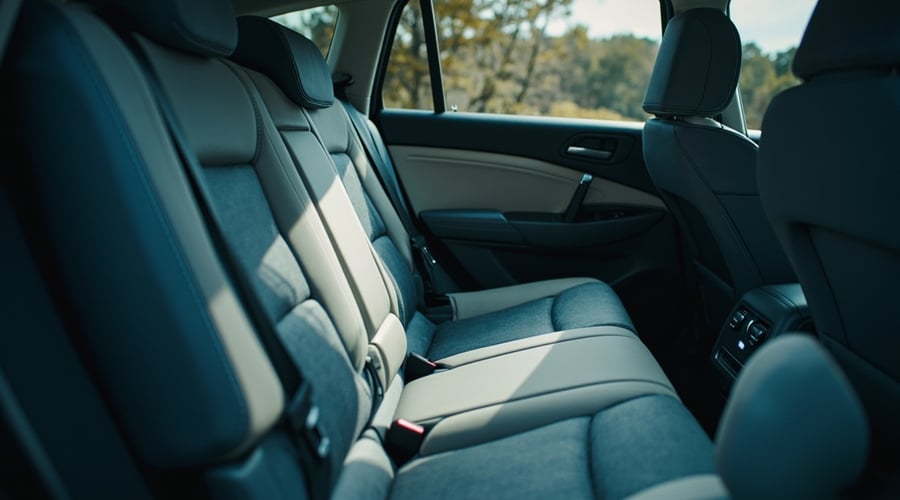
Both are marketed as mid-size SUVs, but the RAV4 does have a genuine edge in rear cabin room. It's not a massive difference on paper, but you feel it when you actually sit in the back: slightly more headroom, a bit more legroom, a flatter boot floor. For Chinese-Australian families with a child seat installed, or who regularly have parents or in-laws along for the ride, that difference is more useful than any depreciation figure.
The CX-5 counters with a better driver's experience. Mazda's steering feel, chassis composure, and cabin noise suppression stand out at this price point among Japanese SUVs. If it's mostly you and one other person in the car, you'll notice that driving quality every single day. If your rear seats are regularly full, the people sitting back there may notice those extra centimetres before you do.
So: Which One Do You Actually Buy?
By now the answer should be coming into focus on its own.
If you drive a lot — long commute, high annual kilometres — and your priorities are fuel economy and ease of resale when the time comes, go for the RAV4 hybrid. But get the battery health checked before you hand over any money. If you can find one with Toyota service records, all the better — at least the battery's history is on paper.
If you want something newer for the same money, with simpler mechanicals, no hybrid battery to worry about, and a driving experience that's genuinely enjoyable, the CX-5 2.5 petrol is a strong choice. Stick to the petrol. The diesel is off the table at this budget.
If rear-seat space is a genuine daily requirement — car seats, regular passengers, regular airport runs with luggage — the RAV4 gives you a bit more room to work with. It's not night-and-day, but it's real.
If the driving experience matters more to you than the exit price in five years, the CX-5's dynamics are a cut above at this price point. One lap of Parramatta Road with the windows down and you'll know what I mean.
The bottom line: resale and running costs pull these two cars in different directions, but the decision really comes down to three practical questions — how many kilometres do you put on each month, how often do you have people in the back seat, and how long do you plan to keep the car? Answer those honestly, and the right car picks itself.
If you want to compare these two side by side properly, come into the lot and say so. We'll pull out whatever CX-5s and RAV4s we have on the floor that week, and you drive both down the same stretch of Parramatta Road — let the cars make the case for themselves. If you're after a specific year and kilometre range on a hybrid RAV4, or you just want to confirm whether a particular CX-5 is the petrol or the diesel before making the trip, drop a comment or send a message. One less wasted trip is worth something.