Sydney Dealerships Offer a 3-Month Warranty — But What Else Can Buyers Demand? The NSW Consumer Law Side You Should Know
Your rights don't expire when the 3-month warranty does — here's what NSW law actually says.

Most used-car buyers in Sydney walk away from a dealership thinking their legal protection is the voluntary warranty written on the contract — 3 months, maybe 6 if they negotiated hard. When that period is up, they assume they're on their own. That assumption is wrong, and it costs people real money every year.
The Australian Consumer Law (ACL) gives every buyer of a used car from a licensed dealer a statutory guarantee of "acceptable quality" that exists regardless of whatever voluntary warranty the dealer offers. It doesn't expire after 90 days. It can't be signed away in a contract. Understanding how it works — and what you can actually do when it's breached — is one of the most practically useful things a buyer in NSW can know.
The Voluntary Warranty vs. the Statutory Guarantee: Two Separate Things
When a licensed dealer sells you a used car in NSW, they typically offer a voluntary warranty — at Max Auto, that's 3 months, consistent across the board. This is their promise to fix certain faults within that period. It's a real and useful commitment, and a meaningful signal about how a dealer stands behind what they sell.
But underneath it sits something else entirely: the statutory guarantee of acceptable quality under the ACL (Schedule 2 of the Competition and Consumer Act 2010, as applied in NSW). This is not a product of the dealer's goodwill — it's the law. It applies to any goods, including used vehicles, sold by a business in trade or commerce.
"Acceptable quality" means the car must be:
- Safe — it shouldn't pose a risk to health or safety
- Durable — it must last a reasonable time given the age, price and condition represented at sale
- Free from defects — not necessarily perfect, but not defective in a way a reasonable consumer wouldn't expect
- Fit for purpose — it must do what cars are supposed to do
The ACL does allow some adjustment for used goods: a 15-year-old car with 200,000 km priced at $8,000 is not held to the same standard as a 3-year-old vehicle at $40,000. What's "acceptable" is calibrated against the age, price, and condition disclosed at the time of sale. But that calibration cuts both ways — if a dealer represents a car as being in good condition and charges accordingly, the statutory bar is set higher.
The critical practical point: if a significant mechanical fault develops that could reasonably be said to have existed, or to have been developing, at the time of sale — even if it only surfaces at the four-month mark — the ACL guarantee may still apply. The 3-month voluntary warranty is not the limit of your rights.
What the ACL Guarantee Covers (and What It Doesn't)
This is where buyers need to be honest with themselves. The ACL is not a blanket promise that any fault at any time is someone else's problem.
It likely covers: Engine or transmission failures that emerge shortly after purchase and are consistent with a fault at the time of sale; braking system defects; major electrical faults affecting safety; structural defects concealed or not disclosed.
It probably doesn't cover: Normal wear-and-tear components — brake pads, tyres, wiper blades — that simply wear out with use; damage you caused; failures that resulted from your neglect (skipped service intervals, ignoring warning lights); or faults that were clearly visible and disclosed before purchase.
The distinction courts and tribunals look at is whether the fault was a defect that existed at the point of sale, or whether it's deterioration that happened afterwards. A car that drops its gearbox at 4 months and 12,000 km — when it was sold as recently serviced — reads very differently from a car whose brake pads wear out on schedule.
One honest trade-off worth naming: the ACL is a legal tool, not an instant fix. If a dealer disputes your claim, you may need to go through a formal process (more on that below), which takes time and sometimes money for an independent assessment. The voluntary warranty — especially from a dealer who honours it without argument — is still the faster, lower-friction path for problems that emerge early.
(配img:a mechanic performing an independent pre-purchase inspection under a car on a hoist, with inspection notes visible on a clipboard nearby)
What You Can Actually Do in NSW When Something Goes Wrong
Say the voluntary warranty has expired, or the dealer is disputing whether a fault is covered, or the fault emerged later than the warranty window but you believe it was present at sale. Here is the practical pathway in NSW.
Step 1: Put it in writing to the dealer first. Before escalating, give the dealer a written notice (email is fine, and it creates a paper trail) describing the defect, when you noticed it, and your request — either repair, replacement or a refund proportionate to the loss in value. Keep it factual, not adversarial. Most disputes at this stage don't need a tribunal.
Step 2: Get an independent assessment. If the dealer denies the fault was pre-existing, you need evidence. An independent pre-purchase inspection (PPI) or a post-fault inspection from a qualified mechanic — ideally someone who can document the likely age and nature of the fault — is what gives your claim teeth. In Sydney, you can find NRMA-approved inspectors, and most independent workshops will write a condition report.
Step 3: NSW Fair Trading. If the dealer won't engage, lodge a complaint with NSW Fair Trading (fair.trading.nsw.gov.au). They offer a free mediation service for exactly this kind of consumer-dealer dispute. Under the Motor Dealers and Repairers Act 2013 (NSW), licensed dealers are subject to NSW Fair Trading oversight — a formal complaint creates a record and often produces movement where informal requests haven't.
Step 4: NSW Civil and Administrative Tribunal (NCAT). If mediation doesn't resolve it, NCAT's Consumer and Commercial Division handles disputes up to $40,000 without requiring legal representation. Application fees are modest (in the low hundreds of dollars range), and the process is designed to be accessible. This is where the paper trail you built in Steps 1–3 becomes the core of your case.
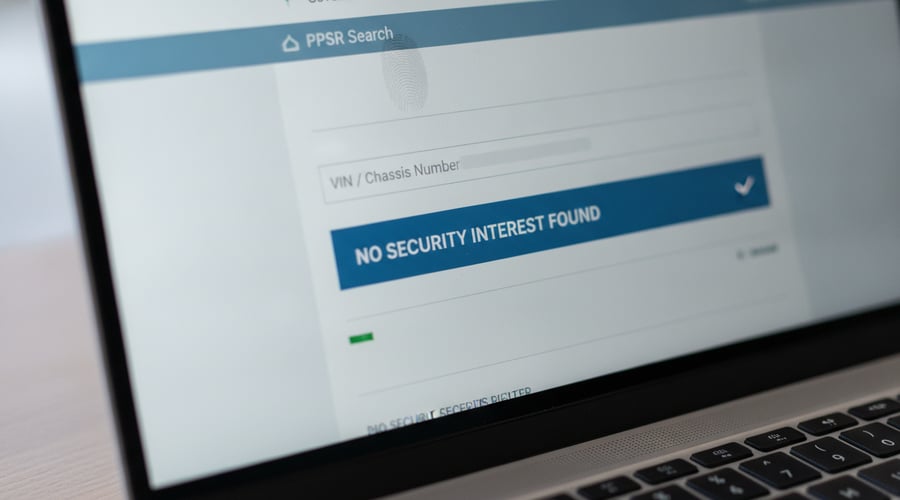
Step 5: PPSR and the original record. Before all of this — ideally before you buy — check the PPSR (ppsr.gov.au) for the vehicle's history. If a fault later emerges and you can demonstrate the vehicle had undisclosed financial encumbrances, prior write-off history, or theft records, that strengthens a claim significantly. The PPSR check costs around $2 by plate or VIN.
The Levers That Make a Claim Stronger
From seeing these disputes play out, a few things reliably determine whether a buyer prevails or walks away frustrated:
Documentation from before the sale. If you have a pre-purchase inspection report that identified a potential issue and the dealer either dismissed it or didn't disclose it, that's significant. If you have the service history the dealer represented, and the car's records don't match, that's stronger still.
The price and representation at point of sale. If a dealer positioned the car as "excellent condition" or highlighted a recent service, those representations matter. Buyers who paid a price consistent with a well-maintained vehicle have a higher bar of "acceptable quality" to enforce.
Time and mileage between purchase and fault. A major mechanical failure at 5 months and 3,000 km is easier to connect to the point of sale than one at 18 months and 30,000 km. That doesn't mean the latter can't succeed — it just means the evidence needs to work harder.
Whether the fault is safety-relevant. NSW Fair Trading and NCAT take safety defects — braking, steering, structural — more seriously than comfort issues. A car that's unpleasant is a lower-priority dispute than a car that's dangerous.
What a Transparent Dealer Does Before This Point Becomes Relevant
The honest reality: most ACL disputes with dealerships are downstream of inadequate inspection at the time of purchase. Not necessarily dishonesty — sometimes a fault is genuinely latent and difficult to detect. But often, thorough inspection would have surfaced it.
At Max Auto, every car that comes onto the lot goes through the M&F workshop before it's priced and listed. That means an actual mechanic looking at the vehicle, not a visual tick-box — fluids, braking components, suspension, tyres, engine bay, undercarriage, and a PPSR check run by plate the day it comes in. We carry a 3-month warranty because we believe what we're selling, but the warranty matters less when the pre-sale inspection is thorough. It's the order of operations that reduces the chance you need to invoke any of this.
None of that makes us immune to faults that emerge later. A used car is a used car. But a buyer who asks their dealer "what did you find in the pre-sale inspection, and what was done?" is asking exactly the right question — and the answer tells them more than the warranty period does.

Before You Leave the Dealership: Three Things Worth Doing
Regardless of which dealer you buy from in Sydney:
-
Ask for the pre-sale inspection report in writing. If a dealer can't produce one, ask why. The presence or absence of a written inspection record is informative on its own.
-
Run the PPSR yourself (ppsr.gov.au, ~$2 by plate). Don't rely on the dealer's copy — run it fresh so the timestamp is yours.
-
Keep the full paper trail from purchase day: the contract, the odometer statement, any representations made in writing, the inspection report, the PPSR result. These documents are what makes an ACL claim viable months down the track.
Your rights under the Australian Consumer Law exist whether or not you knew about them, and whether or not the dealer mentioned them. The 3-month voluntary warranty is a starting point, not the ceiling. And in NSW, there's a clear, accessible pathway — Fair Trading mediation, then NCAT if needed — that doesn't require a lawyer and doesn't cost you much to use.
If you've bought a used car recently and want to talk through a specific situation, or if you're in the market and want to know what questions to ask before signing anything, drop us a message — we're happy to walk through it with you.