Taking a Translator or a 「Car-Savvy Friend」 to Parramatta Road — Is It Actually Worth It?
The truth about who actually catches the problems — and who misses them entirely.
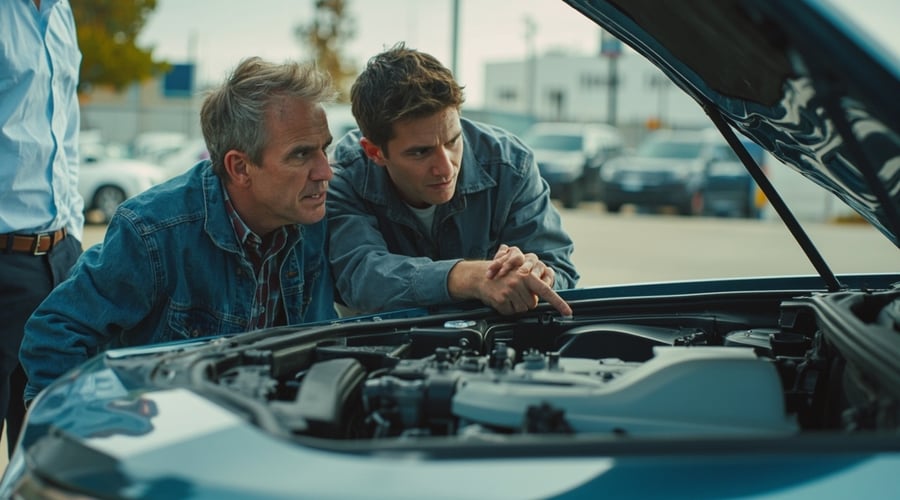
You've probably seen it play out on Parramatta Road more times than you'd like to admit. A buyer pulls up with a friend who "knows about cars," or a bilingual contact who can translate the paperwork. They walk around the vehicle, kick the tyres, ask a few questions in Mandarin, nod a lot — and everyone goes home feeling like due diligence was done. Sometimes it was. Often it wasn't. The question worth asking honestly is: what does that friend actually catch, and what are they almost certainly missing?
This isn't a knock on anyone who has helped a mate buy a car. The impulse to bring someone you trust is completely reasonable, especially when you're navigating English-heavy documentation, a salesperson you've never met, and a transaction worth tens of thousands of dollars. But "someone I trust" and "someone equipped to find the problems" are two different things — and conflating them is one of the most common and expensive mistakes buyers on this corridor make.
What a Bilingual Friend Actually Solves
Let's be specific about where this genuinely helps, because it does help — just not always in the ways buyers imagine.
Language and negotiation are the clearest wins. If your English isn't strong enough to catch nuance in a conversation about warranty terms, what's included in the price, or what "sold as-is" means versus "statutory warranty applies," having someone next to you who can translate in real time is genuinely valuable. The Motor Dealers and Repairers Act 2013 (NSW) gives buyers specific rights — a 3-day cooling-off period on dealer purchases under $50,000, for instance — but those rights only protect you if you understand what you're signing. A friend who can read and explain the contract is not nothing.
Social confidence also counts. Some buyers, particularly recent arrivals or students buying their first car, are simply less likely to push back on a salesperson alone. Having someone with them changes the dynamic, and a dealer who knows a second set of eyes is watching tends to be more careful about what they say.
Where it falls short: anything that requires systematic technical knowledge or access to data systems. Walking around a car and checking the obvious stuff — visible panel damage, interior condition, whether the tyres look tired — is the easy part of inspecting a used car, and most reasonably observant adults can do that without help. What a friend almost never catches is what's underneath: suspension wear, brake condition, fluid leaks, subframe rust, engine mounts, transmission behaviour under load. And they certainly can't access the vehicle's history through NSW Transport or pull a PPSR by VIN to check for written-off status, outstanding finance, or odometer discrepancies across registration records.
The Honest Limits of 「Someone Who Knows Cars」
The most common version of this goes something like: "my friend is a mechanic" or "my cousin knows a lot about BMWs." Both of these are better than nothing. Neither is a substitute for a proper inspection.
Here's why. A mechanic friend doing a walk-around on a dealership forecourt, without a hoist, without diagnostic tools, and without the car's service history in front of them, is working with maybe 20% of the information they'd have in a workshop. They can spot obvious red flags — a mismatch in panel gaps that suggests repair work, coolant residue near the cap, tyres that are wearing unevenly — but the things that cost you money in the first year of ownership are often invisible at street level. A transmission that slips under hard acceleration. An engine that burns a little oil but not enough to show on the dipstick after a cold start. Air conditioning that works fine in the forecourt but fails when it's actually hot. A 485-holder buying a $45,000 Lexus IS doesn't need a friend who'll tell them the car "looks clean." They need someone to tell them whether the front subframe bushings are worn, whether the DSC module has any stored fault codes, and whether the service intervals have actually been followed.
There's also a conflict-of-interest problem that nobody talks about. Your friend wants to help you, which means they want the car to be good. That subtle pressure — the seller is watching, you've driven 40 minutes, you both want this to work out — makes it psychologically harder for them to be the one who says "walk away." A paid third party has no stake in the outcome.
What a Pre-Purchase Inspection Actually Covers
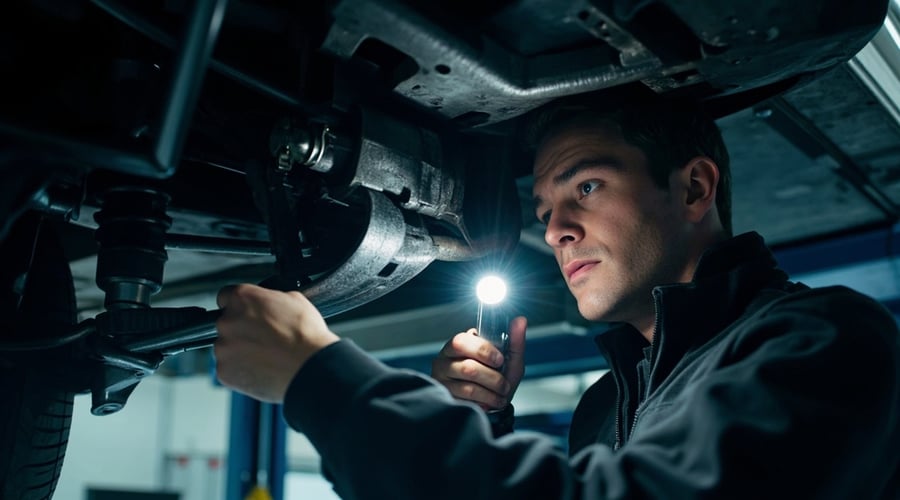
A proper PPI (pre-purchase inspection) from a licensed workshop in Sydney typically runs between $150 and $300, depending on the vehicle and how thorough the inspection is. What you get for that is: a hoist inspection of the undercarriage (rust, leaks, structural damage, suspension and steering components), an OBD diagnostic scan for fault codes including stored codes the seller may have cleared, a brake disc and pad measurement, a cooling system check, and a written report you can take away. Some services include a road test under load. None of that is available on a forecourt.
The practical question is who you book. NRMA does a standard inspection service and is widely recognised in NSW — their reports carry weight in a negotiation because the seller knows the buyer has an independent, verifiable document. Independent inspection services also operate around the Sydney metro area; search "pre purchase inspection Sydney" and you'll find options, but check that the workshop is licensed and that you get a written report, not just a verbal summary. A verbal summary has no value in a dispute.
One important note: if you're buying from a dealer (rather than a private seller), you still have statutory rights, but the PPI is useful because it tells you what you're actually buying before you commit, and because it gives you legitimate grounds to renegotiate the price if there are issues. A private sale is where the inspection matters most — once you hand over the money, the Motor Dealers and Repairers Act doesn't protect you in the same way, and "it was fine when I sold it" is hard to argue against without documentation.
The PPSR — the Personal Property Securities Register — is a separate step that costs $2 and takes five minutes. You can search by VIN or plate at ppsr.gov.au. It tells you whether the car has an outstanding financial encumbrance (i.e., the seller still owes money on it and the financier has a claim over the vehicle), whether it's been reported written-off, and whether it's been reported stolen. This is not a mechanical inspection — it's a title check — and it's something you should do regardless of whether you have a friend with you or not. The consequence of buying a car with undisclosed finance on it is that the financier can repossess the vehicle from you, even though you paid in good faith. That happens on Parramatta Road. It has happened more than once.
When the Friend Strategy Makes Sense (and When It Doesn't)
To be straightforward about it: bringing a trusted bilingual contact helps most when the issue is language, paperwork comprehension, or negotiation confidence. It helps least when the issue is mechanical condition. The two are often conflated, and that's the source of most of the disappointment.
If you're looking at a car under $15,000 from a private seller, the cost of a PPI is proportionally significant but still worth it — a $200 inspection on a $12,000 Mazda 3 that discovers the rear suspension is worn can save you $800-1,200 in immediate repair costs, plus the negotiating position it gives you. If you're buying from a licensed dealer and the car comes with a 3-month warranty, you have some protection, but that warranty covers defects that emerge — it doesn't retroactively tell you what the car's condition was at the point of sale.
The honest trade-off is time and money. A PPI adds a day or two to the buying process and costs money up front. For many buyers who are in a hurry — a student who needs a car before semester starts, someone whose lease is up — this feels like a friction they'd rather avoid. That's understandable. But the cars that cause the most trouble are almost never the ones where buyers took their time.
If you're buying from a dealer who runs their own workshop, ask what their pre-sale inspection process covers. A dealer who can hand you a written inspection record and walk you through what was found and what was done is showing you something — not because it proves the car is perfect, but because it shows their process is transparent enough to document. That's worth more than a friend's walk-around, and it's worth more than a translation service.
The One Thing to Do Before You Commit
Whatever else you do before buying a used car in Sydney — bring a friend, hire a translator, take it for a test drive — run the PPSR first. It's $2 at ppsr.gov.au. Search the VIN (on the compliance plate inside the driver's door, or on the windshield), and check the result before you do anything else. If it comes back with outstanding finance or a write-off record, you walk. No conversation needed, no negotiation, no awkward moment with the seller. Just walk.
For anything over $20,000, add a proper PPI from an independent workshop. Book it before you pay a deposit if the seller will allow it; if a seller refuses to allow an independent inspection, that itself is a signal worth taking seriously.
Bringing someone you trust to a car inspection isn't wrong. Thinking it covers everything is.
If you're buying through a dealer and want to know what a proper pre-sale inspection looks like from the other side — what we check before anything goes on the lot — come in and ask. We're in Concord, on Parramatta Road, and the workshop is right there. We'll show you the process, not just describe it.