The BMW 5 Series That Walked Into Our Workshop and Never Made It to the Lot
One BMW 5 Series came in looking clean. Here's exactly what we found under the hood — and why it never made the lot.
Some cars come in, pass inspection, get sorted, and go up for sale.
Some come in, fail something specific, get the right parts, and come back clean.
Then there are the ones where you're halfway through the inspection and you already know where this is headed.
This is one of those.
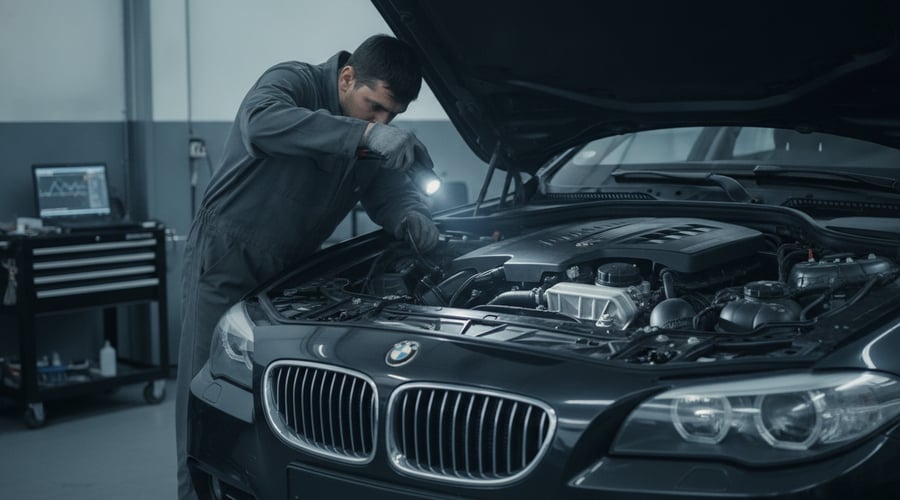
A few months back, an F10 BMW 5 Series rolled into our M&F workshop in Concord. Decent car on paper — presentable exterior, reasonable kilometres, nothing obviously wrong. But once the bonnet went up, things started turning up. One after another. By the time we were done, the call was unanimous: not for sale.
Buyers ask us all the time how we actually vet the cars we carry. Rather than explain the process in the abstract, here's a real one — what we checked, what we found, and why the combination of it all meant this car didn't make the cut.
What the Car Looked Like Coming In
F10 generation, 5 Series. The kilometres made sense for its age. Paint looked original to the eye — no obvious respray or filler work. Interior wear matched the odometer: the leather on the steering wheel was worn in the right spots, the buttons hadn't been rubbed down to blank plastic. It read like a car that had been used, not abused.
Before it even came into the workshop, we'd already run a PPSR check — no written-off history, no outstanding security interest, clean title. On the surface, this was exactly the kind of car that should be sellable.
But PPSR tells you a car's paper history. It tells you whether an insurer has ever written it off, whether someone used it as loan collateral and never paid it back. What it doesn't tell you is what the engine looks like right now — or when anyone last seriously looked at the timing chain tensioner. That's what the workshop is for.
So the car went up on the hoist, the ISTA diagnostic was plugged in, and we started working through it.

First Flag: Cold-Start Oil Pressure
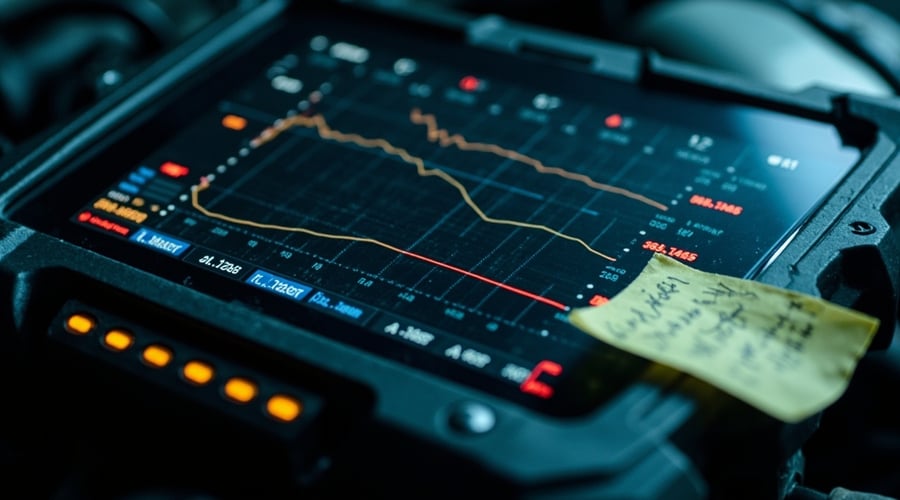
The first thing we do isn't lift the car — it's hook up the scanner and let the engine idle from cold. On the N52, a naturally aspirated unit BMW used in this era and one of their more robust engines generally, cold-start oil pressure is an early indicator of what's happening internally. How fast it climbs, where it stabilises — that tells you something about the oil pump, and about whether bearing clearances have opened up through wear.
Normal cold-start pressure climbs quickly and holds within a predictable range. This one didn't. It wasn't a borderline reading. The technician looked at the data and frowned.
There are a few explanations for low oil pressure: a worn oil pump, main bearings that have worn enough to cause internal leakage, or — and this one's worth knowing — someone adding thinner oil to mask engine noise. Lower-viscosity oil flows more freely and can quieten an engine that's starting to knock, but it offers less protection. We drained the oil, confirmed the wrong viscosity had been used, switched to the correct spec 5W-30, and ran it again.
The reading didn't improve.
That ruled out the easiest explanation. And while low oil pressure alone isn't an automatic write-off — some degree of wear is normal in any used engine — it was the first flag, and it meant we needed to keep looking.
Second Flag: The Oil Leaks, and What They'd Gotten Into
Up on the hoist, the technician started from underneath. The sump gasket area had a buildup of old, baked-on oil residue — the kind that accumulates over months of slow seepage, not from a single incident. Oil had been tracking down the engine casing and building up around the sump edge for a while.
Coming at it from above: the cam cover was seeping. Not fresh oil — this was the deep-brown, almost carbonised residue you get when a leak has been sitting untreated through repeated heat cycles. The gasket edge had a crust to it. This had been going on for a long time.
Now, cam cover gasket leaks on the F10 N52 are well-known. Anyone who's worked on these cars has seen it. It's not exotic — a replacement gasket set and a few hours of labour, and it's sorted. We've done plenty of them. Not a reason on its own to walk away from a car.
The problem here was a second leak point: the front cover, near the timing chain area. When that seeps and goes untreated, oil tracks down the front of the engine and drips directly onto the accessory belt system below it. When the technician checked the belt, it was saturated. Not lightly flecked — soaked. The rubber had taken on a greasy, almost tacky texture and had darkened well beyond its normal colour.
An oil-soaked serpentine belt is a safety issue, not just a maintenance item. The oil degrades the rubber, kills friction, and dramatically increases the risk of the belt slipping or snapping under load. If it lets go on the road, you lose the alternator, the power steering pump, and the air conditioning compressor at the same time. In Sydney traffic — on Parramatta Road or the M4, say — that's not an abstract risk. It's the kind of failure that strands a car and creates a real hazard for whoever's driving.
The Finding That Made the Decision
The first two flags together gave us reason to pull the front cover and look at the timing chain directly.
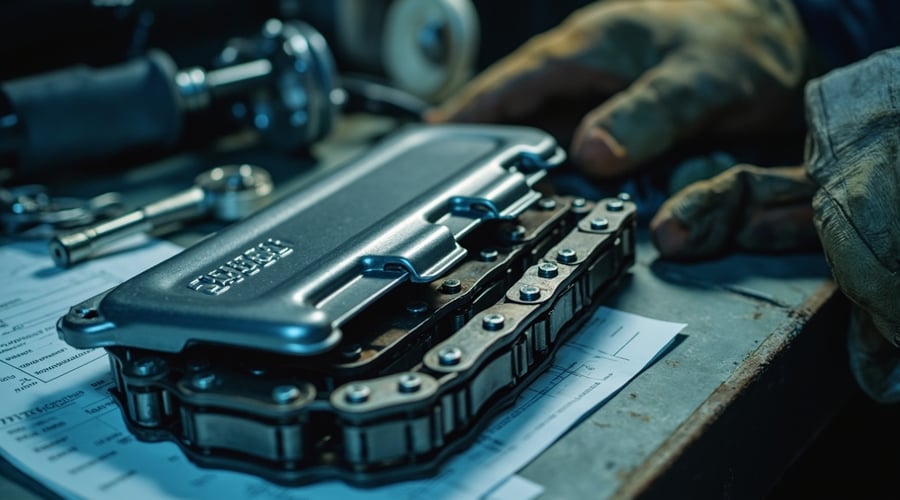
The N52's timing chain system is sensitive to oil quality and service history. Over time — especially in an engine that hasn't been looked after — the chain stretches. Each link wears slightly at its pins and bushings; across the full length of the chain, that adds up. The hydraulic tensioner compensates, up to a point. Once it hits the end of its travel, the chain starts to run loose.
A stretched timing chain sometimes rattles on cold start and quietens once the engine warms and oil viscosity changes. Sometimes it doesn't make any noise at all. You can't rely on listening for it.
The technician checked the chain physically. The slack exceeded what we're willing to accept.
A timing chain that jumps a tooth throws the valve timing out of sync. Intake and exhaust valves open and close at the wrong moments. In an interference engine, that means pistons and valves can collide. Best case, the engine won't run. Worst case, the cylinder head is damaged and the engine is done. In Sydney right now, that level of repair — full timing chain replacement, plus whatever internal damage has already occurred — runs well north of $5,000. Potentially much more, depending on what's found inside.
So here's what the inspection had surfaced, all at once:
Cold-start oil pressure consistently below spec, with bearing wear the most likely cause — not something an oil change fixes.
An oil-soaked accessory belt that was a real-world safety risk, not just a line item on a service quote.
Timing chain stretch beyond acceptable limits, on an engine whose overall internal condition gave us no confidence that a timing chain replacement would actually leave the next owner with a healthy engine.
Any one of these might be a fixable problem in isolation. Together, they weren't reading as a repair list. They were reading as a pattern — a car that had been running on the wrong oil, or not enough of it, or had simply gone too long between services for too long. The internal wear had compounded to the point where we couldn't honestly say what condition it would be in six months from now.
We can't sell a car when we don't know the answer to that question ourselves.
Why Turning a Car Down Is Part of the Job
Rejecting a car has a cost. The time spent negotiating to acquire it, the drive to bring it in, the workshop hours to inspect it — none of that is free, and once the decision is made, it's gone. Sunk cost.
But the alternative is clearer: a car with these issues goes out, the buyer drives it for two months, the engine develops a problem, and they come back to us on a tow truck. At that point, what do we say? Even if it holds together past the three-month warranty period — maybe the timing chain jumps in month four — the fallout travels fast in Sydney's Chinese-Australian community. One post on Xiaohongshu, a few comments from people who've heard something, and the damage far outweighs whatever margin was on that car.
This isn't a claim about being virtuous. It's basic business logic. Max Auto has been operating from Concord since 2013. The way this kind of business sustains itself is that the person who bought the last car comes back for the next one, or sends a friend. That relationship is worth more than any individual transaction. Break it, and no amount of advertising fixes it.
So every car that comes through the workshop gets its bonnet opened and its diagnostic run — not as box-ticking, but as an actual inspection. Some pass and go up for sale. Some need work, get it done properly, and then go up. Some get turned down. This 5 Series was the third kind.
What You Can Check Yourself Before Buying an F10 5 Series
You don't need a workshop to do a reasonable preliminary check. These are things you can do at the car, before any money changes hands.
Listen to a genuinely cold start. Ask the seller not to warm the car up before you arrive. When you get there, start it yourself somewhere quiet and listen to the front of the engine for the first thirty seconds. A stretched timing chain sometimes produces a rhythmic metallic rattle that fades as the engine warms. Not always — but if you hear it, that's your cue to either walk away or pay for an independent inspection before going any further.
Check what the oil has been getting into. Open the bonnet and look at the accessory belt and tensioner area. A little grime is normal. If the belt surface looks oily, discoloured, or has a greasy sheen, ask how long the leak has been there and whether it's been repaired. If it has been repaired, ask for the invoice.
Go through the service history for oil change intervals. The N52 is more sensitive to oil quality and service frequency than a lot of engines. Gaps in the logbook, or entries spaced unusually far apart, are worth asking about. No records doesn't mean no servicing happened — but it does mean you can't verify it.
Run a PPSR before you commit to anything. At ppsr.gov.au, you can search by plate or VIN for $2. It'll show you written-off history and any security interests registered against the vehicle. Five minutes, no expertise required. Do it before you test drive, not after you've already decided you want it.
The F10 5 Series is a genuinely good car when it's been looked after. The N52 engine, properly maintained, is solid well into high kilometres. The catch is that "properly maintained" is doing a lot of work in that sentence — and the gap between a well-serviced example and a neglected one is larger on these cars than on something like a Corolla. It's not a car you buy on looks alone.
We currently have a few F10 5 Series on the lot that have been through our full inspection process. If you're looking at this model — whether that's one of ours or something you've found elsewhere and want a second opinion on — send us a message. We can walk you through what to look for, or help arrange an independent PPI if that's what makes sense.