What Does It Actually Cost to Run a Used Lexus IS in Sydney for a Year?
The numbers most dealerships won't put in writing — until you're already committed.
A lot of people land on the Lexus IS because it feels like the smart move. Japanese reliability, luxury cabin, holds its value — what's not to like? Then they get twelve months in and the bill arrives. Not catastrophic, not a BMW nightmare, but definitely not Toyota Corolla money either.
So let's actually map it out. If you're looking at a used Lexus IS in Sydney — let's say a 2016–2020 IS 200t or IS 300 sitting around the $30,000–$45,000 mark — here's what a realistic year of ownership actually looks like, number by number.
保养:比丰田贵,但比德系便宜得多
This is where the IS earns its reputation — and where it gets a bit complicated.
Lexus recommends a service interval of every 10,000 km or 12 months, whichever comes first. A standard minor service — oil change, oil filter, all fluid top-ups, tyre pressure check, and a basic safety inspection — at a reputable independent shop in Sydney typically runs $180–$280. That range depends mostly on whether your IS has the 2.0T four-cylinder or the 3.5L V6, since the V6 takes more oil and the labour is slightly different. If you go to a Lexus Australia dealership — the one in Artarmon is the closest to inner Sydney — budget closer to $350–$450 for the same minor service. The main thing you're paying extra for is the Lexus-branded oil, the electronic inspection report, and the stamp in the service booklet, which does have resale value when you eventually sell.
Major services land roughly every 40,000 km and include spark plugs, transmission fluid, brake fluid, a fresh cabin air filter, and a full suspension and driveline inspection. At a quality independent that knows Japanese cars, expect $600–$950. At a Lexus dealer, that climbs to $1,200–$1,500 — the spark plugs alone on the V6 are an iridium set that costs more than most people expect, and the dealer labour rate in Sydney is currently sitting around $180–$220/hr at most franchise workshops.
For a typical Sydney driver doing around 15,000 km per year, you'll hit one minor service per year and creep toward a major every two and a half to three years. Annualised across a realistic ownership window: $300–$500 per year for servicing if you use a trusted independent, or $500–$800 per year if you prefer dealer stamps. Neither of those numbers is painful. They're just not free.
The honest caveat worth spelling out: the IS 200t — the turbocharged four-cylinder variant sold from around 2015 — uses a BMW-sourced N20 engine. That's not a rumour or internet speculation; it's a genuine engineering decision Lexus made for that generation, sourcing the engine from the BMW-Toyota joint development agreement of the era. What it means practically is that the 200t shares some maintenance characteristics and known failure modes with early BMW four-cylinder turbos. Direct injection without port injection means carbon buildup on the intake valves over time — it's a slow accumulation issue, not an immediate crisis, but on high-mileage examples you may eventually need an intake cleaning service that runs $300–$500 at a shop equipped for it. It doesn't make the 200t a bad car, but it does mean you should check whether a used example has had this attention, and factor it in when comparing asking prices.
The V6 IS 300 is a purer Lexus drivetrain — the 2GR-FSE is a proven engine with a long history across Lexus and Toyota platforms — and it's arguably more straightforward to maintain over a long ownership period. If the choice between the two is purely about running cost confidence, the V6 is the lower-anxiety pick.
轮胎和刹车:Sydney 路况的真实消耗
The IS runs on 18-inch wheels in most standard configurations, with some Sport and F Sport grades stepping up to 19-inch. That size matters for tyre pricing: a set of four mid-range 18-inch tyres — Continental UltraContact, Bridgestone Turanza, or Hankook Ventus — will run $900–$1,200 fitted through a competitive Sydney tyre shop. Step up to 19-inch and that same quality tier climbs to $1,100–$1,400. Parramatta Rd and the industrial strip out toward Homebush and Silverwater are generally where the competitive independent tyre shops are; tyre centres inside dealership compounds or in the CBD will charge noticeably more for the same rubber.
Tyre wear pattern is worth understanding on this car. The IS is rear-wheel drive, which means under Sydney's combination of stop-start traffic and the occasional spirited freeway on-ramp, the rear tyres carry the drive load. Rear tyre wear on an IS doing 15,000 km per year in Sydney tends to run faster than on an equivalent front-wheel-drive sedan — most drivers find they're replacing rears every 3–4 years, sometimes sooner on the 19-inch Sport variants where the rear rubber is wider and lower profile. Annualised tyre cost across a realistic rotation and replacement pattern: roughly $250–$400 per year.
Brake pads are a separate line. A full four-corner brake job — quality aftermarket or OEM pads front and rear, with a rotor inspection and fluid check — runs $350–$550 at a reputable Sydney independent. If your rotors are worn beyond minimum thickness (common on older IS examples that haven't had attention), add $300–$450 for a rotor replacement at the same time. Front pads on a rear-wheel-drive car doing city driving wear faster than most people expect, because the front axle handles the majority of braking force. A conservative annualised brake budget for a Sydney IS driver doing normal city and highway mix: $150–$250 per year.
NSW Rego + CTP Green Slip:每年绕不过的固定支出
This is the piece that catches people out, especially those newer to NSW who come from other states or overseas with different systems in their head.
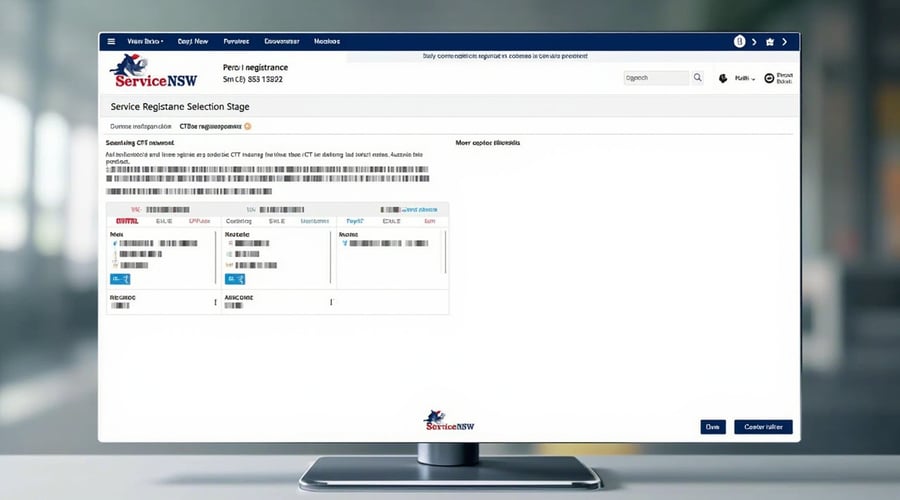
Registration in NSW is calculated from your vehicle's tare weight and number of cylinders — it's not a flat fee. For an IS 300 (V6, tare weight roughly 1,680–1,720 kg depending on spec), the annual registration component paid through Service NSW comes to approximately $350–$380. The IS 200t, being a four-cylinder, sits in a lower cylinder bracket and comes in slightly cheaper on the registration component, around $300–$340. These figures can shift slightly each July when NSW adjusts fees, so always verify the current rate on the Service NSW website or by entering your plate at the time of renewal.
CTP — the Green Slip — is a mandatory third-party personal injury insurance and it's separate from registration. In NSW it's not government-fixed; it's priced by licensed insurers and regulated by SIRA (the State Insurance Regulatory Authority). For a passenger car like the IS, the main variables are your postcode, your age and driving record, and which insurer you choose. For a Sydney driver with a clean record:
-
Inner west or inner city postcodes: $620–$750/year — higher due to traffic density and claim history in those areas
-
Western Sydney suburbs (Parramatta, Blacktown, Penrith corridor): $550–$680/year
-
Outer suburbs or areas with lower traffic density: $500–$620/year
You can compare current Green Slip prices in about two minutes using the Green Slip Price Check tool at sira.nsw.gov.au — enter your plate and postcode, and it pulls live quotes from all licensed NSW CTP insurers side by side. You don't need to commit to anything to use it. Most people who've never done this are surprised by how much the price varies between insurers for identical coverage.
Combined rego plus CTP: $850–$1,130/year is the realistic range depending on your variant and location.
综合保险:悉尼的 Comprehensive 要多少
Comprehensive insurance on a used IS in Sydney has more spread than most people budget for. The main variables driving your premium are postcode, driver age, whether the car is garaged overnight, annual kilometre estimate, and claims history. As honest ballparks:
-
Driver under 25, inner Sydney, street parking: $1,800–$2,800/year — this is the expensive end and it reflects the statistical reality of claim rates in that combination
-
Driver 25–40, Western Sydney suburbs, garaged: $1,200–$1,800/year
-
Driver 40+, established no-claims record, garaged: $900–$1,400/year
One genuine advantage the IS has in this category is how insurers assess it relative to equivalent European luxury cars. A used IS of similar market value to a used BMW 3 Series or Audi A4 will typically attract a lower comprehensive premium — insurers' actuarial data reflects the IS's lower theft rate, lower repair cost per claim (parts availability and repair complexity both factor in), and Lexus's overall safety record. That's a real, quantifiable cost advantage, not just a marketing talking point.
What to actually do: get quotes from NRMA, Youi, Budget Direct, and QBE, and compare them directly. Don't assume your current insurer will match a competitive quote without being asked. The spread between the highest and lowest quote for an identical IS can easily be $300–$600 per year — that's money sitting on the table if you don't check.
把账算完整
Here's what a realistic annual ownership cost looks like for a used IS 300 in Sydney, excluding fuel:
| 项目 | 保守估算 | 中间值 | | --- | --- | --- | | 常规保养 | $300 | $450 | | 轮胎(年摊销) | $250 | $320 | | 刹车(年摊销) | $150 | $200 | | Rego + CTP | $850 | $980 | | 综合保险(25–40岁) | $1,200 | $1,500 | | 合计 | $2,750 | $3,450 |
That doesn't include fuel — the IS 300 V6 does around 10–12L/100km in Sydney traffic conditions, which at current E10 prices works out to roughly $3,500–$4,500/year for a 15,000 km driver. And it doesn't include unexpected repairs, because those can't be budgeted precisely; they can only be provisioned for.
But here's the comparison that matters: a BMW 3 Series or Audi A4 of similar vintage and similar purchase price typically adds $600–$1,200 per year in servicing and parts costs over an IS, and that gap widens significantly once either car runs into an out-of-warranty repair event. A BMW B48 water pump, a Audi DSG service, a leaking Haldex unit on an A4 quattro — these are not cheap repairs in Sydney. The IS V6 doesn't have equivalents waiting in the shadows at the same frequency. That's not blind praise; it's why the IS has the used-car ownership reputation it does in this market. For a luxury rear-wheel-drive sedan, $2,750–$3,450 per year in non-fuel running costs is genuinely reasonable, and it comes with less anxiety about what breaks next.
诚实说:这台车不适合哪类买家
The IS is a driver's car in a way that sometimes surprises people who buy it thinking it's a more relaxed luxury option in the Toyota family tree. A few honest limits worth naming before you commit.
Rear-wheel drive means the rear tyres carry the acceleration load, which means you'll cycle through rear rubber faster than front — as noted above, rears can wear in three to four years on Sydney driving, and on the wider rubber of the Sport variants, sometimes sooner. If you're hard on throttle exits, factor that in.
The back seat is genuinely cramped for anyone over 175 cm. This is a four-door coupe at heart — the roofline drops sharply, headroom in the rear is tight, and legroom behind a normally seated driver is modest. If you're regularly doing school pickups, carrying three adults across the city, or transporting anything taller than a medium-sized human, the IS will frustrate you. The boot follows the same logic: it's not small, but it's shaped awkwardly and the opening is narrow.
The technology also shows its age on 2016–2018 examples. The infotainment system Lexus used in that era — the Remote Touch trackpad interface — is widely considered one of the more aggravating setups in the luxury segment. Native Apple CarPlay wasn't added until later in the production run; check carefully which model year added it before you assume a car has it. A 2016 IS almost certainly doesn't have native CarPlay. A 2020 IS almost certainly does. The years in between vary by trim.
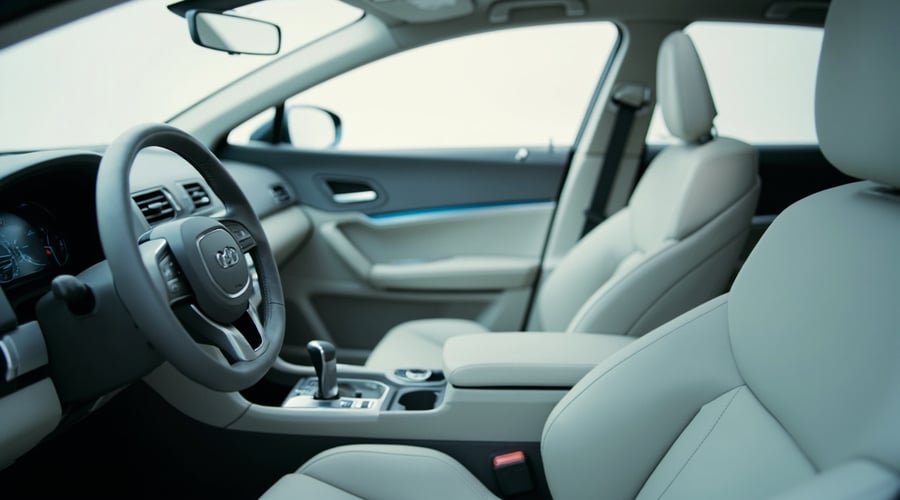
The sweet spot for this car is a solo commuter or someone driving mostly with one passenger, who enjoys the rear-wheel-drive dynamic on a weekend run up through the hills, doesn't want the ongoing low-level anxiety of German car ownership, and values a cabin quality that — apart from the infotainment — has genuinely aged well. If that matches your actual driving life in Sydney, the IS is one of the stronger value propositions in the used luxury segment right now.
在我们这里买一台 IS 之前,我们做了什么
At Max Auto, every car goes through our M&F workshop before it's priced or listed — that's not a line we put in articles for decoration, it's a step we take because pricing a car without knowing its condition is a guess we're not willing to make in front of a customer.
For an IS specifically, that means pulling a PPSR against both the VIN and the plates before we do anything else, then physically comparing the VIN plate at the firewall with the compliance plate and the chassis stamp — mismatches there are rare but they do surface, and they surface precisely because most people skip that check. We do a full brake measurement front and rear, record the tyre depth across all four corners, check the IS 200t intake system on applicable models for the carbon buildup issue described above, and run the car through our standard mechanical inspection that covers steering, suspension, driveline, cooling, and all electrical systems. If something needs attention before the car is fair to sell, it gets addressed in our own workshop rather than being disclosed-and-discounted after the fact.
We've been doing this since 2013, and the IS — both the V6 300 and the turbocharged 200t — is a car that comes through our lot regularly enough that we know the model-year quirks, the service history patterns typical for the Sydney used market, and where the skeletons tend to hide on higher-mileage examples.
If you're weighing up a specific IS and want a straight conversation about the model year, the spec differences, or what a realistic year of running costs looks like for your particular driving situation, come by the lot on Parramatta Rd or send a message. No pressure to buy anything on the day — just a conversation from people who've put enough of these cars through their paces to give you an honest answer.